Ever feel like your brain’s running on legacy code after a toxic sprint? That was me, debugging production at 2 AM with shoulders locked and breath shallow, until I discovered my vagus nerve was basically screaming timeout errors.
The fix? Ridiculously simple patches. Diaphragmatic breathing became my soft reset. A proper chair upgrade finally stopped treating my spine like deprecated tech. Mindfulness? Just logging my mental state before the stack overflow hit.
Your nervous system isn’t broken. It’s just begging for better error handling. What legacy habits are you still running?
How Desk Job Burnout Destroyed My Focus and Fixed My Vagus Nerve
Three years in, my body staged a revolt. Chronic tension headaches. Heart palpitations during standups. My doctor called it dysautonomia, which is fancy speak for “your stress response is borked.” I started stacking micro-interventions: cold showers humming the Wii Shop theme, singing loudly in my sad apartment, even gargling while compiling. Polyvagal theory stopped being abstract. Now I treat parasympathetic activation like infrastructure monitoring. Non-negotiable. Because ignoring your hardware while optimizing software? That’s how you get failure cascading through everything.
Quick Takeaways
- Practice deep diaphragmatic breathing and cold exposure to stimulate vagus nerve activity and reduce stress.
- Incorporate mindful meditation focused on breath and body awareness to recalibrate neural pathways.
- Maintain proper ergonomic posture and environment to support autonomic system stability and focus.
- Use gentle vagus nerve stimulation techniques like neck massage and foot rollers to improve parasympathetic tone.
- Manage stress through regular sleep routines, balanced nutrition, and limiting mental overload for optimal nerve function.
What Is the Vagus Nerve and How It Affects Your Focus
If you’ve ever experienced a system crash mid-debug, you’ll recognize the lamentable reality that our biological OS isn’t much different—except, it’s not subject to patches or updates, only raw hardware responses.
Enter the vagus nerve anatomy, a critical component of this biological infrastructure, interfacing with neurotransmitter pathways that regulate core functions like heart rate, digestion, and inflammation. Proper functioning of the vagus nerve is essential for muscle relaxation during periods of stress, helping to alleviate tension that could manifest in issues such as outer forearm pain.
Like a poorly documented module, its signals modulate the parasympathetic branch, shifting focus from ‘fight or flight’ to ‘rest and digest.’
Understanding this microkernel’s role in your focus cycles is essential—like debugging Ghost In The Shell’s layered code, it’s about decoding the silent data highway. Additionally, tracking your physiological responses with cycle tracking apps can provide insights into how your vagus nerve activity influences your overall well-being.
Signs That Your Vagus Nerve May Need Support
When the body’s operating system begins logging errors—persistent fatigue, heightened stress responses, or chronic inflammation—it’s like your neural code hitting a hard failure. You might notice stubborn neck tension or digestion issues; these bugs indicate your vagus nerve’s nonlinear feedback loop is deoptimized.
Inadequate management of mental load can exacerbate these symptoms, leaving us feeling overwhelmed and disconnected. Think of it as Ghost in the Shell’s cybernetic blueprint—your infrastructure’s failure to adapt. If your “rest and digest” protocols are glitching, it’s time for a system refresh. Incorporating techniques to reset the vagus nerve can significantly enhance your emotional resilience and overall well-being.
Regularly updating vagal tone with gentle support tools isn’t just smart code—it’s the only way to prevent full system crash.
Easy Ways to Calm and Stimulate Your Vagus Nerve
Managing the chaos of your autonomic nervous system often resembles debugging a notoriously unreliable codebase—one with nagging bugs in memory leaks, thread deadlocks, and unchecked exceptions. To inject some resilience, you can activate the vagus nerve with minimal overhead.
- Target acupuncture points linked to vagal pathways, effectively patching system vulnerabilities.
- Use aromatherapy blends designed to stimulate relaxation without crashing your focus stack.
- Gentle ear massages or pressure points can serve as manual patching—think of it as a ctrl-alt-del for your nerves.
- Cold exposure, like splash screens, often rewires your neural interface, rebooting system calm efficiently.
Breathing Exercises for Nervous System Balance

In the ongoing chaos of a nervous system plagued by bugs like chronic stress, inflammation, and cognitive slowdown—similar to a server running endless background processes without cleanup—breathing exercises serve as the debugging protocol that can streamline core functionality. By consciously moderating phone use during work hours, we can enhance our focus and overall well-being. Incorporating techniques such as foot rollers can provide effective stress relief and further support our nervous system’s balance.
Diet, Sleep, and Stress Strategies for Vagus Nerve Health
Like debug logging in a cluttered codebase, your body’s core systems often run into buffer overflows—stress, inflammation, and suboptimal sleep—that cause catastrophic performance bottlenecks.
When nutritional triggers and sleep hygiene are neglected, the vagus nerve‘s ability to modulate stress responses deteriorates, leaving your system vulnerable. Incorporating caffeine gum can provide a quick energy boost for tasks requiring heightened focus.
- Limit inflammatory foods (sugar, processed carbs).
- Prioritize sleep hygiene: consistent schedule, dark environment.
- Incorporate omega-3s for neural integrity.
- Use cold exposure to hack vagal tone.
- During the follicular phase, high energy levels can enhance your productivity and focus on these tasks.
It’s like software patching—except in this case, you’re upgrading from “Ghost in the Shell” chaos to operational stability.
How to Track Your Vagus Nerve Health and Boost Focus
When your bodily firmware exhibits recurrent lag—heart rate variability flatlining like corrupted logs, digestion throwing exceptions, or sleep cycles halting—it’s clear the vagus nerve’s hierarchy is compromised.
You’re witnessing a hardware-level failure, a systemic bottleneck stalling the PNS’s command pipeline. To optimize indoor air quality, consider high-efficiency filters; these can improve overall health, allowing for better concentration.
To boost neuroplasticity potential and optimize focus, you must diligently track physiological signals—HRV analytics, respiratory coherence, digestion regularity—as diagnostic payloads. Eye exercises can greatly assist in supporting this focus enhancement.
Think of it as debugging a complex OS. Recognize these granular failure points; like Ghost in the Shell’s fragmentation, your nervous system’s stability hinges on dynamic hierarchy management and strategic recalibration.
Personal Success Story With Biofeedback
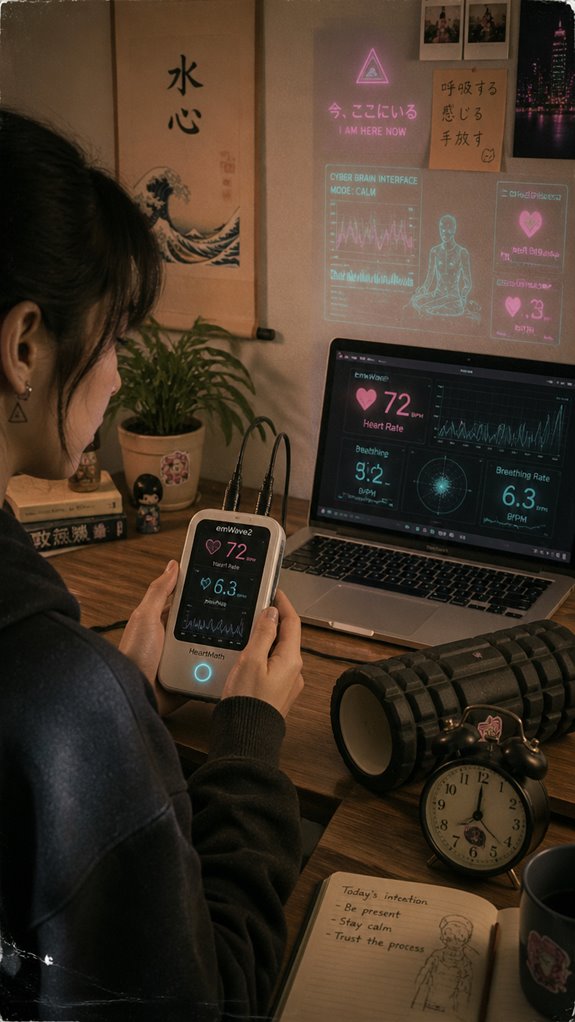
Debugging my autonomic nervous system felt eerily similar to patching a legacy monolith that’s been running production code—flaky HRV metrics, sleep cycles in deadlock, digestion tripping over null pointers.
Tuning my autonomic system was like debugging legacy code—failing metrics, deadlocks, null pointers—seeking resilience over perfection.
A misguided attempt to purge Vagus nerve myths and optimize stress management proved that my system needed a firmware update, not just superficial tweaks.
- Implemented biofeedback, akin to deploying a new kernel patch
- Had to debug nested system calls—heart rate, cortisol, digestion—layered chaos
- Discovered real-time metrics—HRV, breathing patterns—that resembled failing logs
- Realized the aim wasn’t perfect uptime but resilience—akin to fighting “Ghost In The Shell” mindware corruption
- Additionally, I learned that computer screens can significantly affect our sleep quality, further complicating my autonomic balancing act. Foam rolling, as shown to enhance recovery processes, became an essential part of my regimen.
Progress felt incremental, yet power-systems like these demand relentless validation.
Difficulty Controlling Stress Responses
Controlling stress responses in the human nervous system resembles debugging a sprawling microservices architecture where each component—heart rate, cortisol levels, digestion—must synchronize flawlessly, yet often devolves into chaotic race conditions under load.
Your autonomic system’s real-time event loop struggles to execute stress management routines, risking nerve regeneration delay and systemic crashes.
High load induces persistent fight-or-flight cycles, overwhelming the parasympathetic module, leading to low vagal tone and autoimmune deadlocks. Incorporating ergonomic devices can enhance your ability to manage these stress responses effectively.
Like a faulty botnet, the human body defaults to chaotic, unresponsive states, sabotaging focus.
Implementing targeted vagus nerve stimulation—via deep diaphragmatic breathing or gentle massage—is akin to applying hotfixes, restoring system integrity. Ergonomic footrests can further improve comfort and support during these stress management practices.
Mindfulness Meditation Techniques
A human mind trying to maintain focus amidst constant cognitive latency resembles a compromised server farm, overwhelmed by unmanaged threads and resource leaks.
To optimize vagal tone through mindfulness meditation, you must initialize strategic process calls—focusing on breath, body, and awareness—like debugging a failing system.
Optimize vagal tone by initializing mindfulness processes—focusing on breath, body, and awareness—like debugging a complex neural system.
Meditation benefits are akin to patching memory leaks in emotional regulation.
- Practice diaphragmatic breathing: inhale 6 seconds, exhale 8, like graceful code optimization.
- Incorporate cold exposure—face splash, cold shower—for sudden protocol resets.
- Use auricular massage to debug neural pathways.
- Employ mindful listening—internal and external—to establish system baseline stability.
Moreover, using pregnancy support pillows can enhance your comfort during meditation, allowing for deeper engagement with mindfulness practices.
Ergonomic Workspace Adjustments
In the sprawling architecture of your daily workflow, the latent failure points are less about rogue bugs in your codebase and more about systemic, unpatched vulnerabilities in your physical environment—those chronic bottlenecks haunting Ghost in the Shell’s infrastructure.
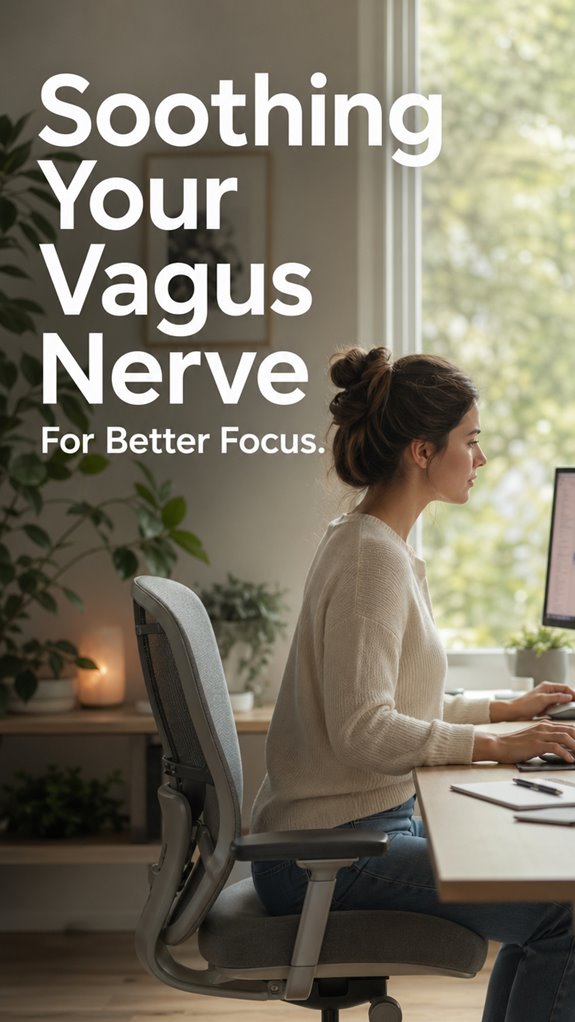
Ergonomic positioning acts as a low-level patch, stimulating the vagus nerve through optimized posture, which calms the parasympathetic response and shifts you from fight-or-flight into focused recovery mode. Implementing better vision practices can complement these adjustments by reducing eye strain, further enhancing your ability to concentrate effectively.
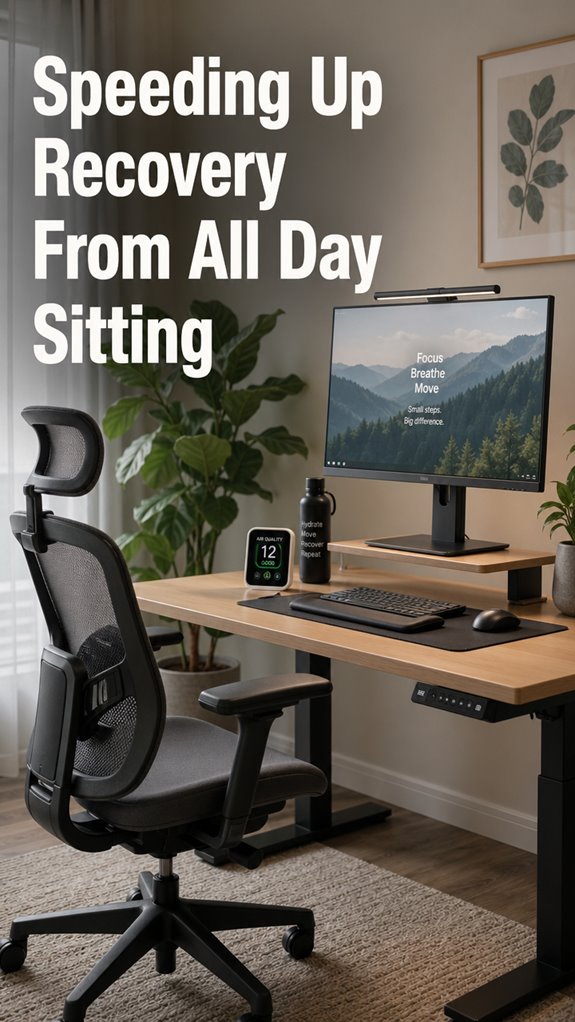
Proper ergonomic adjustments, like an adjustable chair or monitor height, aren’t just comfort patches; they’re critical kernel updates ensuring your neuro-hardware isn’t crashing under the weight of static, repetitive strain, or the absurdity of performing complex logic on a fragile human chassis. Additionally, practicing full-body posture techniques can enhance your overall well-being, supporting sustained concentration and productivity.
FAQ
Can Vagus Nerve Stimulation Improve Focus for ADHD?
Vagus nerve activation can improve focus for ADHD by promoting calmness and cognitive enhancement. You can achieve this through techniques like deep breathing, gentle massage, or cold exposure, empowering your nervous system to sharpen attention and reduce symptoms effectively.
Are There Any Risks Associated With Vagus Nerve Stimulators?
Vagus nerve stimulators carry risks if you ignore safety guidelines—risk assessment is essential. Improper use may cause discomfort, nerve damage, or other complications. Power lies in informed decisions; prioritize safety to harness their full potential effectively.
How Quickly Can You Notice Changes After Vagus Nerve Therapies?
You can notice changes within days, as vagus nerve therapies accelerate neural recovery and stress reduction. With consistent practice, you’ll feel calmer, sharper, and more in control, revealing your power through improved nervous system balance and focus.
Is Vagus Nerve Health Linked to Better Emotional Resilience?
You might think emotional resilience depends solely on mindset, but strengthening your vagus nerve empowers emotional healing and stress reduction, uncovering greater resilience, mental clarity, and power in handling life’s challenges with calm confidence.
Can Daily Massage Prevent Vagus Nerve Dysfunction?
Daily massage, combined with relaxation techniques and dietary supplements, actively supports your vagus nerve health, preventing dysfunction by enhancing vagal tone, reducing inflammation, and promoting deep relaxation, empowering you to maintain peak resilience and focus effortlessly.
Summary
Just like deploying a patch to stabilize a crashing server, fine-tuning your vagus nerve threading through your neural architecture can prevent system overloads. When the macro-system—your overall stress response—begins to falter, the granular modules—your physiological functions—fail to execute cleanly. You can’t code around malfunctioning hardware, nor can you expect focus without troubleshooting these core signals. Think of it as debugging your mind’s inner API—without proper communication, everything becomes a Ghost in the Shell.
References
- https://www.longwellmassagetherapy.com/post/massage-therapy-and-the-vagus-nerve-supporting-the-body-s-healing-switch
- https://www.methodptnm.com/methodphysicaltherapyblog/vagusnervemethodphysicaltherapy
- https://www.jacksonvillewellnesshub.com/blog/how-massage-therapy-can-stimulate-the-vagus-nerve-for-more-relaxation-and-calm
- https://redmoonwellness.com/how-massage-supports-mental-health-calming-the-nervous-system-from-the-inside-out/
- https://pmc.ncbi.nlm.nih.gov/articles/PMC12289630/
- https://www.cedars-sinai.org/stories-and-insights/healthy-living/stimulating-the-vagus-nerve
- https://www.youtube.com/watch?v=Y_8mR_SsUnw
- https://www.massgeneral.org/news/article/vagus-nerve
- https://www.mayoclinic.org/tests-procedures/vagus-nerve-stimulation/about/pac-20384565
- https://www.traumatherapistinstitute.com/blog/Vagal-Nerve-Trauma-A-Pathway-to-Understanding-Chronic-Stress-Responses
- https://pmc.ncbi.nlm.nih.gov/articles/PMC4107166/
- https://my.clevelandclinic.org/health/body/22279-vagus-nerve
- https://foresightmentalhealth.com/blog/the-vagus-nerve-and-self-regulation/
- https://www.uvahealth.com/healthy-balance/5-vagus-nerve-exercises