Ever stared at your screen at 2am wondering why your brain won’t compile sleep? I cracked that bug last year.
My circadian rhythm used to crash harder than production on a Friday deploy. Blue light was the culprit. Melatonin? Blocked like a bad PR.
Now I run f.lux after sunset. The orange tint looks ridiculous. Feels like coding inside a pumpkin. But I actually sleep now.
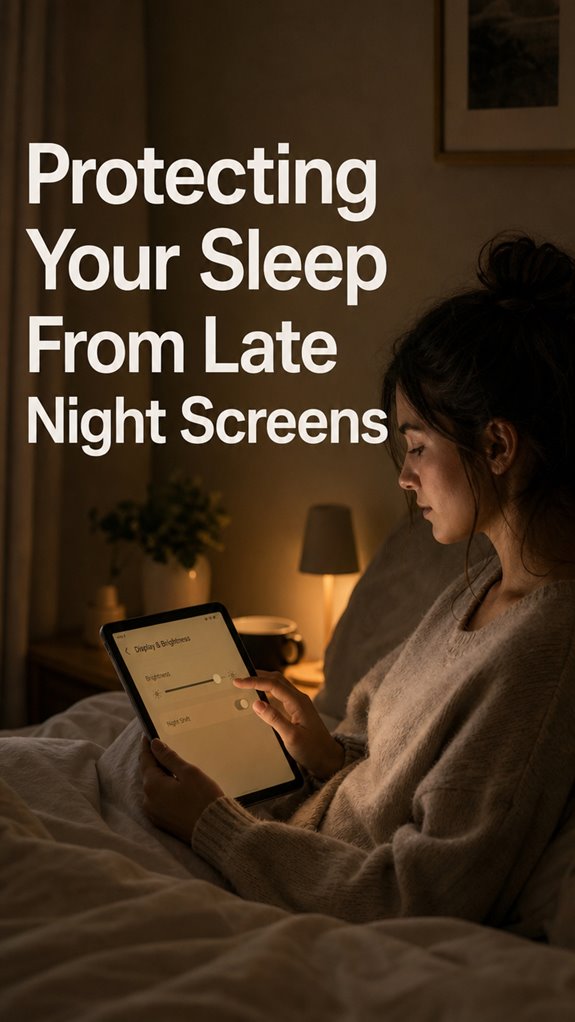
Hardware patches help too. My sleep mask became essential gear. Like noise-canceling headphones, but for light pollution. Screen brightness stays dim. Nothing above candlelight levels.
Sometimes I slip. One more email becomes one more hour. Then I’m debugging my own exhaustion. The irony isn’t lost on me.
Fixing Sleep Mode: How Screen Addiction Destroyed My Sprint Velocity
Last quarter I pulled three all-nighters shipping features. Thought I was grinding. Actually I was degrading. My standup updates got incoherent. My PRs? Embarrassing.
The breaking point: I fell asleep mid-Zoom. Camera on. Drool visible. My manager’s face said everything.
Sleep hygiene isn’t soft. It’s performance optimization. Circadian rhythms, melatonin production, blue light blocking glasses, these are developer tools. Recovery time improves code quality more than another Red Bull. Trust the process.
Quick Takeaways
- Disconnect or avoid screens at least an hour before bedtime to prevent blue light from suppressing melatonin production.
- Use warm-colored lighting and paper books as hardware tweaks to reduce blue light exposure in the evening.
- Implement screen filters or night mode to minimize blue wavelengths and protect your sleep cycle.
- Lower screen brightness and adjust environmental lighting to dim ambient conditions below 200 lux.
- Establish a relaxing wind-down routine, including limiting screen time and engaging in non-screen activities.
How Blue Light Disrupts Your Sleep Cycle
When you delegate the task of winding down to the flickering blue glow of a screen, you inadvertently launch a cascade of physiological exceptions that resemble a poorly tested code commit crashing in production.
Blue wavelengths act as a software patch that short-circuits the brain’s circadian clock, halting melatonin’s role as the system’s sleep scheduler.
This override confuses your internal firmware, similar to T-800 trying to infiltrate “Ghost in The Shell.” The intensified signal prevents the natural shutdown sequence, keeping your neural circuits alert — effectively causing a system crash, right when you need calm to load the nightly sleep protocol.
Why Screen Time Before Bed Affects Sleep Quality
Despite interfaces sporting night modes and blue light filters, the human circadian system remains a legacy operation plagued by unreliably sync signals—akin to a critical subsystem error during a live deployment.
You’re attempting to CLI your way to consistent sleep but flood the core with blue-light payloads, preventing sedative melatonin packets from executing correctly.
It’s like running a codebase where every late-night push causes a database deadlock.
Blue light’s suppression of melatonin acts as a packet drop, delaying the nightly shutdown sequence.
No fancy patch can fix this; you need to roll back to a safer, more stable build—like unplugging the screen entirely.
Simple Strategies to Reduce Blue Light Exposure at Night
Implementing simple strategies at night to mitigate blue light exposure functions like patching a buggy kernel—an act of preventive maintenance that spares you from catastrophic melatonin server crashes.
Start by disabling or scheduling device routines like Night Mode (Apple’s True Tone, Android’s Night Light), akin to rolling out critical patches.
Pair that with hardware tweaks: switch to warm LED bulbs, curl up with paper books—comparable to downgrading protocol complexity.
Use blue light filters—think of them as firewalls—yet recognize they’re no substitute for actual code review.
In the end, it’s all about avoiding a full system meltdown, Ghost in the Shell style, when your nightly sleep infrastructure finally crashes.
Creating a Sleep-Friendly Evening Routine
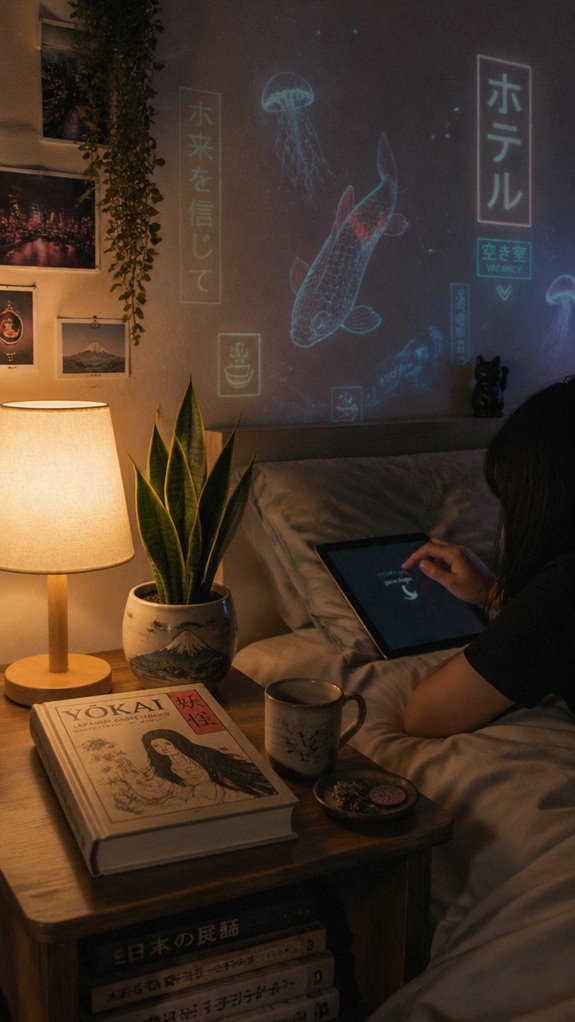
In the digital age, orchestrating a sleep-friendly evening routine functions much like debugging a notoriously unstable codebase—each component must be meticulously curated to prevent catastrophic system failures.
You’re the lead engineer of your circadian system, and blue light is the rogue process threatening stability. You block it with preconfigured night modes, warm lights, and printed materials—analog backups in a digital world. Snake plants can also enhance your sleeping environment by improving air quality, making them a great addition to your space.
Just as a patch prevents a system crash, a structured wind-down resets your neurophysiological state. Think of it as patching your bedtime to avoid the “Ghost in the Shell”—an alertness bug infiltrating your sleep architecture.
Best Tech Tools to Protect Your Sleep
Managing the labyrinthine inefficiencies of digital sleep hygiene often resembles debugging a legacy codebase riddled with memory leaks—every line of blue light from devices like smartphones, tablets, and e-readers acts as a rogue process siphoning your circadian stability.
Tech tools function as patches, filters, and system updates:
- Blue light filter apps that shift screen color temperature toward warmer hues, akin to firmware patches.
- Night mode features, like iOS’s Night Shift or Android’s Night Light, serve as scheduled script executions to minimize blue spectrum interference.
- Hardware solutions like e-ink readers, reducing emission vector, stand as lightweight kernels replacing the bloated GUI processes.
Additionally, using recommended reading glasses can further mitigate the adverse effects of screen exposure on your sleep quality. Implement these modules to restore system integrity before “sleep” crashes entirely.
Light-Blocking Sleep Mask
When the system architecture—our circadian rhythm—begins to experience memory leaks from relentless blue light prompts, it’s the human hardware that suffers crashes and degraded sleep modules.
Enter the light-blocking sleep mask, a rudimentary patch akin to installing a real-time firewall during user sleep cycles. It isolates neurophysiological processes from disruptive wavelengths, preventing melatonin suppression—much like a software sandbox. Brands like Manta or Latitude deploy opaque filters that emulate the darkness of a “Ghost in The Shell” blackout. It’s the simplest patch, but vital: a manual override to re-establish system integrity amidst the chaos of unchecked screen processes. Additionally, using a saddle chair to improve posture while using screens can further enhance sleep quality by reducing physical stress on the body.
Light Sensitivity Disrupts Melatonin
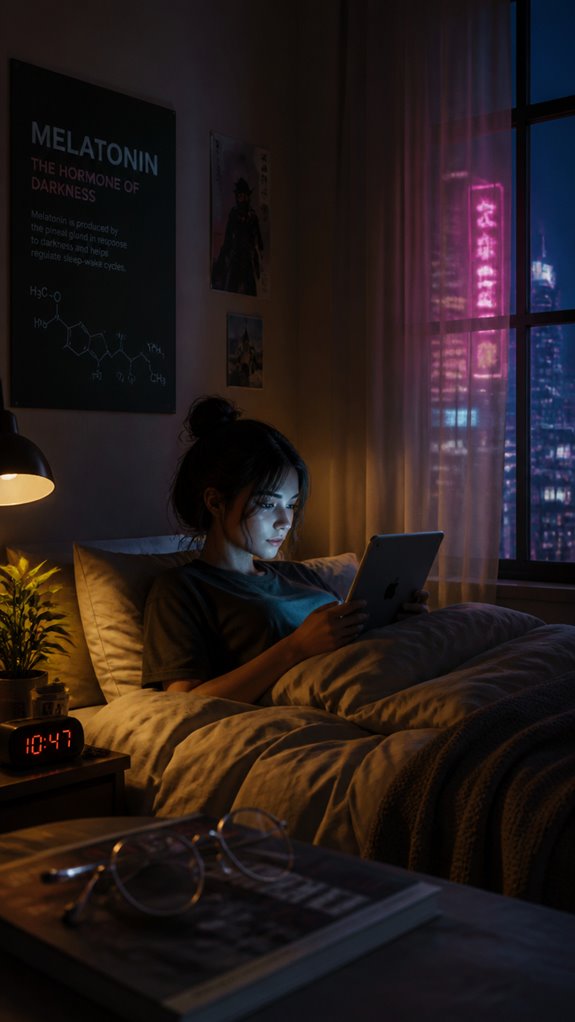
Light sensitivity is the ultimate bug in the sleep subsystem, causing melatonin suppression with military-grade precision.
Imagine this:
- Blue light (460-480nm) acts like a rogue thread planting false ‘day’ signals, up to five times more disruptive than green or red.
- Tiny lux levels (5–40) cause 78% suppression in kids—think of it as a memory leak undermining restorative processes.
- Even after shutdown, melatonin levels stay degraded, like a memory corrupted after runtime.
In this black-box system, calibrating for spectral wavelength is the only way to prevent a total system crash—your sleep depends on it.
Moreover, extended exposure to screens can lead to swollen ankles from sedentary behavior, compounding the negative effects on overall health.
Desk Lighting Adjustments
You control the environment, but neglecting lighting settings risks crashing your circadian algorithm. Switch from harsh, cool-white LEDs to warm, amber hues, mimicking benign system defaults.
Dim ambient lights below 200 lux, akin to limiting API calls—overexposure triggers melatonin suppression. Emulate a “Ghost in the Shell” scene: subtle, warm, almost organic.
These granular tweaks consolidate stability, preventing your nightly system from going offline prematurely. After all, you’re not just optimizing code; you’re debugging your biological infrastructure. Incorporating circadian desk lamps can further enhance the quality of your light environment.
Adjusting Screen Brightness Accordingly
Adjusting screen brightness forms the keystone of any self-respecting bio-optimization script—think of it as mandatory patch deployment to prevent your visual subsystem from overheating or leaking resources due to excessive blue spectrum load.
If crisp, radiator-shredding visuals are your goal, then consider:
- Setting darker, warmer tones akin to a terminal in maintenance mode, avoiding the relentless blue blitz comparable to a “Ghost in the Shell” neon invasion.
- Dimming displays to below 100 lux, mirroring your room lighting, to decrease melatonin suppression and keep your circadian kernel from crashing.
- Using adaptive night modes to automate this process, so your eyes don’t have to debug your sleep schedule manually—automation as a lifehack for human hardware integrity.
Additionally, proper screen brightness can significantly reduce eye strain and enhance overall comfort during extended screen time.
FAQ
Can Blue Light Exposure During the Day Still Impact Nighttime Sleep?
Daytime blue light exposure can still impact your sleep if it is too intense or prolonged, suppressing melatonin and disrupting your circadian rhythm. To stay in control, balance natural light during the day and limit artificial blue light.
Are There Long-Term Health Consequences of Chronic Blue Light Exposure?
Chronic blue light exposure could drastically disrupt your health, potentially leading to serious issues like increased cancer risk, disrupted hormones, or cognitive decline. Take control by limiting exposure, especially during evening hours, to safeguard your well-being.
Does the Type of Device (Smartphone, Tablet, E-Reader) Matter for Blue Light Effects?
Yes, the device type impacts blue light effects; e-readers emit less blue light, especially when dimmed, compared to smartphones and tablets. You control exposure by choosing devices with built-in filters, adjusting brightness, or using night modes.
How Quickly Does Blue Light Impact Melatonin Suppression After Exposure?
You’ll notice melatonin suppression starts within minutes of blue light exposure; your brain stays alert, your sleep cycle shifts, and your body’s natural rhythms get disrupted, all happening faster than you might expect when you keep those screens on late.
Are Children and Teenagers More Vulnerable to Blue Light’s Effects on Sleep?
Children and teenagers are more vulnerable to blue light’s effects because their eyes let in more blue light, and their developing circadian rhythms are more easily disrupted, making it harder for them to fall asleep and get restful, restorative sleep.
References
- https://lifestylemedicine.stanford.edu/screen-time-and-sleep-its-different-for-adults/
- https://www.uclahealth.org/news/article/block-screens-blue-light-to-get-better-sleep
- https://pmc.ncbi.nlm.nih.gov/articles/PMC3047226/
- https://news.virginia.edu/content/qa-your-screen-time-ruining-your-sleep
- https://www.calm.com/blog/screen-time-before-bed
- https://www.medicaldaily.com/how-blue-light-screens-disrupts-your-sleep-cycle-melatonin-production-474956
- https://www.youtube.com/watch?v=j4lX-3KuJ8U
- https://www.sleepfoundation.org/how-sleep-works/how-electronics-affect-sleep
- https://drkumardiscovery.com/posts/action-spectrum-melatonin-regulation-humans-evidence-novel-circadian/
- https://www.colorado.edu/today/2022/01/25/even-minor-exposure-light-bedtime-may-disrupt-preschoolers-sleep
- https://iovs.arvojournals.org/article.aspx?articleid=2160933
- https://pmc.ncbi.nlm.nih.gov/articles/PMC8933063/
- https://www.sleepfoundation.org/bedroom-environment/light-and-sleep