Ever feel like your brain’s buffering at 3 PM? That’s probably your air quality crashing harder than legacy code on a Friday deploy.
I’ll never forget the day I realized my “productivity slump” was just me breathing 1000+ ppm CO₂ all afternoon. My Arduino sensor setup revealed the horror: my cozy home office was basically a cognitive gas chamber. Brain fog. Headaches. The existential dread of debugging while hypoxic.
Now? I run a Coway Airmega on max, crack a window, and keep a plant cemetery near my desk. The difference is wild. My pull requests actually make sense.
—
Why My Desk Plants Died and My Productivity Survived
Last winter I went full “wellness dev” and stuffed my office with snake plants and peace lilies. Thought I’d biohack my way to clean air. Spoiler: I overwatered everything. Root rot. Fungus gnats. The moisture actually spiked my humidity and, ironically, degraded my air quality. Classic overengineering.
That failure taught me something: simpler beats smarter. HEPA filtration, basic ventilation, and a humble carbon dioxide monitor for home office setups outperform my green thumb every time. Sometimes the best optimization is deleting what doesn’t work.
Quick Takeaways
- Install HEPA filters and replace them regularly to reduce dust, VOCs, and airborne pollutants that impair focus.
- Ensure continuous ventilation with mechanical systems to prevent pollutant buildup and maintain fresh airflow.
- Use real-time CO₂ monitors to optimize ventilation and prevent cognitive fatigue caused by high CO₂ levels.
- Minimize indoor pollution sources like smoking and certain cleaners to maintain a healthier, distraction-free environment.
- Incorporate air purifiers validated for pollutant removal to support mental clarity and sustain productivity.
Why Indoor Air Quality in Your Home Office Matters
When the core hardware—your brain and respiratory system—are operating under subpar conditions, the entire software stack begins to falter, reminiscent of a failed debug in “Ghost in the Shell.” You may notice decision-making latency, sluggish focus, and increased error rates.
Dust, VOCs, elevated CO2, all introduce bugs into your mental processes, corrupting peak performance. It’s like running a critical patch, but the environment still injects buffer overflows.
Without proper app elevation—meaning fresh air—your mental OS crashes during deep work. Hardware and environmental misconfigurations become the silent killers, sabotaging your productivity with the subtlety of a memory leak. Incorporating ergonomic furniture, such as meditation stools, can also promote a conducive work environment.
How to Identify and Reduce Indoor Air Pollutants
Identifying and reducing indoor air pollutants is akin to debugging a stubborn memory leak—glimpse the environment’s logs, run diagnostic tools, and locate the rogue processes draining your cognitive resources.
Your “system” might appear stable externally, but covert processes—VOCs, dust, mold spores—cause silent degradation. Think of HVAC filters or electrode cycles as code dependencies; neglecting them invites runtime errors like headaches or fatigue.
Just as in Ghost in The Shell, where unseen bugs sabotage shell integrity, unseen pollutants wreck focus. Profiling your indoor air’s health resembles code review—spot the anomalies, isolate the culprits, patch or quarantine—because system stability hinges on cleaner, leaner inputs. Investing in top psoas massage devices can also provide relief and enhance your overall well-being.
Natural and Mechanical Ways to Improve Indoor Air Quality
In the complex code of indoor air quality management, relying solely on passive variables like passive air exchange or organic greenery is akin to trusting deprecated dependencies in a critical runtime—fragile, unpredictable, and ultimately ineffective against a runaway process of pollutants.
You’re effectively bypassing core system logic, risking stack overflow in your mental kernel.
Control here requires active intervention: deploying HEPA filters, scheduled filter replacements, and mechanical ventilation—akin to patching vulnerabilities before system failure. Just as “Ghost in the Shell” reveals, your infrastructure must be consciously optimized, or else the decay becomes an unavoidable feature of your environment’s runtime. Incorporating inversion tables can also promote physical comfort, ensuring that your workplace encourages sustained focus and productivity.
How to Maintain Consistent, Healthy Indoor Air for Concentration and Wellbeing
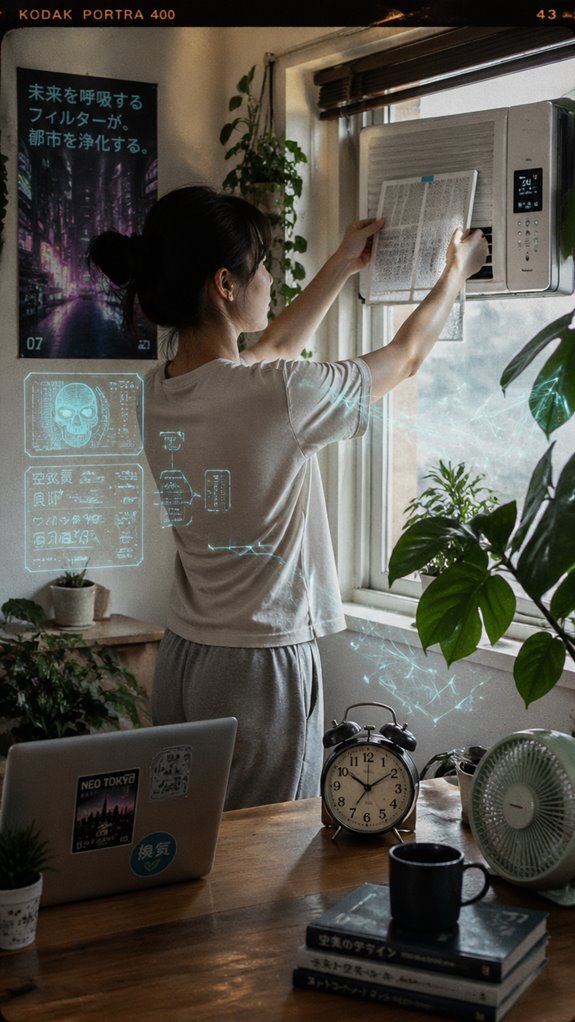
Maintaining consistent, healthy indoor air for concentration and wellbeing resembles debugging a runaway system; if you neglect core updates—like filter replacements or ventilation upkeep—you invite critical failures that cascade through your decision-making processes.
As any dev knows, neglected code can cause memory leaks, stack overflows—morbidity akin to the “Ghost in the Shell” scenario, where the infrastructure collapses before sentience kicks in.
Your HVAC is the runtime environment—if filters aren’t refreshed, particulate errors propagate downstream, causing cognitive slowdowns.
Embrace preventative maintenance like a CI/CD pipeline—routine, predictable, essential. Incorporating elements such as high-torque walking pads can significantly enhance your workspace by promoting movement and boosting air circulation.
Air Purifier Purchase Success
Much like debugging a catastrophic memory leak in a legacy codebase, selecting the right air purifier hinges on understanding where the system fails—be it in filtration efficacy, sensor accuracy, or airflow dynamics—and then addressing that failure with surgical precision.
You must zero in on the critical bugs—particulates, VOCs, or microbial vectors—without drowning in redundant logs.
Choosing units like a Blueair or Dyson is akin to deploying a patch, running tests that validate real-time data without false positives.
This isn’t just about buying another gadget; it’s the strategic refactoring of your environment’s core infrastructure for sustained cognitive throughput, Ghost in the Shell style. Additionally, utilizing CO₂ monitors helps ensure optimal air quality, preventing cognitive decline associated with poor ventilation.
Dust Accumulation Hampers Airflow
Dust accumulation in a home office mirrors software bloat—an insidious, invisible layer silently degrading core system performance while you’re busy debugging creative blocks. Like a poorly managed cache, dust clogs airflow pathways—impaired ventilation turning your room into a stagnation zone.
This poisoning of the oxygen supply leads to reduced cognitive throughput, akin to a server choking on malformed packets. Surface debris, pet hair, and airborne spores discretely sabotage airflow, forcing your HVAC to work triple-time, like running a debug cycle on a legacy mainframe that refuses to boot.
Basically, dust is the “Ghost in the Shell” of your infrastructure, haunting efficiency with microscopic sabotage. Investing in top earbuds for quality can help create an environment that minimizes distractions and enhances focus while working.
Air Quality and Breathing Ease
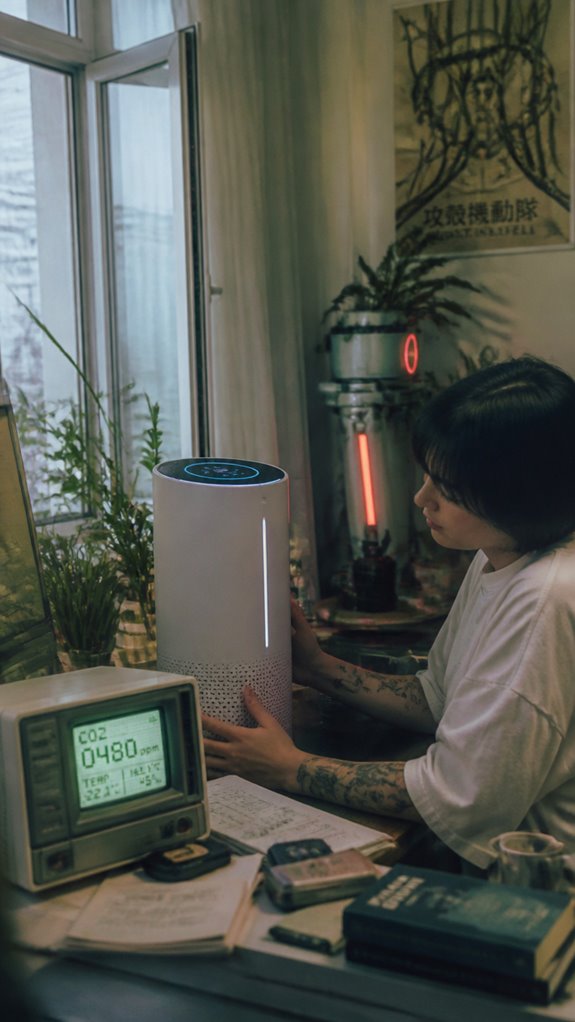
When your home office environment devolves into a semaphore failure—where the oxygen supply default resets into a pressureless backlog—you realize that the core of cognitive performance hinges on real-time air quality metrics.
It’s akin to debugging a memory leak in a system—without visible indicators, you’re flying blind. CO2 levels above 1,000 ppm throttle decision-making, much like a system bogged by unnecessary bloat. VOCs, dust, mold spores—these are the bugs lurking in your infrastructure, degrading processing efficiency. To maintain peak performance, consider incorporating top blue light face mists into your routine, as these can help combat the skin fatigue caused by prolonged screen exposure.
To optimize, deploy HEPA filters, monitor airflow, and update filters like patching vulnerabilities—lest your mental RAM crashes under the weight of preventable errors.
Adjusting Chair Height Improves Posture
Unchecked, misaligned posture is the silent bug lurking beneath the code—a memory leak that siphons cognitive resources and degrades system stability.
Adjusting your chair height is akin to deploying a critical patch.
Key priorities include:
- Ensuring your feet flat on the floor to prevent micro-kernel crashes in spinal alignment.
- Keeping knees at a 90-degree angle for ideal blood flow—no more “almost there” positions.
- Aligning your monitor top at eye level, like setting the correct viewport parameters.
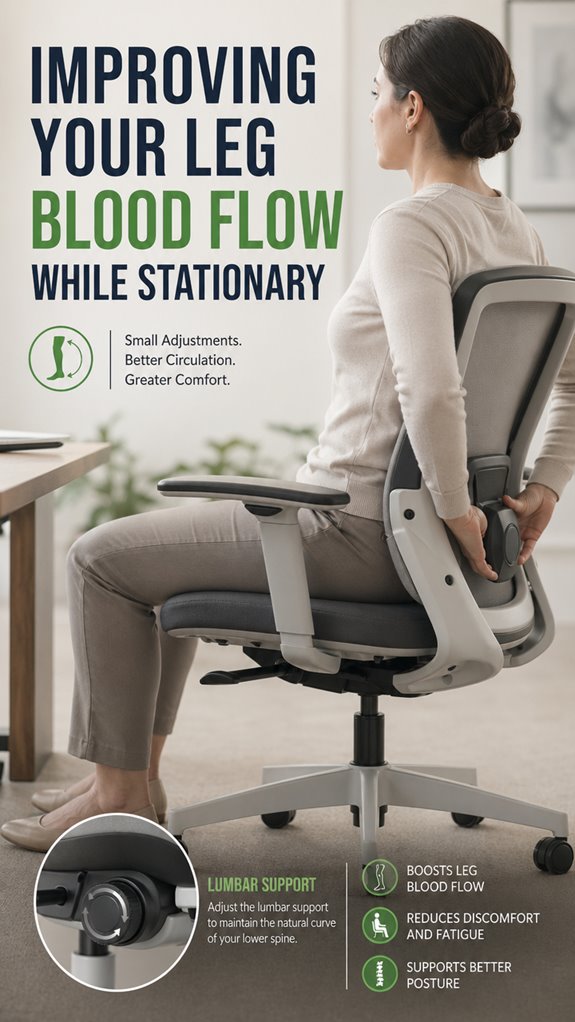
- Supporting lumbar curvature to avoid ‘Blue Screen of Pain’ crashes in your lower back.
- Using adjustable arms to avoid interface conflicts between wrists and desk hardware.
In this system, control is ultimate—don’t let ergonomic bugs persist. Implementing proper positioning can significantly enhance developer ergonomics and overall productivity.
FAQ
Can Specific Plants Significantly Reduce Indoor Air Pollutants in My Home Office?
Yes, you can control air quality with specific plants like pothos, snake plants, and peace lilies. They actively filter VOCs, improve humidity, and naturally reduce indoor pollutants, helping you focus better and create a healthier home office environment.
How Often Should I Replace or Clean My Air Purifier Filters?
You should replace or clean your air purifier filters every 6 to 12 months, depending on usage and manufacturer instructions. Regular maintenance guarantees peak performance, giving you better air quality and clearer focus in your home office.
Are There Any Safe yet Effective Methods to Eliminate VOCS From Furniture?
You can safely eliminate VOCs by increasing ventilation, using activated carbon filters, and placing air-purifying plants like pothos or snake plant in your space. Regularly clean furniture, choose low-VOC products, and avoid synthetic fragrances.
What Are the Best Practices for Ventilation During Different Seasons?
You should open windows for 15 minutes daily to boost air quality; in colder months, utilize cross-ventilation; during warmer seasons, run exhaust fans or air purifiers. Control airflow to maintain a healthy, productive environment year-round.
How Do I Measure Indoor Air Quality Levels Accurately at Home?
You can measure indoor air quality accurately by using dedicated air quality monitors with sensors for CO2, VOCs, and particulates. Place them near your workspace, regularly check readings, and track changes to maintain ideal air purity and focus.
References
- https://dictionary.cambridge.org/us/dictionary/english/main
- https://www.zacks.com/stock/quote/MAIN
- https://www.merriam-webster.com/dictionary/main
- https://www.youtube.com/watch?v=7RH_MDEmemc
- https://www.dictionary.com/browse/main
- https://en.wiktionary.org/wiki/main
- https://en.wikipedia.org/wiki/Main
- https://www.flexispot.com/spine-care-center/5-ways-to-improve-air-quality-in-your-home-office
- https://getuhoo.com/blog/home/the-breath-of-productivity-the-importance-of-air-quality-in-your-home-office/
- https://jan-pro.com/richmond/9-ways-to-improve-indoor-air-quality-in-your-office/
- https://flatheadjanitorial.com/2024/06/19/dust-accumulation-in-office-environments/
- https://homebusinessmag.com/businesses/go-green/fresh-air-better-focus-improving-air-quality-office-spaces-healthier-workdays/
- https://www.safetytrainingservices.net/sts-blog/bid/356079/8-great-ways-to-improve-the-indoor-air-quality-in-your-office-or-home
- https://www.lung.org/blog/indoor-air-quality-improvements
- https://www.epa.gov/indoor-air-quality-iaq/office-building-occupants-guide-indoor-air-quality
- https://norwegianscitechnews.com/2020/04/home-office-5-tips-for-good-indoor-air-quality/
- https://epodcastnetwork.com/why-the-air-in-your-home-office-might-be-killing-your-productivity/