
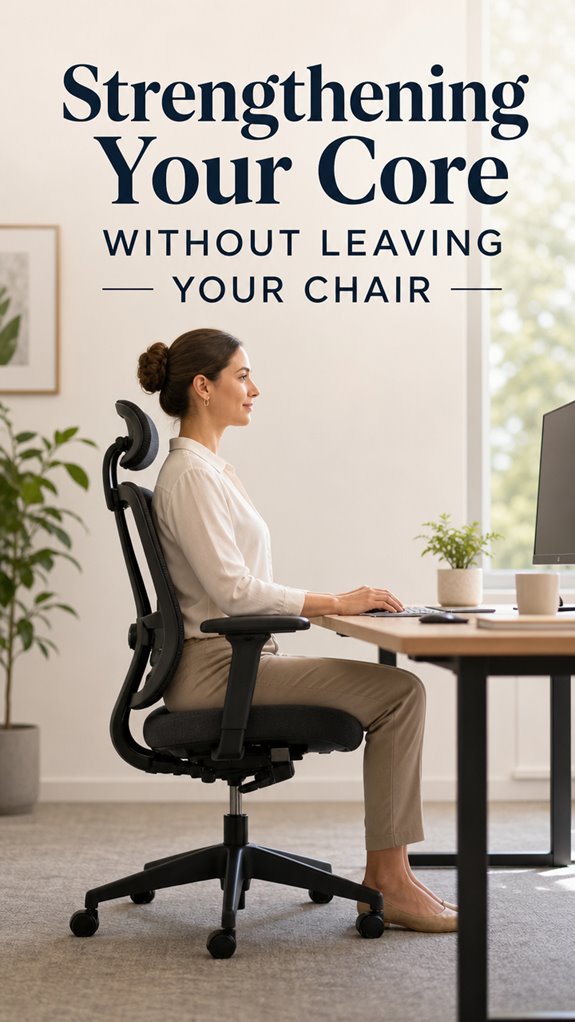
Tired of feeling like a crumbling legacy system by 3 PM? I fixed this without buying a standing desk I’ll never use.
My back staged a revolt last sprint. Eight hours of slouching. Debug sessions ruined by sciatica. Embarrassing.
Now? Toe-taps under my desk. Reverse crunches in my ergonomic chair. Pelvic tilts while my code compiles. Micro-movements. Hotfixes for my failing meat-hardware.
The lumbar support helps. Barely. Core engagement matters more.
Will my posture ever be “production ready”? Unclear. But the pain stopped escalating. Small wins.
How I Survived the 2023 Deploy Week Back Spasm Crisis
Forty-seven hours at my desk. The final build pushed Friday 2 AM. I stood up. Something snapped. Not code. Me.
My physiotherapist called it “programmer’s hunch.” Said I needed dynamic sitting, hip flexor stretches, nerve gliding exercises. I laughed. Then paid for MRI scans.
Now I set pomodoro timers for movement. Glute activation between standups. Diaphragmatic breathing during retros. My spine’s technical debt is slowly clearing. Still haunted by that week though. Some legacy bugs never fully resolve.
Quick Takeaways
- Perform seated micro-movements like toe-taps, reverse jackknives, and foot lifts to activate core muscles passively.
- Use ergonomic supports such as lumbar pillows and adjustable footrests to maintain proper posture and engage core stability.
- Incorporate regular seated posture checks—align ears over hips and relax shoulders—to prevent strain and reinforce core engagement.
- Practice pelvic floor exercises from your chair to strengthen foundational core muscles and prevent system failures.
- Utilize tools like meditation stools and ergonomic inserts to promote core activation and enhance overall seated stability.
Why a Strong Sitting Core Improves Your Posture and Health
When your sitting infrastructure falters—say, the eternal struggle of slumping shoulders or a stubborn lumbar bug—you realize a weak core isn’t just a UX issue; it’s a systemic vulnerability in your workflow.
This fragility hampers smooth operational flow, causing “error states” like back pain and compromised posture. A compromised core resembles a malfunctioning kernel module, destabilizing your ergonomic OS.
Strengthening it acts like a necessary software patch—improving stability, accuracy, and performance.
In essence, you’re debugging the hardware of your biological system, much like patching a “Ghost in the Shell” server—except you’re still working with flesh, not firmware. Posture correctors can serve as effective tools for enhancing alignment and overall health, acting as reminders to support your core strength.
How to Assess Your Current Core Strength and Needs
Diagnosing your core strength is akin to running a baseline debug on a legacy system—it reveals not only surface errors but also lurking bugs deep within the architectural code.
As a senior dev amid endless tabs and runtime errors, you realize that neglecting internal diagnostics invites catastrophic failures.
Your initial task: execute a series of user impact tests—seated toe-taps, reverse jackknives—each a component test revealing weak links.
This isn’t about vanity metrics; it’s about understanding if your foundational modules—abs, back, pelvis—can handle real-world load without crashing.
Think of it as “Ghost in the Shell” diagnostics for your human hardware, sans the noir aesthetic. Incorporating an adjustable footrest can enhance your posture and overall comfort while you focus on these assessments.
Easy Seated Core Exercises to Boost Activation and Posture
In the relentless debugging marathon of a prolonged sitting session, your core—both the hardware backend and the user interface—becomes the most overlooked vulnerability in the system. Like bug-ridden code, passive hardware failure risks cascading chaos, leading to back pain, misaligned posture, and compromised stability. To maintain peak operational parameters, execute quick, modular routines: seated toe-taps, reverse jackknives, and in-chair foot lifts. These microservices activate core functions, running lightweight routines to prevent systemic crashes. Incorporating the right meditation stool can also enhance your core engagement by promoting better posture during seated exercises.
Simple Posture Tips to Support Your Core While Sitting

Even amidst the relentless runtime of back-to-back video calls and the infamous “update required” notifications of office ergonomics, your sitting posture serves as the critical middleware that keeps your core modules functioning without catastrophic crash logs.
As a seasoned developer debugging the ghost in your own hardware—namely, your spine—consistent alignment acts as the patch that prevents system errors like back pain or fatigue. Ears over hips, shoulders relaxed—think of it as optimizing your UI layout.
Engage your core passively, like a well-placed comment in code, ensuring your infrastructure remains rock-solid amidst the chaos of constant inputs. After all, even Neo wouldn’t code efficiently with a faulty console. Incorporating top desk heaters can help maintain a comfortable environment, which is essential for focusing on your posture.
Micro-Movements to Keep Your Core Active All Day
While your ergonomic script may have been optimized with the latest Grammarly-approved posture tips, the real bug lies in the unpatched micro-movements your sedentary system fails to execute in the background. Like a legacy OS running on outdated firmware, your core defaults to idle mode, ignoring vital background processes—tiny muscle activations that keep the system responsive.
Engaging these micro-movements—a toe-tap here, a subtle abdominal brace there—acts like patches to a volatile kernel. Ignoring this leads to system crashes—back pain, stiffness—yet, with disciplined reinitialization, you restore fundamental stability.
Basically, upgrade your default idle with micro-injections of core firmware before your infrastructure, much like “Ghost in the Shell,” faces an existential freeze.
Adjustable Lumbar Support Pillow
Just as legacy software deteriorates under outdated configs or sluggish feedback loops, your lumbar support—crucial for stability—needs a systematic upgrade. Enter the adjustable lumbar pillow, which functions as the patch patching your compromised ergonomic kernel. Additionally, incorporating relief tips for a stiff neck can enhance your overall comfort while seated.
| Feature | Benefit | Implementation Snippet |
|---|---|---|
| Customizable height | Ensures precise lumbar alignment | `setHeight(int level)` |
| Memory foam core | Provides adaptive support with minimal latency | `pressureTest()` |
| Velcro attachment | Seamless integration, easily modifiable | `attach()` / `detach()` |
| Breathable fabric | Reduces sweat error states during long sessions | `getFabricType()` |
| Multi-position lock | Lock in ideal configurations, preventing drift | `lockPosition()` |
Because, unlike “Ghost in the Shell,” we can’t just debug a human spine—yet.
Sore Lower Back Pain

When dealing with chronic lower back pain, it’s akin to running an outdated legacy system—full of bugs, vulnerable to crashes, and crying out for a desperate system reboot. The lumbar spine operates as the critical kernel, yet persistent stress—emanating from weak core modules—overloads the entire architecture.
This forces ligaments and muscles to compensate like AI trying to run Windows ME on vintage hardware. Reliance on faulty stabilization routines leads to pain escalation, reminiscent of Ghost in the Shell’s endless system loops.
Optimizing core engagement isn’t just memory management; it’s a necessary patch, preventing those relentless errors—stiffness, inflammation, recurring crashes—that sabotage smooth operation. Incorporating lumbar support rolls can further enhance your posture and provide the stability needed to alleviate discomfort.
Pelvic Floor Exercises Seated
In the grand architecture of human stability, the pelvic floor acts as the often-overlooked kernel module, quietly orchestrating a complex symphony of support within the core subsystem.
When this core component glitches—think of a server crash—problems cascade into UI failures like in “Ghost in the Shell,” exposing our fragility.
Seated pelvic floor exercises—levator ani, pubococcygeus—are debug routines you can run on your human infrastructure, reinforcing bandwidth for control and preventing the dreaded data leak: incontinence.
Engage this subsystem by contracting the muscles as if holding a vital packet—tighten, hold, relax—ensuring your body’s firmware remains resilient amid endless debug cycles. Incorporating regular breaks during prolonged sitting can also help alleviate pelvic floor discomfort and enhance overall core stability.
Ergonomic Chair Adjustments
A poorly adjusted ergonomic chair acts as the latent bug in your human hardware, quietly corrupting your posture and accumulating a backlog of musculoskeletal errors that would make even Ghost in the Shell’s cybernetic interfaces weep.
- Make certain ears are over hips—precise alignment prevents cascading neck strain.
- Adjust lumbar support for a neutral spine—think of it as buffer overflow protection.
- Set seat height for feet flat—avoids dangling code, ensures proper load balancing.
- Keep armrests at elbow height—eliminates unnecessary wireframes in shoulder joints.
Additionally, regular posture checks can help maintain optimal alignment throughout your workday.
FAQ
Can Seated Exercises Replace Traditional Core Workouts Effectively?
Seated exercises can be surprisingly effective, giving you near-superhero core strength if you’re consistent. You control your progress, focus on quality, and combine these with regular movement to replace traditional workouts and stay powerful all day long.
How Quickly Can You Notice Improvements in Posture From Seated Core Exercises?
You can notice posture improvements within a few weeks of consistent seated core exercises, especially when combined with good sitting habits. Regular effort boosts your muscle awareness, making you feel more aligned and confident throughout your day.
Are There Risks Associated With Passive Core Engagement Devices Like Slendertone?
Passive devices like Slendertone might mean minimal risks, but you should cautiously consider concerns like skin irritation, electrical sensitivity, or improper use. Always consult professionals, practice prudence, and prioritize personal safety for stable, secure core strengthening.
How Often Should I Perform Seated Core Exercises for Best Results?
You should aim to perform seated core exercises daily or at least 3-5 times a week. Consistency is key; start with manageable sets of 10-15 repetitions, and gradually increase intensity as your core strength improves.
Can Poor Sitting Habits Negate the Benefits of Core Strengthening Exercises?
Poor sitting habits can sabotage your core gains, like a thief in the night stealing progress. You must actively maintain good posture and mindful practices to truly harness the benefits of your exercises and stay in control of your health.
References
- https://gb.slendertone.com/blogs/news/achieve-a-stronger-core-while-working-from-your-desk
- https://www.venustreatments.com/en-gl/blog/how-to-strengthen-your-core-while-sitting-at-your-desk/
- https://acac.com/core-exercises-at-work-acac/
- https://www.healthline.com/health/best-core-exercises
- https://info.totalwellnesshealth.com/blog/bid/344319/8-exercises-you-can-do-discreetly-at-your-desk
- https://www.youtube.com/watch?v=7ObUmCvkjXw
- https://nichecrossfit.com.au/health-wellness/the-core-and-its-relation-to-lower-back-pain/
- https://cnsorthopedics.com/essential-core-strengthening-exercises-for-lower-back-pain/
- https://orthosouth.org/core-strength-back-pain-prevention
- https://pmc.ncbi.nlm.nih.gov/articles/PMC4395677/
- https://www.athletico.com/2021/03/15/how-core-strength-can-help-with-back-pain/
- https://www.youtube.com/watch?v=aNhvncwN_CE
- https://spineina.com/blog/strengthen-your-core-and-support-your-back/
- https://www.cawleypt.net/resources/how-to-strengthen-a-weak-core-exercises-to-prevent-back-pain-and-improve-posture/
- https://neurospinefl.com/blog/f/can-back-pain-be-prevented-with-core-strength-posture
- https://www.jagpt.com/blog/how-to-strengthen-your-core-without-hurting-your-back/
Great content! Keep up the good work!