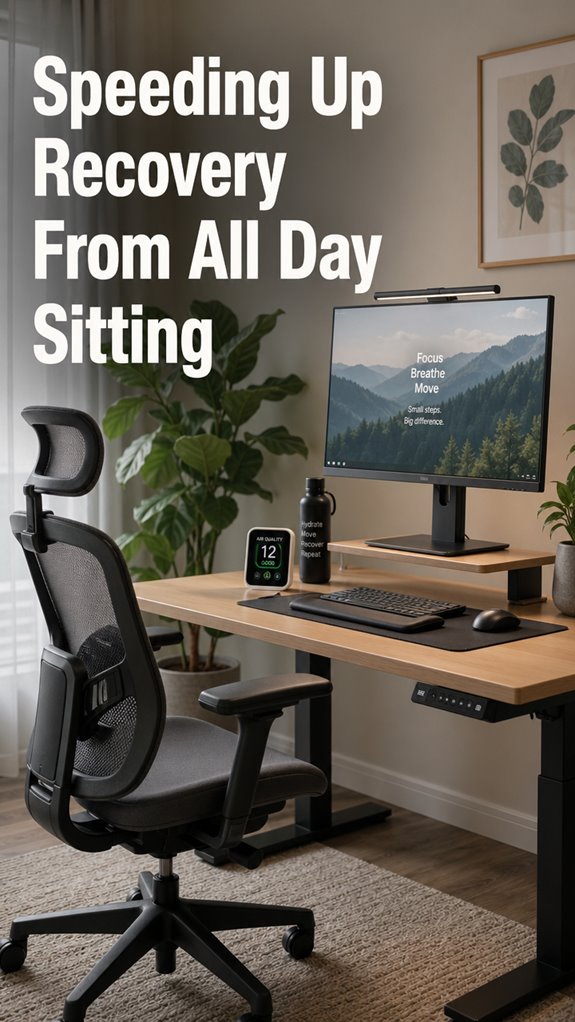
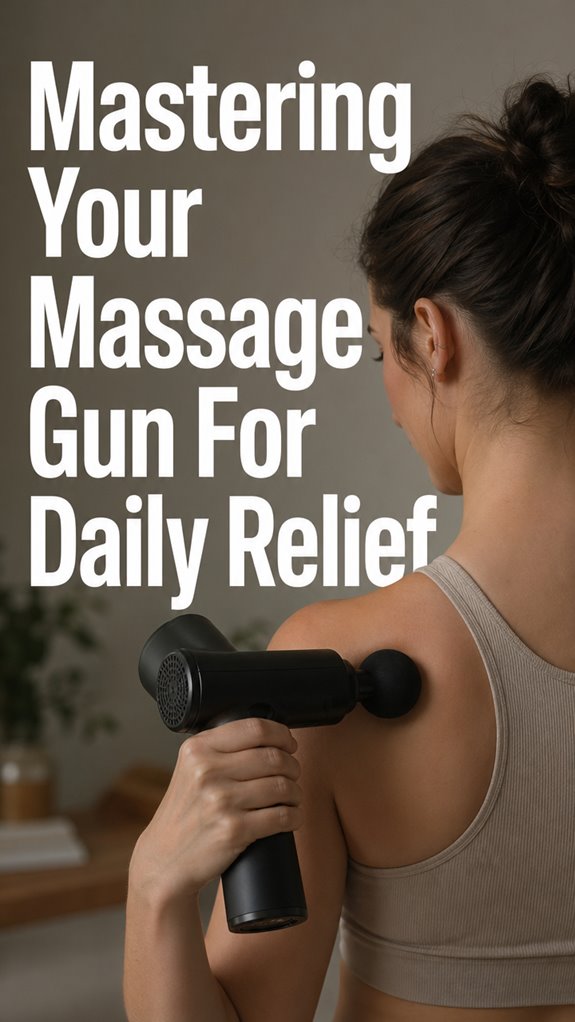
Ever feel like your shoulders are staging a silent protest after eight hours of code? I did. My massage gun became my debugger for human hardware, starting gently before cranking intensity. Learned that the hard way: maxed out on my traps once, couldn’t turn my head for two days. Subtle revenge, my body.
Now I map sessions like sprints. Bullet head for knots. Fork attachment along the spine. Fifteen minutes, then back to the IDE. No shame in treating maintenance as serious as production deploys.
Your infrastructure failing at thirty? Fix it before the outage.
Massage Gun Mistakes Developers Make: My $200 Lesson in Recovery
Bought a Theragun Prime during crunch season. Thought I could brute-force my lumbar pain like a memory leak: just hit it harder. Wrong. Three weeks of daily max-speed sessions left me numb in patches, burning in others. PayPal dispute crossed my mind.
Turned out my “optimization” was just damage. Now I pair percussion therapy with proper ergonomics: standing desk, Herman Miller chair, actual walks. Sleep hygiene matters too, apparently. Recovery isn’t a hotfix. It’s version control for your body, one commit at a time.
Quick Takeaways
- Start with low speeds and gentle pressure, gradually increasing to avoid muscle strain and system errors.
- Use diverse attachments and ergonomic tools to target different muscle layers effectively and safely.
- Log your routine progress regularly to optimize pressure, technique, and recovery outcomes.
- Incorporate targeted deep tissue techniques and proper placement for effective back and deep muscle relief.
- Maintain proper posture, eye care, and controlled movements to prevent hardware-like errors and enhance overall well-being.
How to Choose the Best Massage Gun for Your Needs
When considering the ideal massage gun—a device that functions as an ergonomic patch for buffering the inevitable degradation of your body’s core processing units—you must prioritize hierarchy: power, adaptability, and precision.
As a senior developer steering through the complex codebase of human mechanics after hours debugging postural errors, you recognize that muscle recovery and pain management hinge on raw force and versatility. Choose a model like Theragun or Hypervolt, capable of handling deep tissue requests with relentless efficiency. Additionally, consider how blue light exposure can impact your overall well-being, as prolonged usage of digital devices often leads to increased discomfort that a massage gun can help alleviate. Investing in a massage gun is an important step towards achieving ultimate self-relief through effective muscle recovery and relaxation.
Proper Techniques for Using Your Massage Gun Every Day
In the grand debug session of your daily routine, employing your massage gun functions like a patch rollout—crucial yet often neglected in favor of superficial fixes masking systemic flaws.
Optimal muscle relaxation and pain relief hinge on controlled, hierarchical application: begin at a low speed, gently targeting large muscle groups, then explore trigger points with precision attachments. Moving systematically from origin to insertion ensures resource efficiency, avoiding a catastrophic error state—overuse or direct nerve targeting.
Like balancing code in a runtime environment, your technique requires discipline: sweep, linger, escalate pressure cautiously. Otherwise, you risk corrupting the muscle system, muting its inherent capacity to support an integrated, pain-free performance. To enhance your experience, consider optimizing your desk setup for morning routines, as a well-organized workspace can improve overall well-being and relaxation.
Common Mistakes to Avoid When Using a Massage Gun
Have you ever launched a feature into production only to realize it was flawed at the most granular level, crashing your system from the inside out? Using your massage gun blindly risks triggering unwanted pain management issues.
Overdoing it on sensitive muscle tissues, like nerve hotspots, causes system errors—excessive massage sensitivity leads to false flags, causing discomfort or even injury. Pressing too hard or lingering on trigger points risks corrupting your “user experience.”
Just like debugging Ghost in the Shell’s neural net, you must meticulously calibrate—gradually increasing intensity, avoiding nerve overload, and respecting finite hardware resources—because a rogue command can sabotage your entire relief protocol. For optimal comfort and support, consider using a gel wrist rest to enhance your overall experience.
How to Incorporate Your Massage Gun Into Your Routine for Maximum Relief
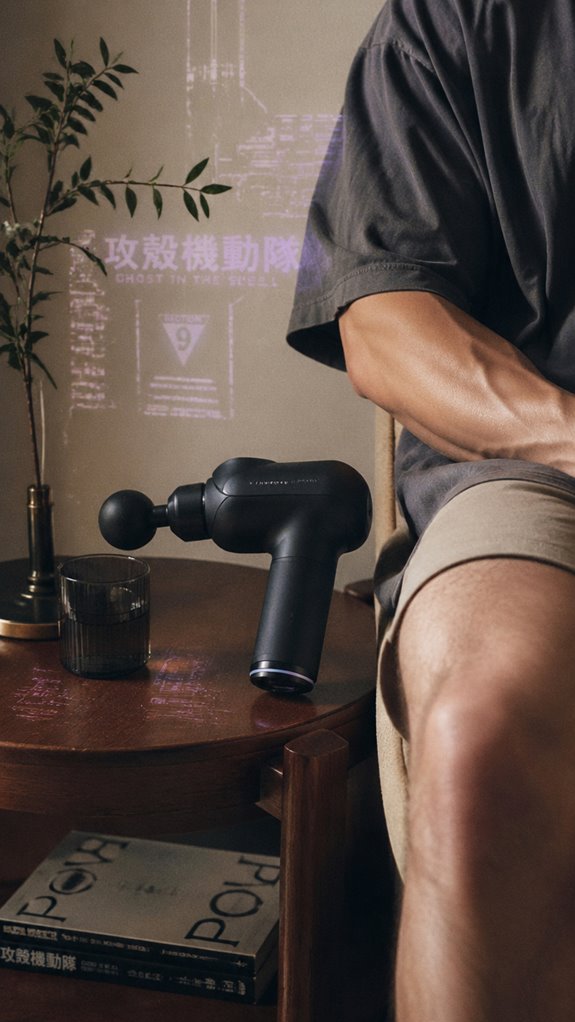
Implementing your massage gun into a daily routine resembles debugging a complex codebase—initially straightforward, then revealing subtle runtime errors threatening system stability.
Using a massage gun daily is like debugging code—start simple, watch for hidden errors, and refine your approach for smooth recovery.
As a senior dev fraught with sedentary bugs, you recognize the importance of proactive muscle recovery routines to prevent catastrophic stress and downtime.
Integration involves sequentially targeting large muscle groups—quads, calves, glutes—using low settings, then incrementally escalating to faster speeds.
This patch optimizes circulation, reduces DOMS, and enhances overall resilience.
But beware: overuse crashes your progress, like ghostly bugs—so log carefully, avoid hardware conflicts, and keep in mind, sometimes, the best fixes are the simplest: controlled, deliberate pressure, avoiding system overload.
Initial Handheld Massage Gun Trial
Ever wondered if your initial foray into manual muscle recovery can avoid a notorious NullPointerException?
Powering up a massage gun resembles debugging a runtime error in an unstable environment—one wrong move crashes your workflow. Start slow, emulate cheat codes for trigger point relief, and warm up your muscles like initializing dependencies.
- Confirm device firmware is up-to-date, eliminating compatibility issues.
- Test trigger points first; they’re like memory leaks—detect early.
- Gradually ramp speed, akin to rolling out a patch in DevOps.
- Avoid hardware “exceptions”: bones and sensitive nerves.
- Wrap up with a cooldown routine—properly closing procedures prevents residual errors.
In addition to using a massage gun, consider incorporating toe stretchers in your routine for improved foot flexibility and overall muscle recovery.
Limited Reach to Back Muscles
Finding your way around the limits of your massage gun’s reach to back muscles mirrors debugging a legacy codebase—frustrating yet reducible through strategic tooling and meticulously calibrated adjustments. The solution resides in optimizing ergonomic design and attachment versatility. Exceptionally designed handles and arrayed attachments, like the bullet and flat head, extend system capabilities—acting as API hooks for formerly inaccessible paraspinal segments. These components emulate hardware acceleration in software, allowing you to bypass natural constraints. In the same way that top vertical mice promote comfort in computing, effective massage gun designs ensure user comfort and accessibility. A schematic overview:
| Limitation | Tool Adjustment | Result |
|---|---|---|
| Restricted arm extension | Ergonomic handle extension | Full back coverage with less strain |
| Inaccessibility of spine | Versatile attachment heads | Precise targeting, no software crash |
| Shoulder strain | Optimized attachment placement | Improved reach, reduced error margin |
Targeting Deep Layer Muscles
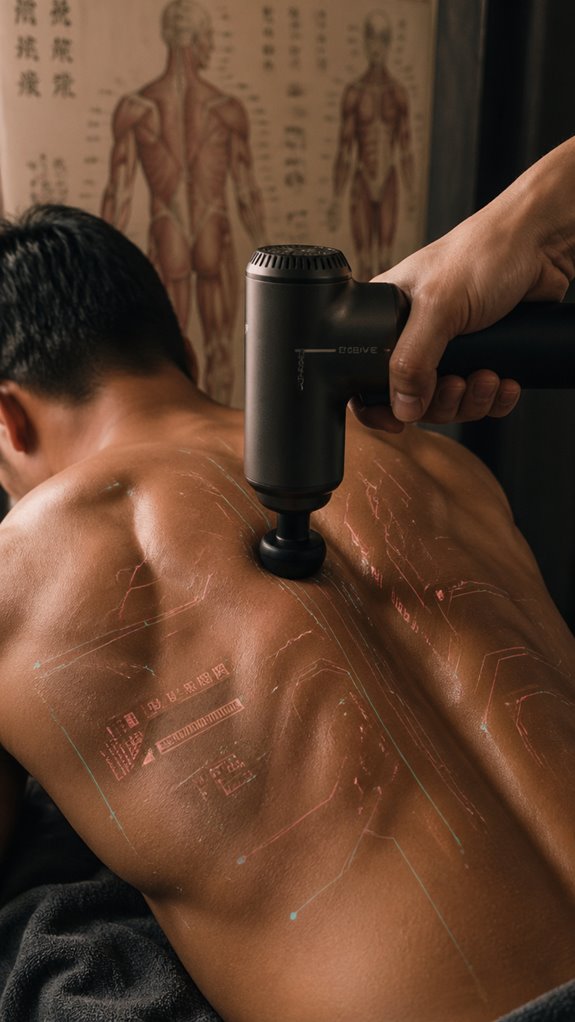
When you prioritize targeting deep layer muscles with your massage gun, you’re debugging a bio-system layered like a tangled codebase—precisely where trigger point therapy confronts stubborn muscle layering issues that cause systemic slowdown.
- Isolate trigger points via strategic sweeps, akin to debugging kernel panics in real-time.
- Use bullet tips to penetrate fascia barriers, forcing the architecture to reset. Wrist wraps can further enhance support during this process.
- Adjust speed and pressure variables to optimize muscle response, avoiding system crashes.
- Surround hotspots, preventing cascading failures in adjacent fibers.
- Leverage anatomy apps like “3D4Medical” as your IDE, debugging muscle-insertion issues with surgical precision.
- Incorporate tools such as muscle scrapers for enhanced relief and efficiency in targeted muscle recovery.
Because sometimes, in humanity’s code, a deep fix is the only way to reconnect.
Customized Grip Techniques
In the relentless runtime of your day-to-day ergonomics, it’s astonishing how the flawed human hardware—the skeletal stack and muscular dependencies—becomes the bottleneck bottling up your productivity pipeline.
When targeting trigger points, a customized grip transforms your massage gun into a debugging tool, initiating muscle activation protocols that resemble code refactoring. Faulty grip techniques cause your system to lag, much like a memory leak. To ensure effective relief, incorporating focus-boosting techniques can help maintain your productivity throughout the day.
Precise pressure and controlled movements ensure you binary-search for relief, bypassing joint and bone errors endemic to prolonged static positioning. Think of it as patching your own hardware—without the need for a firmware update—before your body crashes in a daily stack overflow. Regular eye care habits can also help maintain overall productivity by reducing strain and discomfort during long office hours.
FAQ
Can I Use a Massage Gun on My Tendons Safely?
Yes, you can use a massage gun on your tendons safely if you prioritize tendon health and apply it gently. Focus on controlled movements, avoid bones, and stop immediately if you experience pain, ensuring safe application for effective relief.
How Do I Prevent Bruising or Skin Irritation From Daily Use?
To prevent bruising and skin irritation, you prioritize skin sensitivity, avoid pressing hard, use gentler settings, and limit treatment duration. Gradually increase intensity, monitor response, and focus on controlled movements to protect your skin and muscle tissue.
Is It Okay to Use a Massage Gun Before or After Workouts?
Using your massage gun before workouts primes muscles and boosts circulation for power, while post-workout recovery with it releases tension and enhances muscle relaxation, helping you recover faster and maximize performance for your next session.
How Long Should I Wait Between Sessions to Avoid Overuse?
You should wait at least 24 hours between massage gun sessions to prevent overuse, considering temperature sensitivity and hygiene considerations. This guarantees your muscles recover effectively, avoids tissue damage, and maintains ideal muscle health, power, and performance.
Can a Massage Gun Help With Chronic Muscle Tightness or Conditions?
Did you know 85% of chronic muscle tightness sufferers find relief with targeted massage gun use? It offers powerful muscle relaxation and stress relief by breaking up adhesions, improving circulation, and reducing pain, making it ideal for ongoing conditions.
Summary
Ultimately, mastering your massage gun is akin to debugging a software patch—if you fail to account for system intricacies, the whole runtime crashes. As a dev battling daily latency issues, you realize that without proper technique, you’re just brute-forcing an API call that’s bound to terminate unexpectedly. This is your human hardware’s kernel panic, reminiscent of Ghost in the Shell’s cybernetic dissonance. Embrace the upgrade—optimized routines prevent memory leaks, and perhaps, save your back from a blue screen of despair.
References
- https://www.donnerberg.net/en/blogs/all-posts/massage-gun-attachments-your-guide-to-proper-use
- https://www.rehabandrevive.com/post-1/the-right-way-to-use-a-massage-gun-carpal-tunnel
- https://www.runnersworld.com/uk/health/injury/a46053734/do-massage-guns-work/
- https://www.menshealth.com/uk/fitness/a60009672/how-to-use-a-massage-gun/
- https://www.hingehealth.com/resources/articles/how-to-use-a-massage-gun/
- https://www.youtube.com/watch?v=lclAvTUUaqY
- https://www.healthline.com/health/how-to-use-massage-gun-2
- https://www.youtube.com/watch?v=kxiof42yLkc
- https://www.youtube.com/watch?v=tA99gl-72Ac
- https://peakprimalwellness.com/blogs/wellness/best-massage-guns-for-back-pain
- https://www.hingehealth.com/resources/articles/massage-gun-lower-back-pain/
- https://renpho.com/blogs/wellness-fitness-blog/how-to-use-massage-gun-on-back-tips-for-best-results
- https://www.youtube.com/watch?v=0QqOyocWpOk
- https://www.webmd.com/balance/massage-gun
- https://www.youtube.com/watch?v=fM4e0pNQ4pc
- https://www.consumerreports.org/health/massage-guns/massage-gun-buying-guide-a1197181514/