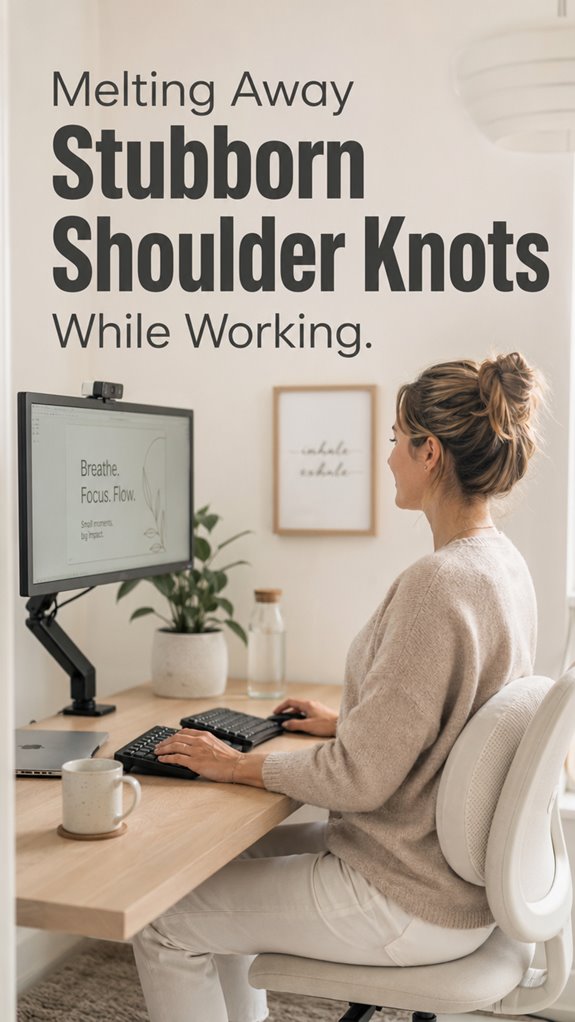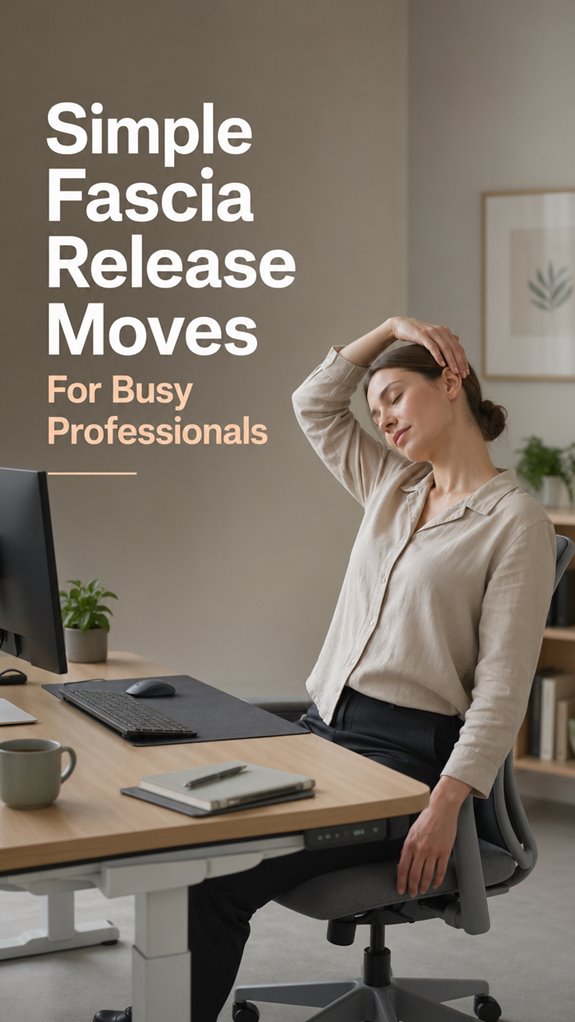
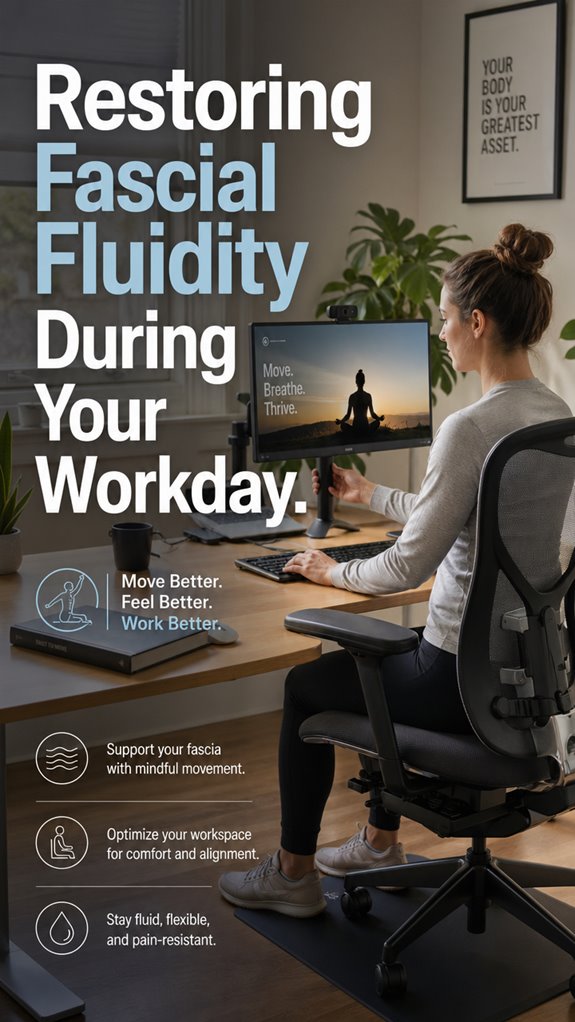
Ever felt your body throwing a 500 error after eight hours at the desk? Yeah, that’s your fascia screaming.
I learned this the hard way. Three years ago, my lower back seized up mid-sprint review. Couldn’t stand straight. Humiliating? Absolutely. Educational? Painfully so.
Turns out fascia’s like spaghetti code. Ignore it, and everything tangles.
Hydration’s my daily commit. Micro-movements? My version of continuous integration. Five desk rotations every hour. A pigeon pose between standups. Sounds ridiculous. Works ridiculously well.
Your body isn’t legacy code you can deprecate. Refactor now, or prepare for total system failure around age forty.
—
Desk Job Back Pain: Why My Facia Collapsed During Crunch Week
Last March, I pulled seventy-hour weeks shipping a feature no one asked for. Water bottle sat untouched. Posture? Think Gollum with a mechanical keyboard. By Friday, standing felt like someone poured concrete into my hips.
The kicker? My Apple Watch kept buzzing about movement. I muted it. Classic.
Physical therapy revealed the truth: dehydrated fascia forms microscopic scar tissue. Like technical debt, but in your actual spine. My therapist mentioned connective tissue dehydration, myofascial release, and something called “creep deformation.” Fancy words for sitting destroys you.
Now I keep a gallon jug. Set Slack reminders. My standup routine includes literal standing up.
Small rituals prevent catastrophic refactoring later.
Quick Takeaways
- Incorporate regular desk stretches and micro-movements to promote circulation and prevent fascia stiffening during work.
- Use foam rolling or massage balls to target adhesions and release fascial tension periodically.
- Stay well-hydrated with water and electrolyte-rich foods to maintain tissue hydration and fascia elasticity.
- Adjust ergonomic setup to ensure proper posture, reducing systemic restrictions and supporting fascia fluidity.
- Perform self-myofascial release and full-range joint movements daily to reprogram and restore fascial flexibility.
Why Fascia Fluidity Is Essential for Your Workday Productivity
Ever wonder why your productivity metrics tank the moment your fascia’s “web” starts acting up? Like a software system with memory leaks, restricted fascial elasticity hampers the body’s data flow, causing lag in movement and cognitive function. Tissue hydration is the critical patch—without it, fascia stiffens, disallowing smooth input/output, much like upgrading RAM without proper maintenance.
When fascia “crunches,” performance degrades, echoing Ghost in The Shell’s critique on corrupted infrastructure. To optimize, you need to prioritize fluidity. Movement, hydration, and self-myofascial release are your debugging tools in this biological codebase, preventing system crashes during your daily grind.
How to Spot Signs of Stiff or Stuck Fascia During Long Hours
When the fascia system begins to lag, the first indicators aren’t as subtle as a few sluggish load times—they manifest as outright performance bottlenecks in your physical pipeline.
Fascial tension emerges as postural cues—hunched shoulders, tilt in the head, or a reluctant back extension—alerting you to a middleware failure. These signals resemble debug logs emblematic of a “Ghost in the Shell” scenario: the infrastructure starting to crack under repetitive stress.
Recognize the signs: limited range of motion, pulling sensations, or persistent stiffness; these are your system’s way of silently throwing errors, begging for an immediate upgrade—dynamic movement and hydration, stat. In addition, implementing effective mouth tape could promote better sleep quality, further aiding in the restoration of your body’s natural fluidity.
Quick Stretches and Movements to Loosen Fascia on the Go
Long-lasting, macro-level system failures—like chronic fascia tightness—manifest as sluggish response times and bottlenecks in your motor subsystem, betraying a hardware-layer issue that software patches alone can’t fix.
To troubleshoot fascia’s “code,” try:
- Micro-movements seated at your desk, akin to rebooting your network—just oscillate your arms or legs gently.
- Dynamic bouncing during breaks—debug your stiffness with every bounce, like clearing cache.
- Foam rolling or massage balls for targeted myofascial release—break those stubborn adhesions.
- Stretch hold times of 1-3 minutes—optimize elasticity, fix illegal crosslinks, and reboot your connective tissue.
Hydrating Foods and Drinks That Support Fascia Health

In the digital domain of human physiology, fascia acts as the underlying code—integral, yet often ignored—highlighting that neglecting hydration is akin to running a production server without proper cooling. Fascia’s success hinges on fascial hydration; dehydration causes systemic failures, resulting in sluggish signal transmission and bottlenecked force flow.
Nutrient timing becomes critical, akin to patch updates, enabling ideal fluid exchange. Drinking electrolyte-rich fluids and consuming water-dense foods like cucumbers, watermelon, and bone broth ensures system stability and enhances reverse osmosis systems, which can be beneficial for full hydration. Moreover, incorporating heated socks into your cold-weather routine can also improve overall body warmth and comfort, thus supporting better circulation for fascial health.
Like debugging a complex script, maintaining fascia requires deliberate input—disregarding this, much like ignoring system logs, invites a cascade of runtime errors in mobility and pain management.
Breathing and Mindfulness Practices to Keep Your Fascia Mobile
Neglecting ideal systemic function often results in cascading failures—akin to a codebase riddled with memory leaks, causing sluggish response times and frequent crashes under minimal load.
Ignoring systemic balance triggers crashes—like buggy code draining resources and slowing performance under pressure.
To optimize fascia mobility, you must leverage breath control and mindfulness meditation as debugging tools for your biological OS.
- Deep, diaphragmatic breathing resets autonomic processes, lubricating fascia fibers.
- Mindfulness meditation blocks background noise of tension, allowing micro-movements to rewire neural pathways.
- Intentional breath tuning during breaks prevents fascia “crunchiness,” like patching memory leaks before a system freeze. Posture sensors can be effective tools for maintaining awareness of your alignment during these practices.
- Integrating these practices keeps your infrastructure responsive, flexible, avoiding the common human “blue screen”—or in this case, chronic tightness.
Additionally, incorporating easy desk stretches can further enhance your fascia’s fluidity and promote circulation throughout the workday.
How to Build a Daily Routine for Maintaining Fascia Fluidity at Work
When your ergonomic setup resembles the most recent Linux kernel update—buggy, unpredictable, and plagued by inexplicable freezes—it signals a system failure originating within, not external malfunctions. To restore fascia elasticity amid this chaos, you must prioritize movement habituation, akin to incremental code refactoring. Integrate micro-movements and full-range shifts into your routine, effectively debugging your natural fascia interface. Regularly engaging in bouncing exercises can also promote hydration and flexibility in your fascia, enhancing overall fluidity.
Freeze moments become opportunities for intermittent self-myofascial release, akin to running health patches during system downtime. Without this internal firmware upgrade, your connective tissue remains “crunchy,” a ghostly anomaly reminiscent of “Ghost In The Shell”—a malfunction waiting for proper scripting. Incorporating tools like wide armrests can significantly enhance shoulder support and relieve tension in your daily routine.
Personal Hydration Routine Discovery

Encountering the perpetual bug of dehydration—akin to a memory leak in a critical app—reminds me my body’s infrastructure is vulnerable. To optimize fascial elasticity, I deploy my hydration techniques:
Dehydration is a memory leak—hydrate regularly to keep your body’s infrastructure running smoothly and fascia elastic.
- Monitor fluid intake like log files—aim for consistent, substantial loads throughout the day.
- Incorporate micro-movements to stimulate circulation, akin to debugging a sluggish app.
- Use dynamic bouncing during breaks, micro-oscillations like system resets for fascia.
- Apply foam rolling—my version of patching code—to break adhesions, improve flow, and maintain tissue integrity. Staying hydrated can significantly reduce brain fog and enhance cognitive function.
Incorporating balance boards into my routine further enhances my workplace wellness by encouraging movement and engagement.
Because, after all, even Ghost in the Shell needs a smooth, hydrated neural interface.
Increasing Joint Stiffness
Ever wonder why your joints keep throwing exceptions like “stiffness timeout” despite deploying the latest stretching patch? Like debugging a system with failed firmware updates, fascia’s fascial memory resists structural integration. Dehydration, chronic stress, and repetitive input cause “crunchy fascia,” locking your joints into a dormant state akin to a kernel panic. Incorporating acupressure mats into your routine can aid in relieving tension and enhancing overall circulation, promoting better joint mobility.
| Condition | Consequence | Fix Strategy |
|---|---|---|
| Cartilage wear | Reduced lubrication | Full-range movement |
| Inflammation | Persistent stiffness | Fluid flow enhancement |
| Sedentary code | System freeze | Micro-movements |
Reprogram the fascia—restore fluidity, optimize joint function—before your body’s hardware becomes permanently bricked.
Footwear’s Impact on Fascia
Is it possible that your footwear choices act like a faulty middleware layer, sabotaging fascia integrity at the system core?
- Excessive shoe cushioning creates a false sense of support, much like a poorly-implemented API that masks underlying bugs.
- Rigid soles hinder micro-movements, akin to stiff code that forces the system to crash during load spikes.
- Elevated heels disrupt plantar fascia signals, similar to misaligned data packets corrupting workflow.
- Ill-fitting shoes generate friction, like software bugs causing memory leaks during critical runtime.
Incorporating essential stretches into your routine can help mitigate these shoe-induced issues, restoring optimal fascial function.
Just as Ghost in the Shell exposes the flaw in synthetic consciousness, your shoes reveal systemic neglect—upgrade accordingly.
Ergonomic Workspace Adjustments
In the sprawling, interconnected ecosystem of the modern workspace, the primary fault line often lies not in the code itself but within the human hardware running it—an analogy straight out of “Ghost In The Shell,” where systemic neglect manifests as biological bugs gnawing at productivity.
Fascial restrictions become unseen yet critical mobility barriers, hampering fluid circuit execution. Poor ergonomic setups exacerbate fascia stiffness, creating micro-latencies that slow response time and misfire essential connections. Adequate workspace organization is key to optimizing these dynamics and ensuring an efficient workflow.
To optimize this crash-prone infrastructure, you must recalibrate your workspace: adjust chair height, monitor placement, and keyboard alignment to dismantle these systemic bottlenecks—because, in this system, every millimeter matters. Implementing full-body posture tips can further enhance your overall comfort and efficiency throughout the workday.
FAQ
Can Specific Exercises Target Stubborn Fascia Stiffness Effectively?
You can target stubborn fascia stiffness effectively with foam rolling and stretching exercises. Use dynamic, full-range movements during foam rolling, hold stretches for 1-3 minutes, and stay consistent to break adhesions and boost fascia elasticity.
How Does Posture Influence Fascia Hydration Over Time?
You know, poor posture affects 90% of people, tightening fascia and decreasing elasticity over time. By maintaining good posture alignment, you promote fascia hydration, optimize elasticity, and prevent stiffness, empowering your body to move freely and perform at its best.
Are There Any Contraindications for Self-Myofascial Release Techniques?
Contraindications risks exist with self-myofascial release, especially if you have blood clots, infections, or skin conditions. Prioritize safety precautions, listen to your body, and avoid aggressive pressure to prevent injury and maximize fascial benefits effectively.
What Are the Best Times of Day to Perform Fascia Hydration Routines?
Envision seizing your power at dawn—morning is prime for fascia hydration routines. Hydration timing then boosts your energy, enhances flexibility, and sets a resilient tone, unblocking your potential before tackling the day with unstoppable force.
How Does Stress Impact Fascia Dehydration and Stiffness?
Stress increases muscle tension, which strains fascia, causing dehydration and stiffness. To counteract this, you need to boost circulation through movement and self-myofascial release, empowering your body to recover fascia’s fluidity and strength effectively.
Summary
Without periodic system reboots and patching, your fascia’s architecture degrades into a brittle codebase, prone to crashes during mundane loops. Think of your fascia as the fragile kernel orchestrating your motor functions—neglecting it turns your ergonomic patch into a system fault, reminiscent of “Ghost In The Shell”’s digital chaos. Investing in hydration and mobility routines isn’t just user error; it’s a necessary firmware update to prevent memory leaks, ensuring you don’t find yourself stuck in an infinite loop of stiffness.
References
- https://www.thecyclesanctuary.com/blog/fascia-101-the-hidden-tissue-that-could-be-causing-your-tightness
- https://www.profysionj.com/about-us/blog/2021/november/does-fascia-affect-flexibility-/
- https://www.youtube.com/watch?v=cNZwb9Vrns8
- https://www.dailyom.com/courses/fascia-micro-movements-to-rewire-pain-patterns
- https://nmortho.com/potential-causes-of-stiff-joints-and-what-to-do-about-them/
- https://www.webmd.com/rheumatoid-arthritis/ss/slideshow-stiff-joints
- https://www.orthoatlanta.com/media/what-are-stiff-joints-and-how-to-remedy-them
- https://www.mayoclinic.org/symptoms/joint-pain/basics/causes/sym-20050668
- https://my.clevelandclinic.org/health/symptoms/17752-joint-pain
- https://www.health.harvard.edu/pain/what-makes-my-joints-stiff-in-the-morning
- https://www.wayneunc.org/wellness/health-talk-blog/health-talk/2021/7-reasons-your-joints-may-ache/
- https://www.merckmanuals.com/home/bone-joint-and-muscle-disorders/symptoms-of-musculoskeletal-disorders/joint-stiffness
- https://www.brownhealth.org/be-well/joint-pain-and-stiffness-morning-and-how-reduce-it