Ever looked in the mirror after an all-nighter and wondered if your face is caching too much data?
I have. Three hours debugging a memory leak, and my reflection looked like a bloated Docker container. Not cute.
The culprit? Sluggish lymph drainage, capillaries gone haywire, salt-heavy delivery fuel. My skin’s basically running on legacy code with zero optimization.
The temporary patches work. Cold brew (the drink, not the deploy) plus chilled spoons. Caffeine constricts. Compression tricks the system. But it’s all just hotfixes.
Real fix? Movement breaks. Desk ergonomics that don’t treat my spine like technical debt. I’m still refactoring my routine, honestly. Some days the puff wins.
Ever feel like your body’s screaming for a system reboot while you’re stuck in sprint hell? Same. We’re running on borrowed RAM out here.
Why Your Desk Job Is Inflating Your Face: A Developer’s Lymphatic Horror Story
Last quarter I shipped a feature that lived in production for exactly six hours before rollback. Those six hours? I didn’t move. Not once. Dinner was instant ramen sodium bomb at 11pm. Next morning, my cheekbones had completely vanished into what I can only describe as “water retention as a service.” I tried gua sha stones, expensive serums, even that ridiculous ice globe trend. Nothing stuck. The real breakthrough came when I started treating my body like I treat my code: scheduled maintenance intervals. Pomodoro but for standing. The puffiness didn’t vanish overnight, but it stopped owning my face. Hydration, potassium-rich snacks, lymphatic massage during compile times. Small commits, real results. Still debugging the dark circles though. That’s a different repo entirely.
Quick Takeaways
- Apply chilled compresses or ice rollers to constrict blood vessels and reduce swelling quickly.
- Maintain proper workspace ergonomics to prevent muscle strain and fluid stagnation.
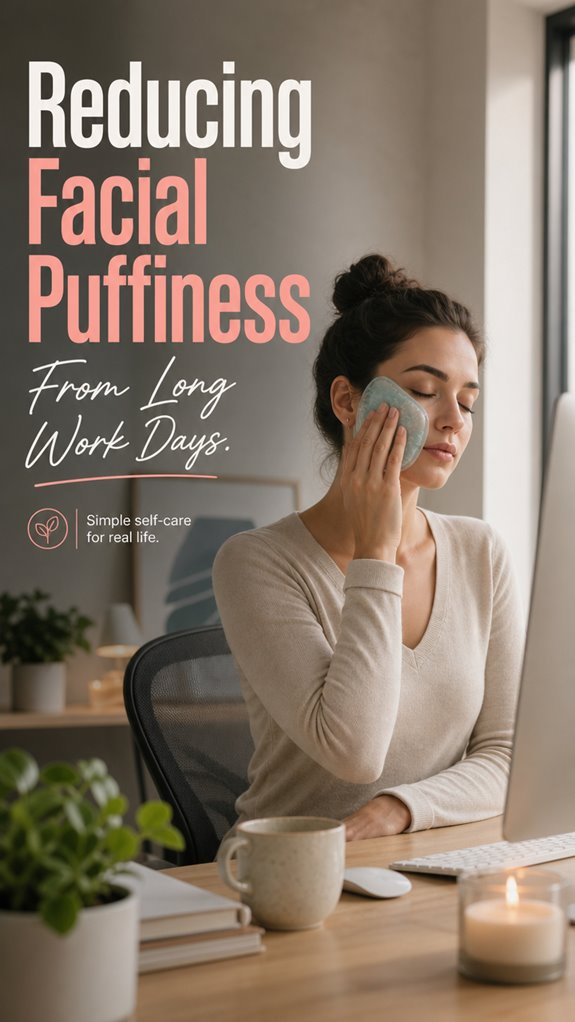
- Promote lymphatic drainage with gentle massage or Gua Sha tools to encourage fluid movement.
- Limit sodium intake and increase movement during breaks to prevent fluid retention.
- Incorporate anti-inflammatory foods and herbal supplements like turmeric and dandelion to decrease puffiness.
Why Does Work-Induced Facial Puffiness Matter?
In the grand runtime environment of a corporate workstation—think endless coffee breaks, sprint deadlines, and the ever-present risk of memory leaks—facial puffiness from prolonged work hours is often dismissed as a minor UI glitch. Yet, it signals systemic failure at the microvascular level, akin to a Java memory leak clogging the garbage collector.
Fluid accumulation isn’t just cosmetic; it exposes the fragility of your personal infrastructure’s foundation—the lymphatic and circulatory system. Like “Ghost In The Shell,” where code and flesh blur, your face’s swelling exposes how your human hardware struggles under infinite loops of sedentary output, demanding a patch or worse, a reboot. To counter this issue, integrating activities that target core stability can help improve circulation and reduce the likelihood of puffiness.
Causes of Face Swelling During Busy Workdays
Prolonged immobility at your workstation acts like a perpetual infinite loop, causing systemic fluid-bursts your physiology can’t handle—akin to a memory leak in a poorly optimized server.
When you’re stationary, gravity’s fail-safe fails, and capillary systems glitch, leading to microscopic edema. Your lymphatic congestion—software’s version of stack overflow—slows drainage, compounded by high-sodium inputs akin to unoptimized code with memory leaks.
It’s as if “Ghost in The Shell” recorded your biological processes: sleek but crashing under load.
Your infrastructure is *literally* lagging, causing facial swelling, which—despite your desire for control—is an unavoidable bug in the hardware, not just a feature. Moreover, incorporating rechargeable hand warmers during breaks can help stimulate blood circulation and reduce swelling.
How to Reduce Facial Puffiness Fast at Home
Triggering a rapid response to facial puffiness at home resembles hotfix deployment in a legacy system—urgent, targeted, and often a makeshift patch rather than a true resolution.
You must first isolate the payload—cold compresses, tea bags, or ice rollers—as these deliver immediate constriction, like a quick patch override.
Implement these strategies:
- Apply a chilled compress or an ice roller to compress blood vessels,
- Use caffeinated tea bags to stimulate vasoconstriction,
- Gently massage with tools like Gua Sha to drain lymphatic stagnation.
In this digital-inspired emergency, think of it as debugging runtime errors—fast, effective, with the understanding that long-term system integrity requires broader refactoring. For ongoing motivation, consider incorporating vision board kits into your routine to help visualize your wellness goals.
Long-Term Treatments and Skincare for Face Swelling

When faced with chronic facial swelling—an ongoing bug in your biological architecture—it’s clear your system’s core modules need an upgrade, not just patching superficial layers. The immune subsystem misfires, sodium leaks into tissues, and lymphatic processes hang in limbo — akin to Ghost In The Shell’s detective trying to debug a corrupted matrix.
Long-term skincare regimens involving retinoids, peptides, and barrier reinforcement serve as firmware updates, optimizing cellular communication pathways. Think of daily routine adjustments as scheduled maintenance—preventive rather than reactive.
You wouldn’t run production without testing, so don’t expect your face to perform without consistent, strategic upgrades. Consider integrating ergonomic products like top vertical mice to reduce strain during long work hours, as part of a holistic approach to overall wellness.
Daily Habits to Prevent Facial Puffiness
In the operating manual of facial health, neglecting daily input parameters can cause system bloat—akin to a server running at 99% CPU without thermoregulation.
You must implement these protocols:
- Schedule 8-12 hours of sleep—think of it as a system reboot—to mitigate resource leaks from insufficient rest.
- Limit sodium intake—less than 2,300 mg/day—to prevent fluid overload, much like managing bandwidth to avoid bottlenecks.
- Incorporate consistent movement—jumping jacks or brisk walks—fuel the lymphatic processes, preventing stagnation akin to memory leaks in a perpetually running loop. Additionally, consider snacking on foods that enhance focus, which can improve overall well-being and energy levels.
Upgrade your daily routine; prevent system crashes.
Natural Herbal Supplements I Tried
Operating at a high level, I approached my body’s immune and detox systems like debugging a legacy codebase—root cause hunting, patch deployment, and praying the kernel doesn’t panic overnight. Naturally, I experimented with herbal supplements, attempting to reroute fluid bottlenecks around malfunctioning lymphatic servers. Understanding how pelvic floor pain can exacerbate discomfort during prolonged sitting also informed my choices.
| Herb | Effect |
|---|---|
| Turmeric | Anti-inflammatory, decreases edema |
| Milk Thistle | Liver support, boosts detox |
| Ginger | Circulatory stimulant, constricts vessels |
| Dandelion | Diuretic, flushes excess fluid |
| Ashwagandha | Reduces stress, mitigates inflammation |
Because even a human system benefits from a little code refactor.
Chronic Toxin Buildup Issues

Chronic toxin buildup functions much like a stubborn memory leak in a legacy codebase—incrementally degrading performance, yet undetectable until system crashes.
You can debug this inherently slow decay by:
- Monitoring: Use exhaustive system logs, akin to liver strain indicators, to detect sluggish metabolite clearance, especially after binge inputs like alcohol.
- Optimizing: Implement “system cleanups” with targeted lymphatic drainage protocols, comparable to refactoring inefficient queries in your codebase, ensuring fluid movement of metabolic waste.
- Mitigating: Suppress irritants—dysbiosis and inflammation—by deploying strategic patches like probiotics or anti-inflammatory supplements, preventing the persistent buildup from causing catastrophic system failure.
Additionally, incorporating body oils known for their hydrating properties can enhance your skin’s resilience against daily stressors and toxin accumulation.
Aligning human physiology with system stability remains a project, Ghost in the Shell-style, that few dare to debug effectively.
Targeted Neck Massage Techniques
When you think about optimizing system performance—say, patching memory leaks or rerouting data paths—the analogy to human physiology becomes painfully obvious: your neck acts as the gateway between your central processing unit (brain) and peripheral subsystems, the spinal cord acting as the bus.
Perform a targeted neck massage as if debugging low-level code, applying gentle pressure from the base of your skull downward, focused on lymphatic nodes.
Akin to “Ghost in the Shell” hacking—disabling bottlenecks—you manipulate fascia and superficial muscles, facilitating fluid drainage and preventing buffer overflow of facial tissues.
Control your infrastructure before it crashes; manual intervention is the patch.
Ergonomic Workspace Setup Tips
In the complex ecosystem of your human hardware, the workspace functions as the kernel module whose misconfiguration inevitably leads to system instability—think of it as the blue screen of ergonomic discontent sprawled across your desk.
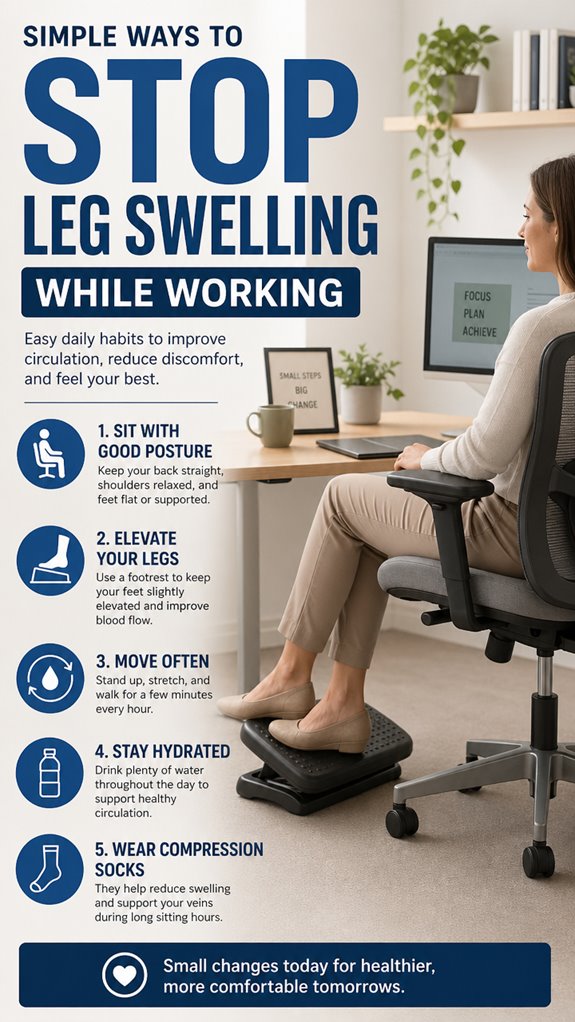
- Position your monitor at eye level, avoiding the classic “hunched coder” posture that introduces fluid stagnation, akin to a memory leak in your ocular cache.
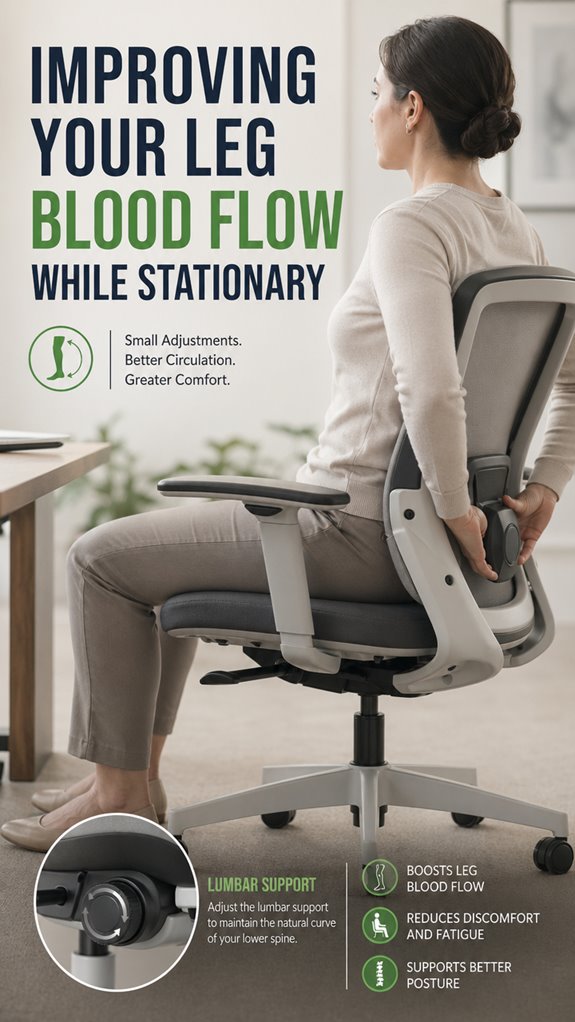
- Guarantee your chair supports lumbar architecture like a well-optimized codebase—no more awkward debugging in your thoracic region.
- Allocate space for frequent micro-movements, preventing fluid aggregation; a standing desk or ergonomic accessories act as debug flags silently optimizing fluid dynamics. Regular stretching breaks are also crucial for full-body posture to maintain overall developer comfort.
Failure to implement these upgrades ensures your hardware ecosystem remains perpetually in a state of flux, just like a malfunctioning AI in “Ghost in the Shell.”
FAQ
Can Hydration Levels Affect Work-Related Facial Puffiness?
Hydration levels can profoundly impact your facial puffiness; drinking plenty of water helps flush out excess fluids and reduce swelling, giving you better control, especially after long work days. Stay consistently hydrated for the best results.
Are There Specific Foods That Worsen Under-Eye Swelling During Work Hours?
Like a siren’s call, salty foods tempt your regret—boosting fluid retention and under-eye swelling. Avoid processed snacks and excessive sodium, and you seize control over your puffiness, maintaining a sharp, refreshed look during long work hours.
How Does Stress Influence Facial Fluid Retention?
Stress causes your body to produce more cortisol, leading to fluid retention and increased swelling around your eyes and face. By managing stress through relaxation techniques or exercise, you can control fluid buildup and reduce puffiness effectively.
Can Standing Desk Use Reduce Facial Puffiness?
Using a standing desk acts like a gentle tide, encouraging fluid to flow downward from your face. It boosts circulation, helping you take control to reduce puffiness and keep your appearance fresh, energized, and in command.
Are Certain Skincare Ingredients Better for Quick Puffiness Relief?
You should look for ingredients like caffeine, which constricts blood vessels, and witch hazel, known for anti-inflammatory effects. Use eye creams with these to target puffiness quickly, giving you more control over your appearance and confidence.
References
- https://www.webmd.com/a-to-z-guides/ss/slideshow-puffy-face-home-remedies
- https://annababayanskincare.com/blogs/news/combat-face-puffiness-with-these-esthetician-tips
- https://www.youtube.com/watch?v=SGUSujV2BsQ
- https://buypeakperformance.com/blogs/blogs/lymphatic-drainage-drops
- https://whitesandstreatment.com/2025/12/12/effects-of-alcohol-and-face-puffiness/
- https://selfdecode.com/en/pages/puffiness-face-body-genes/
- https://www.ueschiro.com/blog/why-opportunistic-bacteria-cause-facial-puffiness-swelling-fluid-retention
- https://ubiehealth.com/doctors-note/facial-puffiness-swollen-lymph-gua-sha-remedies-5741e5
- https://www.veintreatmentclinic.com/blog/causes-of-puffy-face/
- https://www.bannerhealth.com/healthcareblog/better-me/everything-to-know-about-moon-face
- https://studioaustraliabarcelona.com/blog/what-causes-a-puffy-face-7-hidden-triggers-and-how-to-treat-them-naturally/
- https://www.webmd.com/allergies/ss/slideshow-swollen-face
- https://my.clevelandclinic.org/health/symptoms/moon-face
- https://pmc.ncbi.nlm.nih.gov/articles/PMC7874868/