Ever catch your jaw clenching so hard it could crack walnuts? I definitely have. It’s my body’s way of saying “we’re not okay.”
Three-hour debug sessions left me with a jaw that clicked like a mechanical keyboard. Pop. Pop. Pop. Each pop was its own little error message.
Micro-breaks became my lifeline. Deep breaths. Deliberate unclutching. I even bought a cheap gua sha off Temu. Desperate times, etc.
The real fix? Actually fixing my setup. Monitor at eye level. Keyboard where my arms don’t scream. Revolutionary, I know.
Your body keeps receipts. What version are you running?
When Desk Job Jaw Pain Becomes Your Daily Standup Blocker
Last sprint, I presented with a headache so brutal I genuinely forgot my own talking points mid-sentence. Classic. My TMJ had flared spectacularly after crunching through a legacy codebase migration, twelve hours daily, zero movement. The irony wasn’t lost on me: I automate everything except my own biomechanics. Magnesium, ergonomic chairs, proper hydration, stress management: I ignored the entire toolchain. Now I block calendar time for jaw stretches. Same rigor as code reviews. Prevention beats refactoring.
Quick Takeaways
- Practice deep breathing and deliberate jaw releases to reduce muscular tension effortlessly at home.
- Incorporate ergonomic workspace adjustments to prevent strain and support relaxed posture.
- Use gentle self-massage and light palpation techniques to release jaw muscles daily.
- Apply weighted heating pads to relax tense muscles and ease discomfort naturally.
- Utilize external tools like Gua Sha and lymphatic drainage to promote fascia release and improve circulation.
What Causes Stress-Related Jaw Tension?
In the grand architecture of human stress responses, the immediate failure mode manifests as a cascade of muscular overrides—like a poorly optimized loop flooding your CPU with exceptions. You, the operator, experience a systemic overload in the face of emotional payloads—be it project deadlines, constant meetings, or that relentless Slack ping.
This overload triggers a hyperactive response, where the jaw’s neural arbitration (think kernel panic) causes clenching, grinding, and tension—akin to Ghost in The Shell’s malfunctioning cyberbrain. It’s the human equivalent of a memory leak—slow, insidious, and demanding a debug session called relaxation. Adding omega-3 supplements may support overall health and help mitigate stress responses, including jaw tension.
How to Recognize the Signs of Jaw Stress
When your body’s internal operating system starts issuing warning signals—clenching, grinding, or a stubborn backlog of tension—the physical manifestations of jaw stress reveal themselves with all the subtlety of a software exception thrown mid-build.
You notice the hardware—your jaw—becoming unresponsive, clicking or popping like outdated firmware. Chronic headaches appear like memory leaks, and ear discomfort mimics hardware driver conflicts. Frequent thumb pain can also contribute to overall stress, compounding the issues you’re experiencing.
These signals are the systemic crash logs of emotional load; a failed attempt at silent error handling. Recognizing these symptoms early allows you to debug your physical infrastructure before your entire productivity fails, turning your human hardware into a Ghost in the Shell glitch.
How to Relieve Jaw Tension at Home Effortlessly
Unexpected system bugs often originate from overlooked peripheral failures, much like chronic jaw tension stubbornly persists amidst the chaos of a high-pressure debugging session.
As a dev bangin’ out code at your desk, your physical environment is the hardware infrastructure—mobility, posture, stressors—that inadvertently compromises core functionality.
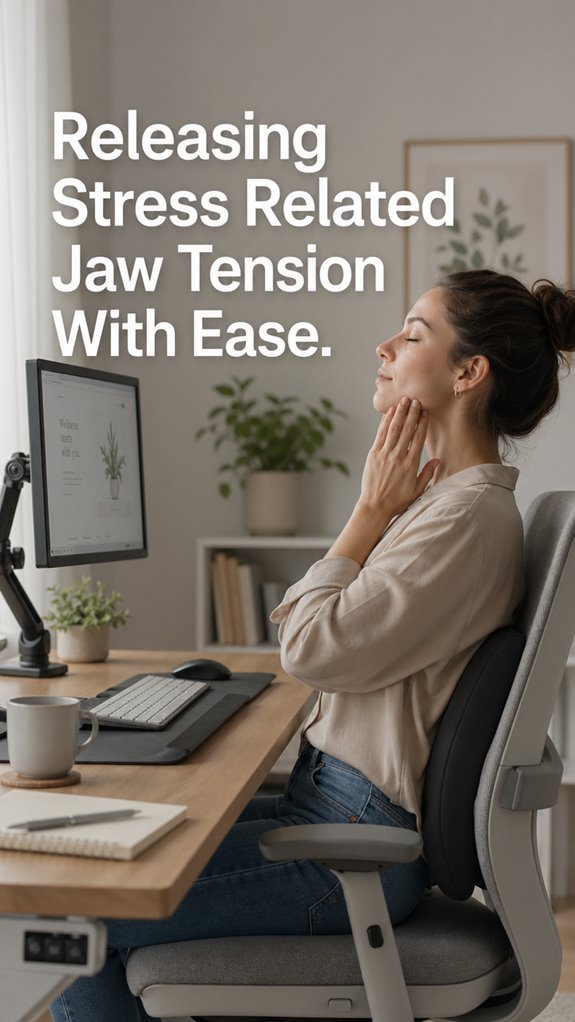
To remediate this at home, think of gentle micro-releases: initiate deep breathing routines between tasks, execute deliberate jaw releases, and perform light muscle ‘refactoring’ using simple palpation. Incorporating office plants into your workspace can dramatically enhance your focus and create a calming atmosphere.
Just like patching a memory leak, these micro-adjustments optimize your neuro-muscular system and prevent a slow crash—mirroring the silent yet inevitable decay “Ghost in The Shell” predicts.
Using Gua Sha and Lymphatic Drainage for Jaw Relief
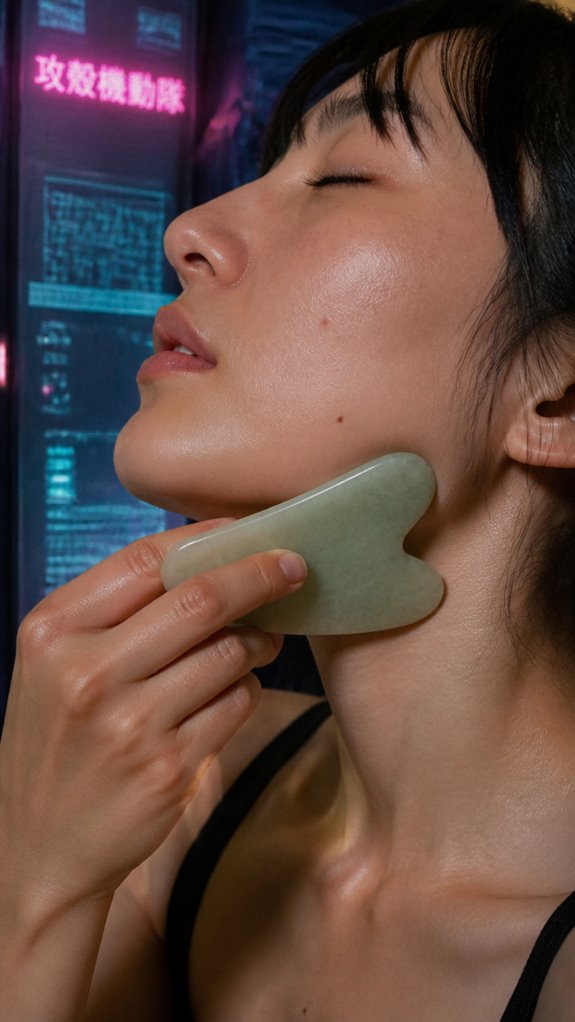
Disregarding the subtle, yet relentless, memory leaks of accumulated stress in your facial infrastructure is akin to neglecting buffer overflows in an essential API—eventually, it crashes the whole system.
Enter Gua Sha and lymphatic drainage: your manual debug tools. These techniques serve as system patches, clearing cache and unwinding tight fascia, much like optimizing server response times. Effective practices like these can improve reading speed and enhance cognitive clarity, giving you a dual advantage.
You’ll reroute lymph flow, reduce inflammation, and enhance circulation, effectively avoiding those dreaded “system hang” errors—TMJ pain, headaches, tension. It’s akin to running a low-level script—precise, intentional, necessary—restoring the integrity of your face’s core architecture.
Lifestyle Changes to Prevent Future Jaw Stress
If your daily workflow resembles a relentless debugging session, it’s no surprise your facial infrastructure—your jaw—begins throwing catastrophic exceptions under load.
Chronic tension resembles a memory leak—slow, insidious, degrading system performance.
You might consider refactoring your lifestyle: establish micro-breakpoints, optimize ergonomic settings akin to firmware updates, and implement stress management modules like mindfulness patches.
Avoid the legacy code of jaw clenching; audit your posture’s architecture, patch cracks with intentional relaxation routines.
Just like “Ghost in The Shell” overloads cybernetic silicon, your nervous system crashes under misconfigured stress responses.
Systematic lifestyle upgrades—discrete, purposeful, and debugged—are essential to prevent total system failure. Incorporating biofeedback devices into your routine can enhance awareness of stress levels, aiding in more effective relaxation strategies.
Observing Initial Gua Sha Benefits
When deploying a new routine like Gua Sha, the immediate feedback resembles debugging a legacy system—initial outputs are promising but obscure the true system health beneath layers of chronic tension. You watch the metrics, expecting incremental improvements, yet anomalies persist.
Physiologically, subtle increases in circulation and lymphatic flow are akin to log entries hinting at a system upgrade. Skin flushes, slight reduction in tautness—these feel like small patches applied under a tight security protocol.
Like Ghost in The Shell scanning infiltrations, I monitor these micro-movements to determine if the core system, my jaw, is becoming less crash-prone. Progress remains quietly satisfying—until the next runtime error. Recent studies suggest that incorporating top vertical mice can further enhance overall comfort, helping to alleviate related tension throughout the body.
Painful Skin Irritation Occurs
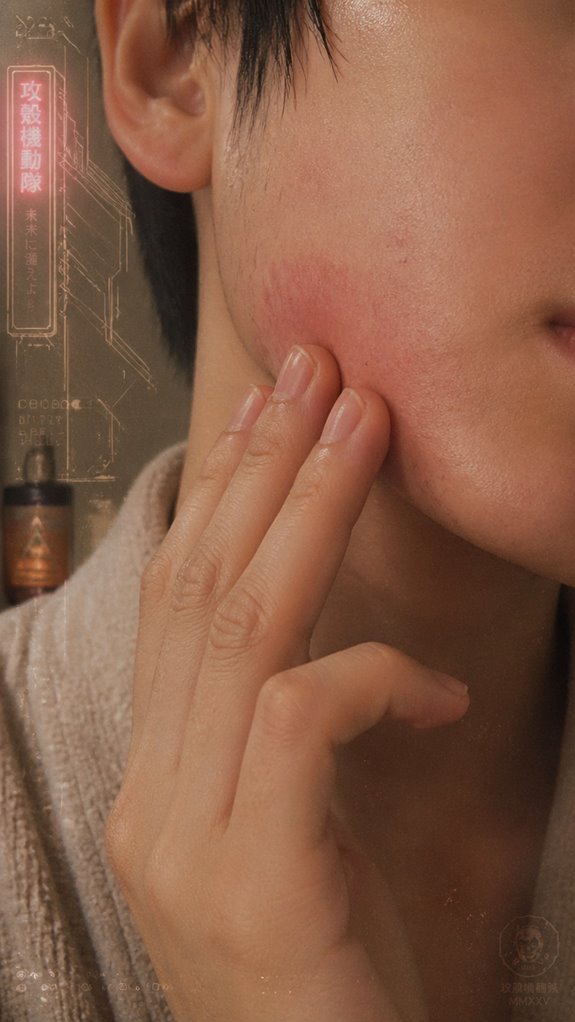
Could it be that your body’s stress response is more like a perpetual software bug than a seamless operating system?
When the macro system crashes—think chronic tension from unresolved stress—localized skin modules malfunction, manifesting as redness and tenderness. As muscle fibers tighten, they press against the skin, akin to overloaded RAM causing micro-tears, leading to inflammation. Poor posture, the unnecessary patches in code, further irritates the facial skin, amplifying nerve alerts for no good reason.
| Trigger | System Artifact | Effect | Diagnosis | Fix |
|---|---|---|---|---|
| Clenching | Skin pressure points | Pain | Micro-tears | Relaxation techniques |
| Poor postural alignment | Strained skin | Inflammation | Micro-fissures | Posture correction |
| Bruxism | Friction abrasions | Sensitivity | Micro-tears | Night guards |
| Anxiety | Tightenings | Redness | Localized inflammation | Mindfulness |
| Reduced circulation | Dry skin | Susceptibility | Damage accumulation | Circulatory boost |
Gentle Neck Lymph Techniques
In the relentless debug cycle of our bio-software, neglected lymphatic routing in the neck becomes an unpatched bug flooding the system with debris—metaphorical trash accumulating from persistent stress and digital misfires.
You must initiate a strategic lymphatic cleanse, akin to cleaning cache after a failed Windows update. Gentle neck techniques serve as troubleshooting scripts, rerouting flow and restoring harmony.
Simulate those flickering moments from “Ghost in the Shell,” where neural networks recalibrate amid chaos. Execute light-pressure, downward maneuvers with deliberate precision—think of it as deploying a patch—redirecting the debris, and rebooting the system before your hardware stalls entirely. Adding supportive measures like weighted heating pads can enhance relaxation and muscle relief while you perform these techniques.
Ergonomic Workspace Adjustments
The mainframe of your bodily interface is silently degrading, much like deprecated code buried in legacy systems, when physical misalignments compound into system-wide latency.
Adjust your workspace strategically—think of it as a patch rollout for the physical kernel.
- Optimize monitor height and angle to prevent eye strain and cervical drift.
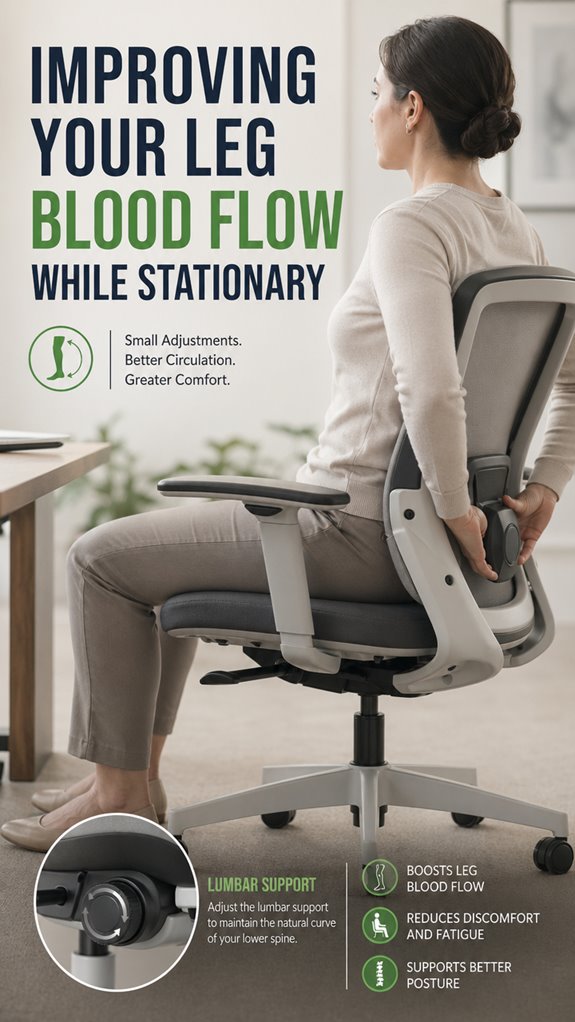
- Embed lumbar support to stabilize the back-end, reducing false positives like neck and jaw tension.
- Deploy an adjustable ergonomic desk frame to balance load distribution and minimize hardware bottlenecks.
Without these modifications, your hardware stack risks catastrophic failure—like debugging a client’s code only to discover your own poor posture is the real bug.
In Ghost In The Shell, even optimized interfaces are vulnerable to input noise. Additionally, maintaining boosted focus through proper ergonomics can significantly enhance your coding efficiency and overall productivity.
FAQ
Can Gua Sha Help With Chronic TMJ Pain Long-Term?
Yes, gua sha can help with long-term TMJ pain by releasing tension, improving circulation, reducing inflammation, and increasing flexibility. Consistent use alongside proper posture and stress management empowers you to manage and potentially reduce your chronic jaw discomfort effectively.
Are There Specific Facial Areas to Avoid During Gua Sha?
You should avoid delicate eye areas and swollen, inflamed spots during gua sha. Treat your face like a finely tuned instrument—gentle strokes over sensitive zones preserve control, prevent irritation, and guarantee safe, effective tension release.
How Often Should I Perform Gua Sha for Jaw Tension?
You should perform gua sha for jaw tension daily or as needed, but limit sessions to 5 minutes to avoid overstimulation. Pay attention to your body, and adjust frequency based on how you feel, ensuring gentle, consistent practice.
What Are Signs That I’M Pressing Too Hard With Gua Sha?
You press too hard when you feel discomfort, soreness, or redness lasting longer than a few hours. If your skin becomes irritated or bruised, or if pain worsens, ease up immediately to maintain control and prevent damage.
Can Gua Sha Reduce Nighttime Teeth Grinding Effectively?
Think of gua sha as a gentle reset button—my friend used it nightly, and her teeth grinding eased considerably. With consistent, soft pressure, this technique can effectively reduce nighttime grinding and relieve jaw tension.
References
- https://jenniefresa.com/blogs/news/melt-jaw-tension-stress-with-gua-sha
- https://www.proteethguard.com/blog/gua-sha-for-tmj/
- https://oseamalibu.com/blogs/wellness-blog/gua-sha-for-facial-tension
- https://www.youtube.com/watch?v=m-OmmEYxiaM
- https://www.medicalnewstoday.com/articles/gua-shua-for-tmj
- https://www.sourcevital.com/blogs/insights/video-how-to-relieve-jaw-tension-with-gua-sha
- https://metabodywork.com/how-does-face-cupping-and-gua-sha-help-with-tmj-discomfort/
- https://www.youtube.com/shorts/BCxZMXWaOhU
- https://www.medicalnewstoday.com/articles/jaw-tension-anxiety
- https://www.tmjplus.com/how-stress-affects-your-jaw-and-how-to-fix-it/
- https://amfmtreatment.com/blog/anxiety-and-tight-jaw-causes-how-to-release-tension/
- https://breatheptw.com/exercises-jaw-pain-stress/
- https://www.sleepapneaandtmjsolutions.com/blog/how-anxiety-and-stress-directly-impact-your-jaw-health/
- https://jsdentallab.com/blogs/news/jaw-tightness-anxiety
- https://www.medibank.com.au/livebetter/be-magazine/wellbeing/stress-can-cause-jaw-pain-relieve/
- https://www.healthline.com/health/facial-tension
- https://www.pennmedicine.org/news/how-to-manage-tmj-jaw-pain
- https://tmjindia.com/how-tension-and-anxiety-affect-your-jaw-health/