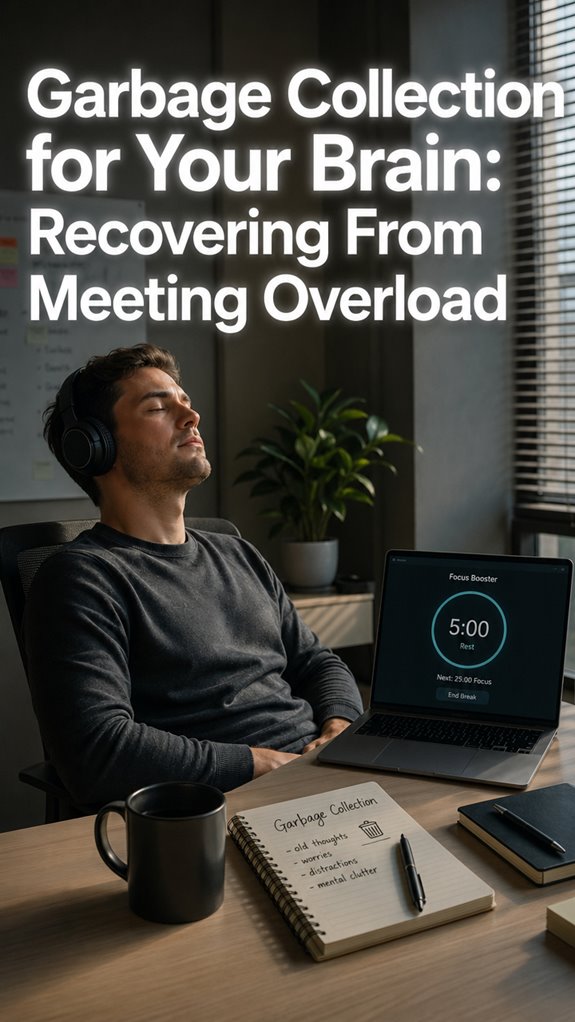

Ever watched your brain blue-screen at 3 AM because you treated bedtime like a hard crash instead of a graceful shutdown? I have. Too many times.
Last Tuesday, I learned the hard way. Eight hours wrestling with Kubernetes configs, then straight to doomscrolling in bed. My nervous system? Total kernel panic. Heart racing, sheets soaked, staring at the ceiling until my alarm mocked me.
Now I treat my body like production infrastructure that actually matters. Unplug the peripherals, dim those displays to candlelight warmth, maybe stretch the wreckage of my posture into something resembling human. Lavender diffuser running like a background process. Ten minutes of breathwork, if I’m being generous with myself.
The absurdity kills me. I’m a senior dev who debugs distributed systems daily, yet I needed a meltdown to realize my own shutdown sequence was garbage.
—
Desk Worker Insomnia: When Your Biome Becomes a Bug
Fixing Developer Sleep Patterns After Chronic Screen Exposure Destroyed My Circadian Rhythm
Three months ago my body flat out rebelled. Migraines blooming behind my eyes like corrupted memory. Caffeine stopped working, then worked too well, then stopped again. My GP asked about screen time and I laughed, darkly. She suggested I treat my bedroom like a dark mode CSS file: absolute, unforgiving, zero blue wavelengths. I bought the blackout curtains that same afternoon. The first week felt like withdrawal. Now I wake without that familiar dread, though I still catch myself reaching for phantom notifications at midnight. Old commits die hard.
Quick Takeaways
- Unplug devices and manage blue light exposure 30–60 minutes before bed to prevent circadian disruption.
- Establish and follow a consistent evening routine incorporating relaxation, mindfulness, and ergonomic adjustments.
- Use calming aromatherapy, such as lavender, to support neurochemical balance and promote sleep readiness.
- Practice breathing exercises like 4-7-8 and body scans to lower neural load and ease mental tension.
- Create a comfortable sleep environment with dim lighting, soft fabrics, white noise, and sensory control for optimal rest.
Prioritize Unplugging From Devices to Reduce Blue Light
In the grand debugging process of bedtime routines, the biggest system failure often stems from a misguided reliance on the glow of our screens—an all-too-familiar firmware bug in the human software.
Blue light reduction is the critical patch, yet you try to run a device curfew like a patch for unresponsive code. The hardware—your circadian clock—lags behind, misfiring because of persistent late-stage screen exhaustion. Maintaining optimal hydration can also play a role in enhancing cognitive focus and promoting restful sleep, as dehydration can interfere with cognitive performance.
It’s akin to trying to debug Ghost in the Shell with corrupted RAM. To minimize this, implement strict disconnection protocols—power down devices 30–60 minutes before sleep, force that blue light toggle, and regain control of your sleep infrastructure. Listening to white noise can further enhance relaxation and help mask distractions for a more restful environment.
Set a Consistent Bedtime and Wake-Up Routine
When your circadian system operates like a poorly debugged API—sporadically disconnecting or throwing errors under unpredictable inputs—you realize that setting a consistent bedtime and wake-up routine is akin to establishing reliable server protocols in a distributed network. Bedtime consistency becomes your version control, preventing the chaos of debugging sleepless nights.
Incorporating rib pain relief strategies during your day can help reduce discomfort, making it easier to maintain your evening routine. Sharp, regimented morning routines serve as scheduled job runs, maintaining system integrity amid entropy. Like Ghost in the Shell’s glitching cybernetic interface, your biological processes demand deterministic cues to avoid catastrophic desynchronization.
Routine synchronization isn’t just self-care; it’s system architecture’s best practice, ensuring uptime for the most complex software—your own mind. Incorporating productivity planners into your evening routine can help streamline your goals, making it easier to transition into restful sleep.
Use Relaxation Techniques, Like Deep Breathing or Meditation
If your neural architecture’s like a legacy system bugged out after a series of inadequate patches, then attempting to stabilize chaos with breath awareness or mental visualization is surprisingly akin to deploying a patch on a critical server fault. You command your system—deep breaths compute, releasing tension like garbage collection, clearing memory leaks of residual stress. Shoulder blade pain can often arise from poor posture during long hours at the computer, compounding the need for these relaxation techniques.
Meditation acts as an optimizer, reducing process load. In this debugging protocol, you scrutinize each breath—inhale, hold, exhale—like a manual override.
As “Ghost in the Shell” alludes, even the most sophisticated AI crumbles without proper shutdown routines, reminding you that your own mind, like software, demands structured shutdown sequences for a proper sleep cycle. Engaging in breath control techniques can significantly enhance your ability to focus and relax before sleep.
Create a Sleep-Friendly Atmosphere in Your Bedroom

While your bedroom is ostensibly the final checkpoint before complete system shutdown, it often manifests as a patchwork of conflicting signals—bright screens, jarring noises, or relentless ambient light—that sabotage the delicate circadian architecture.
You must reroute visual inputs like a master debugger: prioritize ambient lighting, dimming post-sunset, and applying softer, warmer tones to mitigate blue-light bugs. Incorporating top posture vibrators can provide additional comfort and support, enhancing your relaxation process before sleep.
Sensorial textures act as frictionless interfaces, encouraging sleep-mode transitions. Soft fabrics and muted surfaces are your user interface, reducing sensory overload.
Failure to optimize this environment risks system instability, reminiscent of “Ghost in the Shell” glitching under relentless digital noise—except, this time, it’s your neural firmware crashing. Additionally, adopting monotasking techniques can dramatically enhance your ability to wind down and prepare for sleep.
Avoid Caffeine and Heavy Meals Before Bed
After spending hours debugging code and patching runtime errors, the last thing you need is your biological CPU initiating a meltdown mid-shutdown sequence. Caffeine detox becomes your critical patch, ensuring the system doesn’t get stuck at a high-vigilance process resistant to sleep commands. Consuming caffeine gum for energy during the day might contribute to a later struggle in winding down.
Meal timing, like scheduled maintenance, prevents metabolic overload—heavy meals before bed are akin to memory leaks, blocking recovery routines. The abrupt shutdown—reminiscent of “Ghost In The Shell’s” infiltration—demands a clean code base; skipping these steps invites system instability.
Integrating tools like vagus nerve stimulators can enhance your relaxation protocols, ultimately leading to smoother shutdown processes.
Power down your intake, optimize termination protocols, and treat your physiology like a database in need of scheduled reboots—precision, not chaos.
Reflect on Your Day to Calm Your Mind Before Sleep
Implementing this routine guarantees your subconscious isn’t operating in a “tired but wired” state, reminiscent of “Ghost In The Shell’s” infiltration—an infiltration of unresolved stress into vulnerable system pathways.
As a senior developer debugging a line of code that crashes at runtime, you recognize that macro-system failures cascade downward, affecting core functions like sleep. To mitigate eye strain during late-night coding sessions, remember to follow the 20-20-20 rule, which encourages taking regular breaks to rest your eyes.
Through mindful journaling and emotional acknowledgment, you act as a system admin patching leaks, preventing memory leaks from accumulating. This process clears cache, compresses logs, and resets mental processes, enabling a clean shutdown.
With each reflection, you optimize your mental infrastructure for a smoother reboot—less blue-screen, more sleep mode. Additionally, practicing good on-camera fatigue management techniques can help reduce the mental load and improve your overall well-being as you prepare to rest.
Gentle Lavender Aroma Infusion

Tracing back from the stubborn, residual errors of a long debugging session, it’s clear that system-wide failures often originate from subtle, unpatched leaks—like unresolved stress responses seeping into sleep architecture.
Enter lavender’s aromatherapy benefits: its compatibility with our neurochemical framework acts as a benign patch, silently optimizing the brain’s sleep module.
As developers, we recognize the importance of clean dependencies; similarly, a gentle lavender infusion acts as an elegant dependency injection for relaxation, minimizing runtime errors—namely, insomnia.
It’s a soft reset—a reminder of “Ghost in The Shell,” where quiet code runs smoother without unnecessary interruptions, shouldering the burden of human fragility with minimalist grace.
Difficulty Disconnecting From Work
Ever wonder how a bug in your mental state propagates from a minor memory leak—say, the unresolved stress from a late-night code commit—into catastrophic system failure the next morning? It’s a cascade—poor work boundaries encode emotional detachment; a single debug session turns into runaway processes of rumination.
Your subconscious acts as an infinite loop, draining resources without firmware updates. Recognizing that not all tasks are critical prevents catastrophic overload, akin to system-level responsibility shifts.
Establish solid boundaries, clear code between work and home, and avoid the endless refresh cycle. Without this, you’re just a Ghost In The Shell, debugging yourself in real-time, system crash imminent.
Meditation for Mental Clarity
When your mental cache hits a capacity threshold—resources depleted from incessant debugging of unresolved code leaks—each recursion to troubleshoot one more bug triggers a cascade of system errors.
To optimize focus enhancement and restore mental clarity:
- Implement body scan meditation—metadata structure for tension, garbage collection for stress. Breathwork apps can enhance your practice by guiding you through effective techniques.
- Engage in gratitude meditation—an internal refactor for positivity, alleviating memory leaks of stress.
- Utilize 4-7-8 breathing—like a system reset, clearing buffered noise for a smoother execution path.
- Regularly schedule these routines—aligning mental patches with nightly system updates, ensuring peak performance in the next day’s process load. Incorporating breathing techniques can significantly enhance your overall concentration levels.
Desk Ergonomic Adjustments
In the modern developer’s ecosystem, the root cause of mental kernel panics often stems from the collateral damage inflicted by a static, ergonomically compromised payload—your body—whose default configuration was never meant for the 14-hour debugging marathon.
Optimizing your ergonomic posture isn’t just about comfort; it’s a system-level patch. Improved focus can significantly enhance your coding performance.
Adjusting your posture is a vital system patch for smooth, error-free operation under pressure.
Implementing desk angle adjustments to align your core processes reduces the latency of nerve signal transmission. Static U-frames induce system crashes, so reconfigure your desk to mimic a configurable `sleep()` state—dynamic, responsive, and adaptable.
Failing to do so is akin to running an alpha build on a legacy kernel, destined for catastrophic failure before the night completes. Additionally, developer ergonomics play a crucial role in maintaining long-term productivity and preventing injury.
FAQ
How Can I Maintain a Relaxing Routine on Busy or Unpredictable Evenings?
You can maintain a relaxing routine by quickly incorporating meditation techniques like breathwork or body scans, and using aromatherapy benefits such as calming essential oils; these powerful tools help you unwind efficiently, even during hectic, unpredictable evenings.
What Are Quick Strategies to Fall Asleep if I Can’T Follow My Routine Exactly?
You can quickly fall asleep by optimizing your sleep environment—dim lights and cool temperature—while practicing mindfulness techniques like deep breathing and body scans. These powerful methods calm your mind, making sleep inevitable, even if routines get disrupted.
How Do I Handle Late-Night Work Emails Without Disrupting Sleep?
Set firm email boundaries like a castle’s walls, turning off notifications an hour before sleep. Resist nighttime notifications, reassuring yourself that power lies in controlling your inbox, not chaos, thereby safeguarding your sleep fortress from unwelcome disruptions.
Are There Specific Bedtime Apps or Tools to Enhance Sleep Preparation?
Use bedtime apps and sleep tools that track your sleep, set gentle reminders for winding down, and optimize your routine. These empower you to establish control, promote consistent sleep patterns, and enhance your nightly preparation for restorative sleep.
How to Manage Restlessness or Anxiety That Prevents Winding Down?
You manage restlessness or anxiety by practicing mindfulness meditation, such as body scans or gratitude reflections, and sipping calming herbal teas. These powerful techniques help you shift into relaxation, reclaim control, and effectively prepare your mind for restful sleep.
Summary
In the end, your nightly shutdown routine acts like a system patch—mitigating the inevitable memory leaks of overtaxed neural processes and preventing thermal throttling of mental performance. Think of it as debugging the human infrastructure, akin to optimizing a sluggish database server after hours. For instance, a hypothetical coder’s sleep reboot, swamped with caffeine-induced latency and unchecked notifications, might resemble Ghost in the Shell’s fragile human-interfaces—ultimately crashing without proper shutdown protocols. Upgrading your sleep routine isn’t just recommended; it’s essential to prevent future runtime failures.
References
- https://napiers.net/blogs/news/cant-switch-off-at-night-simple-steps-for-deeper-calmer-sleep
- https://www.themindfulnessapp.com/articles/ultimate-guide-evening-wind-down-practices
- https://www.youtube.com/watch?v=BDik5Yo9Rzs
- https://www.sleepstation.org.uk/articles/sleep-tips/wind-down-routine/
- https://cancercenter.gwu.edu/news/how-build-sleep-routine-actually-works
- https://www.youtube.com/watch?v=hHZVYIlVGN8&vl=en
- https://peoplespheres.com/the-importance-of-knowing-how-to-disconnect-from-work/
- https://laurieruettimann.com/how-to-detach-from-work/
- https://www.transitioningwell.com.au/having-trouble-detaching-work-time-think-about-how-recover/
- https://www.indeed.com/career-advice/career-development/how-to-disconnect-from-work
- https://www.onlinepsychologist.com.au/post/five-ways-to-disconnect-from-work-stress
- https://www.joellespractice.com/how-to-disconnect-from-work/