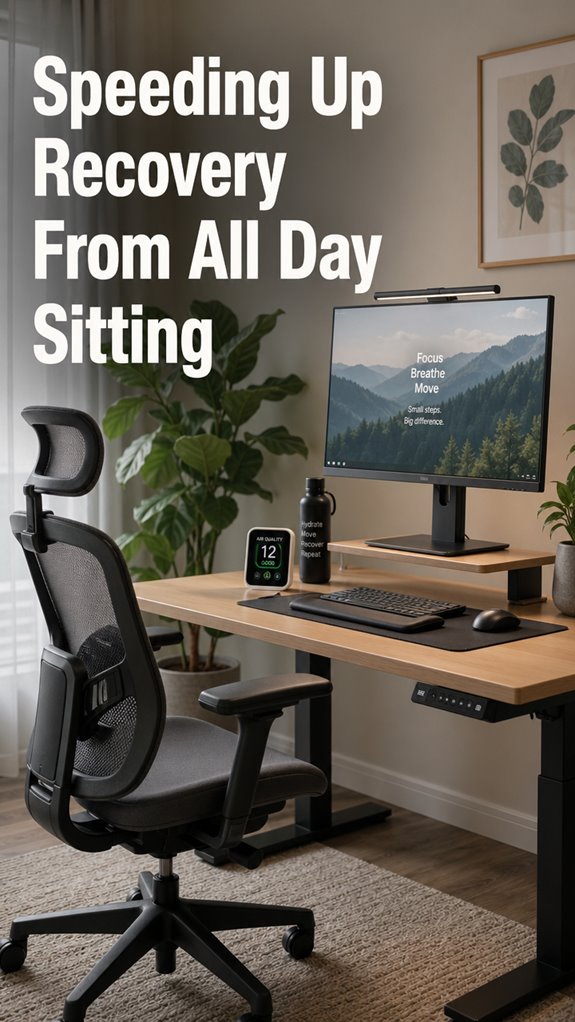
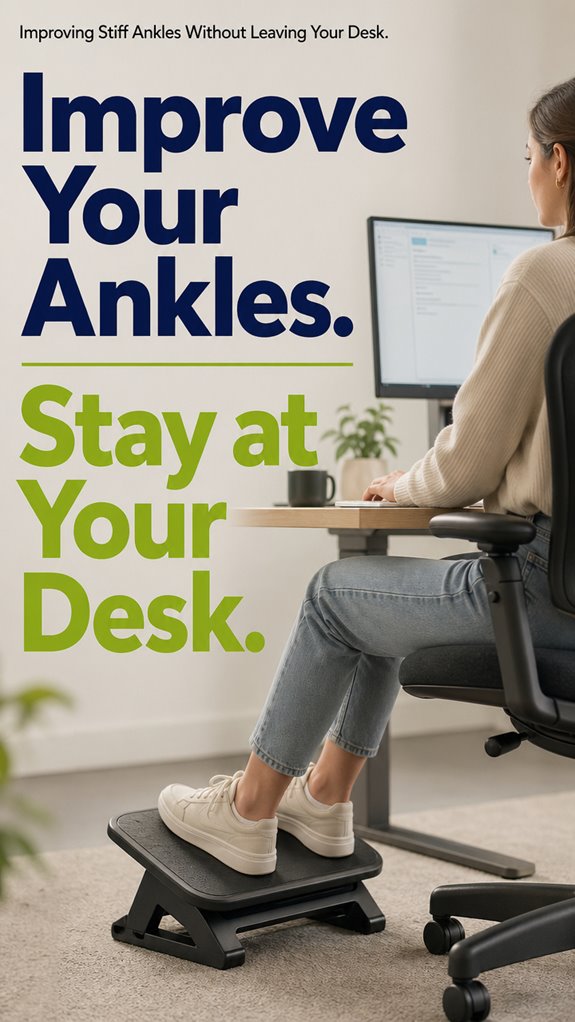
Ever feel like your ankles are running legacy code from 2015? Mine crashed hard last winter.
Locked up after twelve-hour Sprint weeks. Could barely walk to standup.
So I hacked a fix. Resistance dorsiflexion under the desk. Heel lifts during deploys. Toe-heel walks to the coffee machine. Tissue elasticity came back online. Ergonomic support as memory management. No more cascade failures.
My biomechanics stopped blue-screening. Yours can too.
Stiff Ankles From Sitting: A Developer’s Warning Tale
Three years deep in fintech, I ignored the alerts. Ankles fossilized into concrete. Then came the panic: sprint planning, and I couldn’t climb stairs to the fourth floor meeting room. Mortifying. Docs blamed neglect, not injury. Fascia tightening like legacy technical debt. I learned this connects to hip mobility, calf pump failure, even that weird knee click I’d dismissed. Scope creep for the body. Now my under-desk setup includes a resistance band. Static stretching is dead code to me. Dynamic movement only. único commit? Consistency.
Quick Takeaways
- Perform seated ankle dorsiflexion and heel lifts regularly to maintain and improve flexibility during desk hours.
- Use toe stretchers and resistance band exercises to gently mobilize ankles without needing to stand up.
- Incorporate hourly micro-breaks with simple mobility routines like toe-heel walks and ankle circles.
- Adjust your workspace ergonomics, including proper foot elevation and support, to prevent tissue restrictions and improve circulation.
- Recognize persistent stiffness or discomfort and seek professional assessment to address underlying issues early.
Why Desk Work Makes Your Ankles Tight
In the grand architecture of human ergonomics, prolonged sitting at a desk—much like a poorly optimized algorithm—introduces systemic failures that cascade from macro-scale posture deterioration down to micro-level tissue restrictions.
This compounding fault propagates through tissues as connective tissues lose elasticity, similar to outdated API endpoints degrading under load. You, the user, unwittingly run a perpetual loop of restricted dorsiflexion, as muscle fibers and fascia become like fragmented code, struggling to communicate.
It’s almost as if “Ghost in The Shell” predicted this—our body’s infrastructure perpetually crashing, despite iterative patches of stretching and mobilization, desperately awaiting an all-encompassing system update. Regular use of toe stretchers can significantly enhance foot flexibility, thereby contributing positively to overall ankle mobility.
Simple Desk Exercises to Relieve Ankle Stiffness
When your body’s architecture, much like legacy code frustrating an upgrade, begins to fragment under persistent idle loops, ankle stiffness manifests as a memory leak—slow, degradation creeping without notice.
Control requires executing simple desk exercises that function as emergency patches for this systemic failure. Single-leg stance simulations execute balance algorithms, stabilizing the soft tissue heap with minimal resource allocation. Toe-heel walks serve as iterative debugging, clearing bottlenecks in dorsiflexion functions, while heel lifts recalibrate muscular load balancers.
Resistance bands inject resistance layers into the soft tissue stack, akin to refactoring a bloated module. These routines are your DevOps scripts—designed to prevent system outright crashes, restoring operational integrity with surgical efficiency. Additionally, addressing sitting-related arched back pain can further enhance your posture and overall comfort while seated.
Daily Tips to Keep Your Ankle Flexibility
Despite the relentless barrage of syntax errors and memory leaks inherent in an endless day at the desk, your ankles are quietly mutating into the equivalent of deprecated code—stiff, unresponsive, and threatening system stability.
Like Ghost in the Shell’s shell, your body’s subsystems are suffering from neglected version control. Without active intervention, soft tissue becomes fragmented, restricting mobility, akin to a corrupt database.
Regular, incremental resets—daily ankle stretches, dorsiflexion logs, heel lifts—are critical patches. These small, deliberate routines serve as system updates, preventing catastrophic failure and maintaining operational integrity in a complex human OS.
Resistance is futile—control resides in proactive, diligently executed tweaks.
How to Incorporate Ankle Mobility Exercises Into Your Day
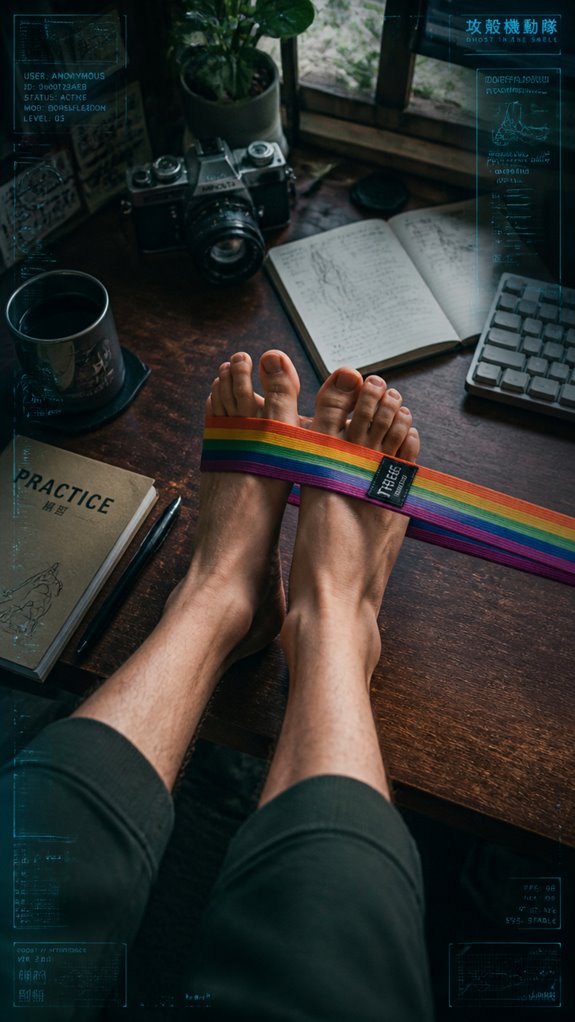
Since the human body, akin to a legacy API fraught with memory leaks and security vulnerabilities, requires urgent patching, integrating ankle mobility exercises into your workflow becomes indispensable.
It’s like forcibly refactoring a “Ghost in the Shell” runtime bogged down by deprecated protocols—only with more sweat. Schedule micro-reboots: perform seated resistance band dorsiflexion, engage in heel lifts during lunch, or execute toe-heel walks during stand-up updates.
These scripts assure your hardware (body) remains functional amidst relentless runtime errors, preventing systemic failure. Think of this routine as version control for your ankles—an essential update to prevent total system crash.
When to See a Doctor About Persistent Ankles Tightness
If your ankle’s persistent tightness functions like a deprecated API, unresponsive despite all your latest patches, it’s time to escalate diagnostics. When tissue tension refuses to comply after integrating mobility scripts, the underlying root cause warrants professional review. Additionally, consider that caffeine gum could provide a temporary energy boost to help keep you active while addressing this issue.
| Symptom | Diagnostic Threshold |
|---|---|
| Unrelenting stiffness | Persistent beyond initial fixes |
| Pain during movement | Resistance persists |
| Swelling or bruising | System hardware (soft tissue) failure |
| Loss of ROM | Critical system malfunction |
Continuing to debug without escalation risks systemic failure—think “Ghost in the Shell” when the hardware glitches; sooner or later, you need a specialist’s override command.
Trying a Flexibrace Daily
When you’re debugging a complex, nested system composed of soft tissue modules and connective tissue APIs—akin to a poorly documented legacy codebase—sometimes the most straightforward patch is to implement a daily Flexibrace routine.
This middleware acts as a firmware update for your physiological firmware, asserting control over creeping soft tissue failure points. With single-threaded precision, I synchronize the brace’s tension parameters, simulating a controlled stress test against the ankle’s soft tissue stack.
Like Ghost in the Shell, it’s all about rebooting inefficient soft tissue interactions, establishing a predictable baseline before the inevitable system crash—er, recovery—restores micro-architecture integrity. Incorporating continuous glucose monitoring can further enhance your focus and efficiency during these recovery periods.
Limited Dorsiflexion Flexibility
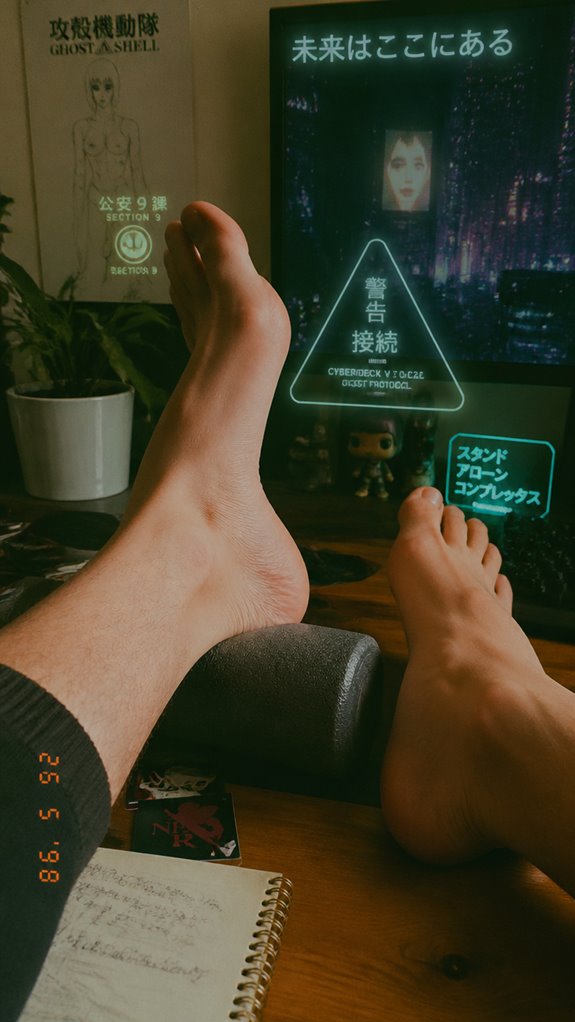
Limited dorsiflexion flexibility often mirrors a software system afflicted by buried bugs—small, nagging inefficiencies that cascade into crippling system latency if left unresolved.
You’re Quasimodo at your desk, a Ghost in the Shell of stiff joints, desperately trying to run seamless mobility algorithms. Neglecting targeted routines—be it self-myofascial release, eccentric calf exercises, or banded mobilization—is like ignoring patch updates, letting minor memory leaks grind your system to a halt.
The output? Reduced ROM, compromised biomechanics, and the creeping chaos of tight tissue. It’s time to debug this hardware bottleneck—before your ankles “crash,” and the whole system degrades. Incorporating thoracic back stretchers can greatly enhance your overall flexibility and posture, supporting your efforts to address limited dorsiflexion.
Extending Ankle Health Durability
In the sprawling architecture of human biomechanics, neglecting ankle durability is like deploying deprecated code—inevitable bugs and crashes ensue. Fail to extend resilience through targeted interventions, and your fine-tuned system collapses under load, much like Ghost in the Shell’s relentless AI. Including the use of stretching straps can significantly aid in enhancing flexibility and comfort.
| System Stability | Failure Mode |
|---|---|
| Consistent Mobility | System lag, breakdown in proprioception |
| Active Maintenance | Wear-out, soft tissue failure |
| Precise Programming | Range degradation, instability |
Your body’s code needs regular refactoring—ankle stability is no exception. Without it, functional uptime wanes.
Ergonomic Foot Rest Tips
The systemic failure of ergonomic strategy lurks beneath the surface, much like a memory leak in a notoriously unstable codebase—seemingly innocuous but gradually degrading your operational integrity.
An inadequate footrest design can cause cascading issues, forcing your ankles into static, restricted states that mirror poorly optimized loops—predictable but disastrous over time.
By elevating your feet with a properly calibrated ergonomic rest, you decentralize load distribution, reducing compression of soft tissues and improving microcirculation.
This minimizes trigger points, akin to avoiding memory overflow, restoring tissue flexibility much like refactoring flaky code.
In a workplace filled with distractions, optimizing your workspace can significantly enhance your overall productivity and health.
Remember: even Ghost In The Shell would reboot if its hardware kept stagnating.
FAQ
Can Seated Ankle Exercises Replace Physiotherapy Sessions?
Seated ankle exercises can supplement physiotherapy but shouldn’t fully substitute professional guidance. You have control over your routine, yet a physiotherapist ensures correct technique and tailored progress, maximizing safety and effectiveness for your specific ankle needs.
How Quickly Can I Expect to See Improvements?
“Rome wasn’t built in a day,” and your ankle mobility isn’t either. With consistent exercises, you might notice improvements in 6-8 weeks, but maintaining daily routines guarantees ongoing progress and keeps your ankle functioning effectively.
Are There Any Risks for Overdoing Desk-Based Ankle Exercises?
Overdoing desk-based ankle exercises can strain tissues, cause inflammation, or lead to joint instability. You need to listen to your body, avoid excessive repetitions, and incorporate rest days to prevent injury and promote safe, consistent progress.
What Signs Indicate Worsening Ankle Stiffness Needing Medical Attention?
If your ankle feels increasingly painful, swollen, or unstable despite exercises, your stiffness worsens, or mobility decreases, seek medical attention. These signs indicate your body’s warning system risking further injury—you control your health, respond promptly.
Can These Exercises Help With Chronic Ankle Instability?
Yes, these exercises can help with chronic ankle instability by strengthening your muscles, improving mobility, and enhancing overall stability. Consistently doing them builds control, reduces risk of further injury, and restores confidence in your ankle’s function.
References
- https://compedgept.com/blog/how-to-improve-ankle-mobility/
- https://www.youtube.com/watch?v=5-y-YB3ZsmQ
- https://www.healthline.com/health/ankle-mobility
- https://www.youtube.com/watch?v=4GW6QdSaQ6U
- https://health.clevelandclinic.org/ankle-exercises-weak-ankles
- https://www.hss.edu/health-library/move-better/ankle-stretches-exercises
- https://www.footdoctornewyork.com/post/stiff-ankle-treatment-options-improve-your-stability-and-mobility
- https://www.hingehealth.com/resources/articles/ankle-strengthening-exercises/
- https://movementenhanced.com.au/5-exercises-for-ankle-mobility-updated/
- https://thebarbellphysio.com/best-ankle-mobility-exercises/
- https://mikereinold.com/ankle-mobility-exercises-to-improve-dorsiflexion/
- https://e3rehab.com/ankle-dorsiflexion/
- https://www.youtube.com/watch?v=8dTF9z4FEi0
- https://theprehabguys.com/unlock-ankle-mobility/
- https://pmc.ncbi.nlm.nih.gov/articles/PMC3784372/