Ever felt your brain buffer overflow after four hours of staring at legacy code? I’ve been there. Box breathing fixed it.
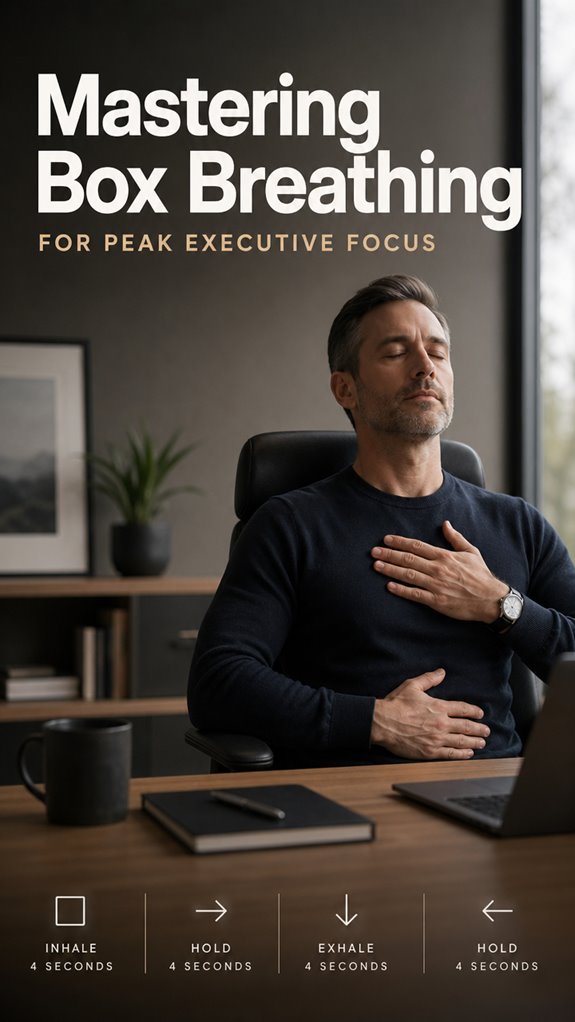
Four counts. In. Hold. Out. Hold. Sounds like a broken CI/CD loop. Actually works though.
Back in 2019, I was grinding 70-hour weeks on a microservices migration. My hands shook during standups. Heart raced for no reason. Classic sympathetic overload.(Debug: insufficient downtime between deploys.)A senior dev noticed me white-knuckling my mechanical keyboard. Taught me the Navy SEAL trick between commits. Sounds woo-woo. Isn’t.Rhythmic breathing hacks your vagus nerve. Drops cortisol. Clears that fog where you stare at a function for twenty minutes and forget variable names.I’ve done it in bathroom stalls before production deploys. In parking garages before salary negotiations. Weird? Absolutely. Functional? My commit graph doesn’t lie.The pattern matters. Visualize a square. Your lungs fill the edges. No gasping. No yawning. Just mechanical precision.Like refactoring spaghetti code into clean functions, but for your nervous system.Start today. Your future self debugging at 2am will thank you.
Box Breathing for Developers: Fixing My Panic Before Product Launches
Three days before our biggest product launch, I woke up at 3am convinced our payment gateway would fail. No evidence. Pure anxiety. My PM found me running integration tests at midnight. Again.
I’d tried meditation apps. Deleted them. Too precious. Box breathing felt different… tactical. Like a tool in my dotfiles I actually used.
The Thursday before go-live, I locked myself in a conference room. Four cycles. Heart rate dropped from 110 to 78 per my smartwatch. Deployed anyway. Zero incidents.
Sleep hygiene and caffeine cycling helped too, but the breathing was my emergency rollback. Still is.
StackOverflow won’t debug your amygdala.
Quick Takeaways
- Consistently practice rhythmic box breathing to enhance neural regulation and improve focus during high-stakes decision-making.
- Use guided timers or apps to maintain precise inhale, hold, exhale, and hold cycles for optimal system reset.
- Incorporate box breathing during idle moments, like before meetings or during breaks, to promote mental clarity and reduce stress.
- Ensure diaphragmatic breathing to fully engage the nervous system, stabilizing cognitive load and preventing system overloads.
- Combine proper ergonomic setup with breathing techniques to maximize physical comfort and sustained executive attention.
What Is Box Breathing and Why Should Executives Use It
Ever wonder why your cognitive throughput degrades faster than your IDE crashing under load? It’s the human equivalent of a memory leak—startlingly predictable and barely preventable without a rewrite.
Box breathing acts as the system patch, pruning runaway stress signals and restoring buffer integrity. It’s a controlled reset, akin to rebooting your neural cache during “Ghost in the Shell,” where tech meets subconscious architecture.
This technique’s core—four equal steps—disrupts the chaos, recalibrates the parasympathetic subroutine, and enables critical focus checkpoints.
As with code refactoring, it’s about maintaining ideal function amid increasing complexity, not emotional therapy but an essential system upgrade.
Learn How to Master Box Breathing in Minutes
When your cognitive pipeline starts throttling under load and your mental cache begins leaking variables into an undefined state, the logical response should be a system reset—preferably without a full reboot or, worse, a catastrophic crash.
Master box breathing in minutes by focusing on the core input-output loop:
- Set a timer or use a guided app to avoid iteration anomalies
- Count consistently, mimicking debug logs to ensure process stability
- Practice during idle cycles—like waiting for batch jobs to execute
- Maintain a steady cadence, akin to testing for memory leaks
Interestingly, narrow ergonomic chairs can also provide the supportive environment necessary for optimal focus.
Because, in the end, optimizing mental processes is no different than debugging code—precision, discipline, and control govern the execution.
How Box Breathing Boosts Your Focus and Decision Skills
As any seasoned dev knows, when your cognitive pipeline begins to choke—akin to a legacy system encountering a buffer overflow—your ability to prioritize and execute tasks plummets exponentially.
Box breathing acts as a critical patch, stabilizing your neural OS by resetting resource allocation. The rhythmic inhale-exhale cycle balances sympathetic and parasympathetic subsystems, akin to fixing a memory leak.
This reset clears the cache of distracting code, enabling you to debug complex decision trees like steering “Ghost in The Shell’s” cybernetic matrix. It’s not about flowery mindfulness; it’s about deploying a minimalist algorithm to restore peak logic processing under stress. Additionally, engaging in focused breathing techniques can enhance your overall skin health, sharpening your focus as you clear both mental and physical clutter.
Quick Tips to Incorporate Box Breathing Into Your Day

In the relentless runtime of a demanding workday, your mental cache often becomes corrupted by accumulating stress logs, leading to sluggish decision-making and cascading system errors. You’re essentially debugging in “Ghost in the Shell” without the benefit of a firmware patch.
Quickly integrating box breathing requires strategic hooks:
- Set micro goals during code review pauses.
- Use timer apps (like Be Focused) during sprint transitions.
- Designate a “quiet node” in your workspace for breath sessions.
- Sync breath cycles with high-impact meetings or crisis flags.
Incorporating practices to manage mental load ensures your cognitive system remains optimized, bypassing the chaos of a recursed stack overflow.
Troubleshooting Common Challenges for Executives
Controlling the labyrinth of executive stress is akin to debugging a sprawling, interconnected codebase plagued by memory leaks and segmentation faults; systemic failure at the core triggers cortisol spikes rather than server crashes, like Ghost in the Shell malfunctioning under pressure.
When you hit the wall—perhaps your breath sync’s off or the counts jitter—remember, this isn’t a bug in your consciousness but a misconfigured subsystem. Rewire by anchoring to the basics: assure steady inhalation, avoid race conditions with breath retention.
Incorporating techniques like diaphragmatic breathing can help you reinforce this foundation effectively.
It’s like patching a memory leak—gradual, deliberate, with the understanding that a flaky process can destabilize even the most optimized mental infrastructure.
Readiness App Helped Me Focus
When your neural threading begins to resemble a failing server under peak load—akin to Ghost in the Shell glitches disrupting critical processes—it’s tempting to blame external chaos.
The Readiness App became my system monitor, alerting me when CPU cycles—focus—started plummeting.
- It functioned as a telemetry dashboard, scanning my cognitive RAM utilization.
- Flags, like debugging breakpoints, paused my workflow at optimum jitter-free windows.
- Locking onto timely notifications, it prevented my mental memory leak from spiraling into a crash.
- Leveraging it felt like deploying a hotfix during runtime, restoring control over my attention kernel.
Ultimately, optimizing my mental uptime became a matter of software patching, not willpower. Supplementing my routine with L-Theanine supplements further enhanced my cognitive performance during critical tasks.
Breath Retention Causes Dizziness

A single mismanaged thread—like breath retention—can cascade into a critical failure in the central processing unit of your physiology.
When you hold your breath too long, blood CO2 levels plummet, triggering vasoconstriction akin to a system crash, reducing cerebral blood flow.
This reduction in oxygen delivery mimics a “Ghost in the Shell” moment—dizziness, vertigo, or feeling like your neural network is buffering.
The brain’s delicate balance between oxygen and CO2 becomes compromised, forcing your hardware to issue error signals.
Slowing CO2 depletion via nasal breathing or brief pauses ensures your system remains operational—keeping the neural server from rebooting prematurely.
Incorporating techniques from coworking spaces for introverts can enhance your focus, providing a supportive environment that promotes mindfulness and reduces distractions.
Quick Stretching Resets Mental Clarity
Amidst the relentless bloatware of a caffeine-fueled, nine-to-five grind, your cognitive core begins to hesitate—akin to a program encountering an out-of-memory error.
Breaking the mental latency cycle requires a quick system reset.
- Execute a physical “soft reboot” through rapid stretching—think of it as clearing cache in your neural interface.
- Reset focus by interrupting the endless loop of microtasks, just like flushing a zombie process.
- Reinitialize cognitive buffers to prevent memory leaks of distraction.
- Synchronize, avoid deadlocks, and remind your neural threads it’s okay to pause—Hello, analog “Ghost in the Shell”.
Control your software; refactor your focus.
To enhance this reset process, remember the importance of limiting screen time to mitigate digital eye strain.
Desk Ergonomics Tips
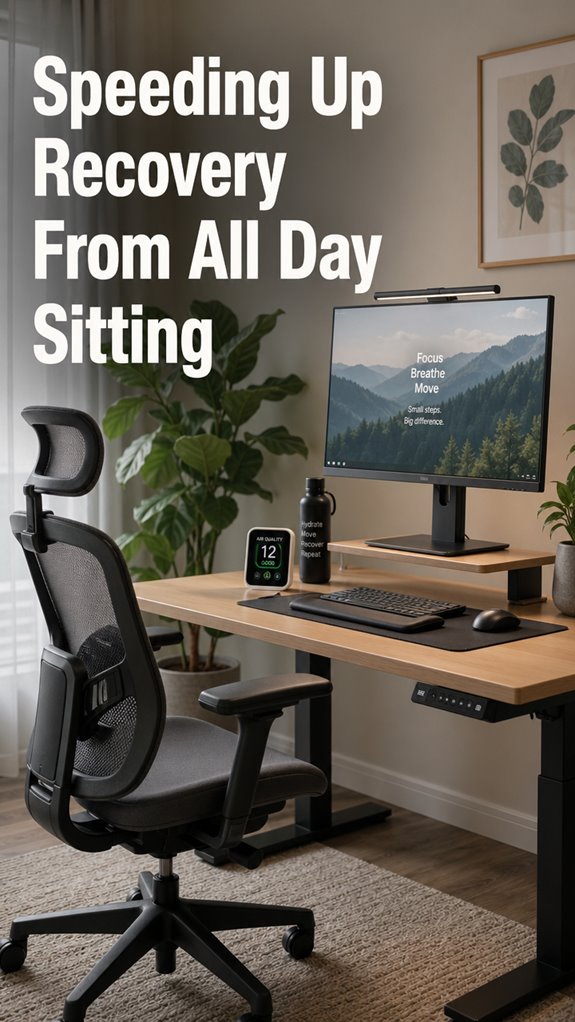
In the grand architecture of your workstation, systemic failures rarely signal their presence until they cascade into cognitive deadlocks—the static, silent bugs sabotaging your ability to parse code or debug a stubborn leak. Your ergonomic setup is the kernel panic of productivity, where misalignments ripple into chronic fatigue.
| Hardware | Placement | Impact |
|---|---|---|
| Monitor | Eye-level | Reduces neck strain |
| Chair | 90° hips | Prevents back pain |
| Keyboard | Elbow angle | Diminishes wrist stress |
| Desk | Adjustable | Enables dynamic positioning |
| Lighting | Bias-free | Fights eye fatigue |
Without this infrastructure, you’re debugging yourself; with it, you control the environment—like a well-optimized microservice. Implementing healthy visual habits can further safeguard against fatigue and strain over time.
FAQ
How Long Should I Practice Box Breathing Each Day for Optimal Results?
You should practice box breathing for about 10 to 15 minutes daily, splitting sessions into manageable chunks, like 3-5 minutes each. Regular practice builds mastery, calms your nervous system, and sharpens your focus for peak performance.
Can Box Breathing Replace Other Stress Management Techniques?
Yes, box breathing can replace other stress management techniques because it actively calms your nervous system, improves focus, and reduces anxiety. You can incorporate it consistently to gain control over stress responses and enhance overall emotional resilience.
Is It Safe for Everyone, Including Those With Respiratory Issues?
If you have respiratory issues, consult your healthcare provider before practicing box breathing. While generally safe, it may cause discomfort or dizziness for some. You stay in control by listening to your body and adjusting or pausing as needed.
How Quickly Will I Notice Improvements in Focus and Stress Levels?
You’ll notice improvements in focus and stress levels within a few days of consistent practice; like turning a ship around, regular box breathing helps you regain control quickly, sharpening your mind and calming your nerves effectively.
Can I Customize the Count Duration for Different Situations?
Yes, you can customize the counts based on your needs. For calming quickly, try shorter counts like three seconds, and for deeper focus, extend to five or six. Adjusting duration gives you greater control over your stress and focus.
References
- https://www.medicinenet.com/why_do_navy_seals_use_box_breathing/article.htm
- https://www.jodybraverman.com/post/5-box-breathing-benefits-from-stress-relief-to-better-focus
- https://www.onepeloton.com/blog/box-breathing-technique
- https://health.clevelandclinic.org/box-breathing-benefits
- https://www.healthline.com/health/copd/box-breathing/
- https://www.webmd.com/balance/what-is-box-breathing
- https://awcim.arizona.edu/health_hub/awcimagazine/just_breathe_using_breathwork_for_wellbeing.html
- https://pmc.ncbi.nlm.nih.gov/articles/PMC9873947/
- https://cymbiotika.com/blogs/health-hub/why-does-taking-deep-breaths-make-you-lightheaded-understanding-the-science-behind-breathing
- https://www.youtube.com/watch?v=6KdC2sd_mHA
- https://www.connectpelvicfloorfitness.com/blog/why-do-i-feel-dizzy-when-i-do-diaphragm-breathing
- https://www.medicalnewstoday.com/articles/shortness-of-breath-and-dizziness
- https://www.generationcalm.com/blog/breathing-exercises-make-me-dizzy/