Ever wondered why my back feels like legacy code nobody wants to maintain? Because I treated my spine like technical debt, ignoring it until everything broke down.
Three years ago, I was that developer: 10 hours hunched over IntelliJ, energy drinks, back brace from Amazon at 2am. Pathetic, right? The brace became a crutch. My core muscles atrophied into vestigial comments. When I finally ditched it? Regression testing failed spectacularly. My trunk collapsed like a badly managed microservice.
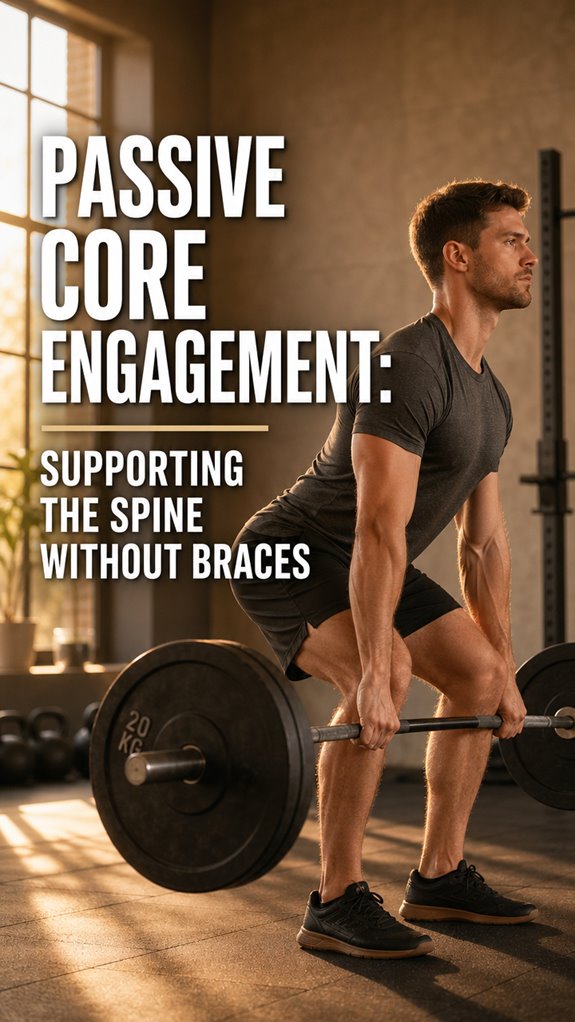
The fix? Neutral pelvis. Diaphragmatic breathing between deploys. Chair adjusted so my feet actually touch floor. My deep core stabilizers now handle load silently, no conscious overhead. Graceful degradation, not catastrophic failure.
Programmer Posture Pain: How My Ergotron Setup Collapse Changed Everything
Last sprint, my fancy standing desk broke mid-refactor. Cables everywhere. I spent two weeks on a folding chair from the closet, convinced I’d survive. My QL muscle seized like a mutex deadlock. Couldn’t stand straight for days.
That humiliation taught me posture isn’t about expensive gear. It’s about the boring fundamentals I’d ignored: hip hinge mechanics, ribcage positioning, those tiny multifidus muscles I’d never heard of. Now I do “git commit breathing” exercises. Exhale during push, inhale during pull. Sounds ridiculous. Works flawlessly. My Jira tickets are still late, but at least my spine isn’t screaming during standups.
Quick Takeaways
- Passive core engagement activates intrinsic stabilization mechanisms automatically, maintaining spinal efficiency without conscious muscle effort.
- External braces create dependency, causing core muscle atrophy and diminishing the body’s natural stabilization capabilities over time.
- Transverse abdominis and multifidus coordinate to regulate intra-abdominal pressure, providing resilient spinal support without external hardware.
- Diaphragmatic breathing and proper posture distribute pressure evenly, supporting spinal stability through foundational engagement rather than braces.
- Refactoring stabilizer patterns through posture practice and movement awareness prevents architectural debt and reduces reliance on external supports.
Why Passive Core Engagement Protects Your Spine Better Than Bracing

When you’ve spent the last eight hours debugging a recursive function that only fails in production—while your lumbar spine silently degrades like legacy code nobody dares refactor—you’ll start to appreciate why your body’s actually engineered something more sophisticated than the rigid bracing industry wants you to believe.
Your deep stabilizers don’t operate like external constraints. They’re adaptive load-balancing mechanisms. Bracing externally locks your system, creating dependency injection problems: atrophied musculature, degraded proprioceptive feedback.
Passive core engagement activates your intrinsic stabilization stack organically, maintaining algorithmic efficiency across spinal segments while preserving your body’s native fault-tolerance architecture. You’re not bolting on a crutch; you’re optimizing infrastructure. Engaging in tasks that align with your follicular phase, such as strength training, enhances these benefits even further.
Passive vs. Active Core Support: Why the Difference Matters
The distinction between passive and active core support isn’t academic—it’s the difference between your spine running on a legacy monolithic architecture versus a distributed microservices approach.
Passive engagement operates like your skeleton’s intrinsic load-balancing system. Your deep stabilizers activate automatically, mitigating compensatory strain patterns before they cascade into system failures. Effective integration of cycle tracking apps can help individuals identify patterns in physical stress that may impact core stability.
Active support? You’re manually orchestrating micromanagement. You’re performing conscious abdominal bracing—essentially running debug mode perpetually. That’s cognitively expensive, unsustainable overhead.
Your lumbar spine prefers autonomous operation. When you develop genuine passive core competency, you’ve achieved what engineers call graceful degradation under load. Your infrastructure handles stress without requiring constant runtime intervention.
Achieving work-life balance can also help reduce overall physical and mental stress, allowing your spine to function more optimally.
The Core Muscles That Support Spinal Stability
Your spine’s stability hierarchy mirrors a poorly architected monolith—everything depends on components you’ve never debugged, operating in layers you don’t observe.
| Muscle Group | Primary Function |
|---|---|
| Transverse Abdominis | Intra-abdominal pressure regulation |
| Multifidus | Segmental vertebral stabilization |
| Diaphragm | Pressure distribution mechanism |
| Pelvic Floor | Load-bearing foundation |
You’re fundamentally running legacy code on biological hardware. Your transverse abdominis acts as the innermost load-bearing layer, while multifidus provides granular segmental control—like exception handlers preventing cascade failures. The diaphragm and pelvic floor complete this distributed system. Regular keyboard cleaning techniques for your workstation can also enhance your ergonomic setup, promoting better posture during long hours of sitting.
Without synchronized engagement, you’re debugging stack overflow at runtime while seated at your desk, frantically refactoring posture as your L4-L5 segment threatens kernel panic.
How to Sit Without Losing Core Engagement
Sitting’s where your carefully architected core system degrades into a distributed denial-of-service attack against itself.
You’re fundamentally running legacy code on incompatible hardware. Your lumbar spine becomes the single point of failure while erector spinae modules enter standby mode—a catastrophic architecture shift. Consider utilizing top vertical mice to improve your ergonomic workspace and reduce strain.
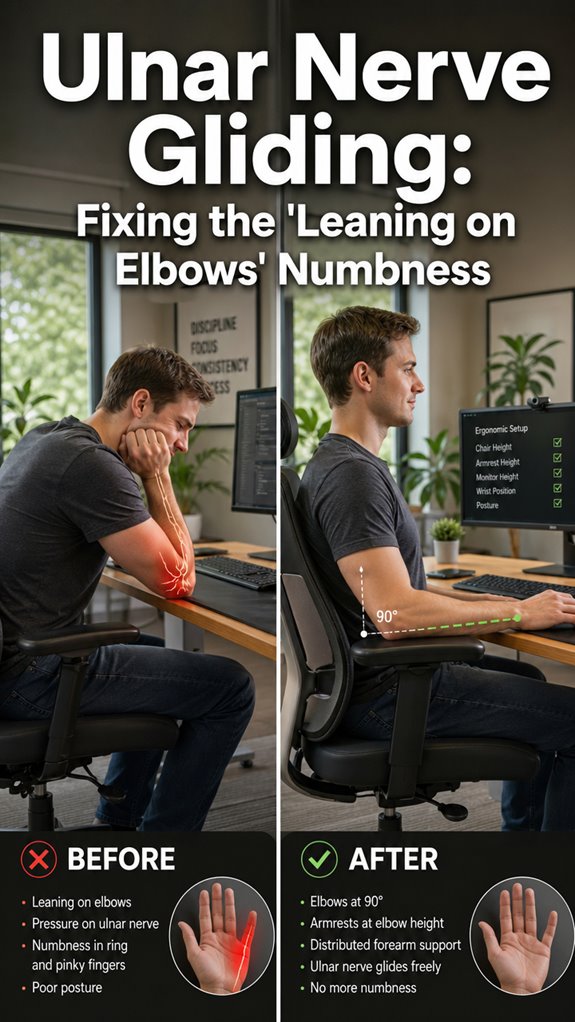
Maintain neutral pelvis positioning. Engage your transverse abdominis before slouching initiates. Think of it as load-balancing: distributing intra-abdominal pressure equally across your stabilization infrastructure.
Your desk job demands active monitoring. Deploy postural checksums every thirty minutes. Adjust your seat height so hip flexors maintain maximum angles.
This isn’t wellness theater. It’s preventative system maintenance against biological deprecation. Proper sitting posture can help mitigate the effects of diastasis recti by supporting spinal alignment and core engagement.
Core-Supporting Breathing and Movement Patterns
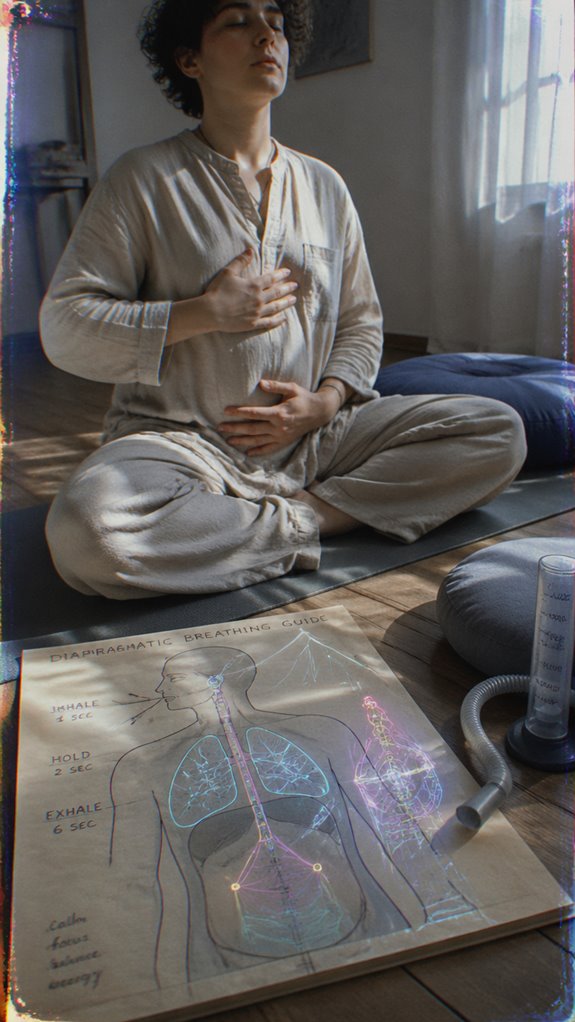
Before you can optimize core stability through movement, you’ve got to recognize that most developers are executing respiratory algorithms with deprecated parameters—shallow chest breathing that starves your stabilization stack of the oxygen it desperately needs to compile correctly.
Diaphragmatic breathing functions as your foundational runtime environment. You’re activating deep abdominal engagement, creating intra-abdominal pressure that stabilizes your lumbar spine during load-bearing operations—sitting included.
Movement patterns require synchronized breathing protocols. Exhale during exertion phases; inhale during recovery cycles.
This isn’t wellness theater. You’re literally preventing stack overflow conditions in your vertebral column while your lumbosacral junction handles production workloads.
Back Brace Caused Persistent Skin Irritation
While I’ve optimized my breathing stack and synchronized my diaphragmatic protocols, I’ve discovered that the hardware I’ve deployed to stabilize my lumbar runtime—a standard neoprene back brace—is executing a cascading failure at the application layer.
Persistent skin irritation that compounds throughout each eight-hour sprint cycle is the issue. To mitigate discomfort in similar scenarios, a high-quality arch support can provide a foundation that helps reduce overall body strain.
The friction coefficient between synthetic material and epidermis generates localized inflammation, degrading my cognitive load capacity.
I’m fundamentally debugging my own infrastructure while it’s actively crashing.
This represents a critical system design flaw: external stabilization mechanisms introduce unforeseen side effects that undermine their intended performance gains, necessitating immediate architectural reconsideration toward passive, endogenous solutions. Additionally, a high-quality standing desk mat can serve as a key component in promoting comfort and reducing strain during prolonged periods of standing.
Muscle Atrophy From Prolonged Bracing
The back brace’s therapeutic benefit decays exponentially once you’ve offloaded stabilization responsibility to synthetic material—your core musculature responds by entering a deprecated state, much like legacy code that’s been abstracted away from active maintenance cycles.
You’re fundamentally running production without load testing. Your erector spinae atrophies. Transverse abdominis decompiles into dysfunction.
Meanwhile, you’re debugging spinal instability while sitting hunched over—a perfect recursion loop.
The irony? You’ve replaced one vulnerability with architectural debt. Your body’s compensatory patterns trigger cascading failures downstream. You’ll need refactoring. Additionally, prolonged exposure to computer screens can negatively affect your sleep quality, further complicating recovery.
Dependency on External Spinal Support
Once you’ve outsourced your stabilization logic to a back brace, you’ve fundamentally created a hard dependency on external infrastructure—and like any monolithic system that’s grown too comfortable relying on a single load balancer, your spine becomes brittle the moment that external support fails.
You’ve practically introduced technical debt into your musculoskeletal architecture:
- Learned helplessness cascade: Your proprioceptive feedback loops atrophy faster than deprecated legacy code
- Single point of failure: Removing the brace triggers immediate system instability
- Runtime performance degradation: Unsupported lifting operations crash catastrophically
- Patch dependency hell: You’re now perpetually tethered to external hardware iterations
Your core’s become a ghost in its own shell. Furthermore, excessive dependency on external supports can lead to diminished muscle engagement, causing a decline in overall spinal health over time. This can be countered by actively practicing good posture, which reinforces muscle strength and stability.
FAQ
How Long Does It Take to Develop Passive Core Engagement Strength?
You’ll develop foundational passive core engagement in 4-6 weeks of consistent practice. However, you’ll need 3-6 months to build the neuromuscular patterns that support your spine reliably during complex movements and daily activities.
Are There Specific Foods or Supplements That Enhance Core Muscle Function?
You’ll strengthen your core most through protein intake, magnesium, and omega-3 fatty acids. However, you can’t supplement your way around consistent progressive training—nutrition supports the adaptation, not replaces the work.
Can Passive Core Engagement Prevent Future Spine Injuries and Degeneration?
Don’t you wonder why consistent passive core engagement transforms your spinal resilience? You’ll greatly reduce degeneration risk and injury probability by maintaining foundational stability throughout daily movement patterns.
What Age Is Too Late to Start Building Passive Core Stability?
You’re never too late to develop passive core stability. Your neuromuscular system adapts throughout life. Start now with progressive loading patterns, and you’ll build meaningful spinal resilience regardless of your current age.
How Does Passive Core Engagement Compare to Physical Therapy for Spine Health?
You’re building your foundation like a tree anchors itself—passive engagement works complementary to physical therapy, not as replacement. You’ll gain structural resilience through both integrated approaches, maximizing your spine’s adaptive capacity.