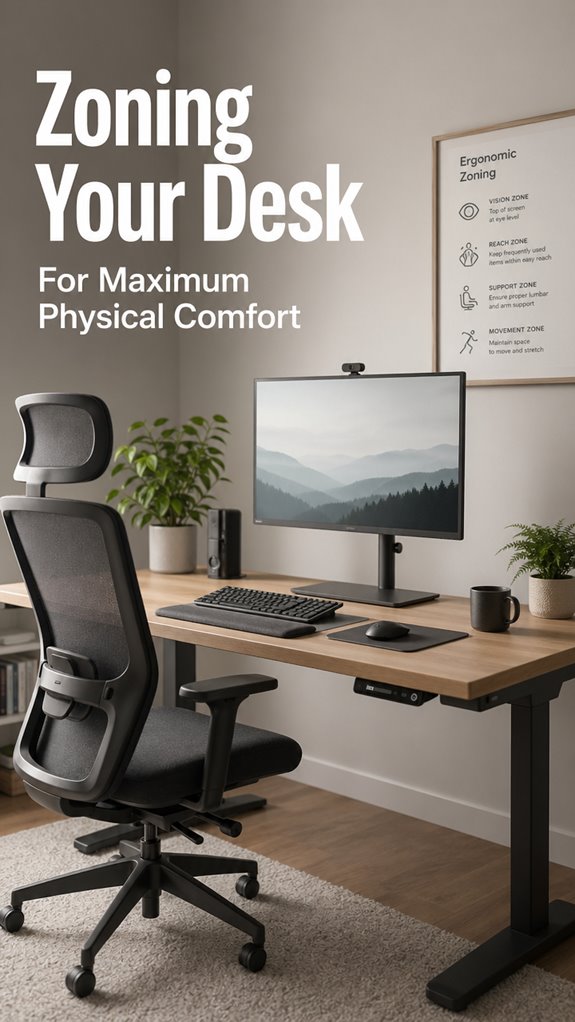
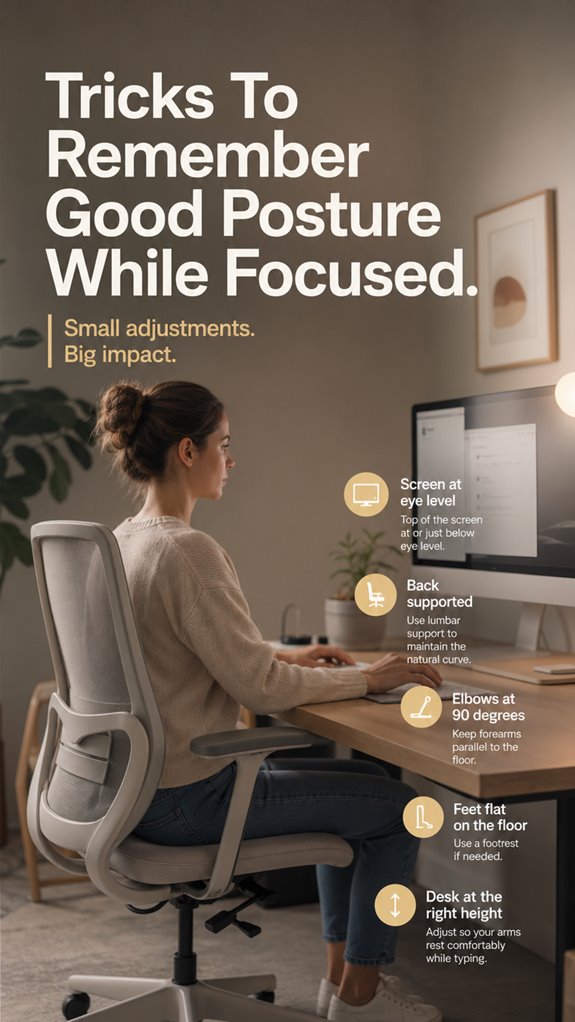
Ever catch yourself halfway through a sprint looking like a question mark? I did. My spine paid for it.
Three years coding Swift at an agency, I treated my Herman Miller like a thrift store chair. Leaned. Slouched. Rotated until my lumbar screamed. Then came the numb fingers. The headaches that felt like merge conflicts in my skull.
My fix? I hacked my environment instead of willpower. Sticky note on my monitor rim. Phone alarm labeled “uncurl.” A rolled hoodie became my desperate lumbar patch. Small triggers, big relief.
Your posture isn’t discipline. It’s infrastructure. What are you actually building?
Lower Back Pain From Coding: My Warning Shot
The Tuesday it happened, I stood up and my right leg stayed asleep. Neuropathy, the physio said. Twenty-six years old. I’d ignored the twinges for months,stacking Jira tickets instead of addressing the obvious. Turns out “sitting disease” meets disc compression creates genuine damage. Remote work ergonomics aren’t optional, they’re technical debt you pay with interest. That standing desk I mocked? Bought it the following week. Still use it. Still guiltily grateful.
Quick Takeaways
- Use visual cues like mirrors or screen alignment to maintain awareness of your posture during tasks.
- Incorporate physical reminders, such as lumbar supports or wrist checks, to prompt posture adjustments.
- Take brief breaks with movement exercises, like shoulder rolls or neck tilts, to reset musculoskeletal alignment.
- Implement ergonomic tools and adjustable furniture to support optimal positioning while working.
- Regularly monitor and recalibrate your setup with tactile diagnostics or feedback devices to sustain good posture.
Why Good Posture Helps You Focus and Feel Better
If we consider the human body as the original operating system—an infinitely complex, poorly documented beta build—then poor posture is like neglecting routine maintenance during a critical system update.
You’re running a multi-threaded process, executing complex logic, hoping the core doesn’t crash. When the infrastructure—muscles, bones, neural pathways—gets misaligned, performance suffers, errors multiply.
Think of slouching as debugging a segment that causes lag—unnecessary strain, cognitive overload, sluggish responses.
Maintaining good posture resets the core, reducing system errors, improving focus. Chair comfort plays a significant role in supporting good posture throughout the day.
Remember “Ghost in The Shell”: an optimized shell runs smoothly until neglected. System upgrades aren’t optional, even in your own hardware.
Visual Cues You Can Use to Improve Your Posture During Work
In the relentless runtime of a typical workday, your posture functions like a debugging tool—an essential visual cue that provides immediate feedback on the health of your human hardware. You monitor screen alignment and eye level—akin to keeping your IDE error-free—because misalignments cascade into system crashes.
Check your reflectivity; mirrors are the console logs of your physical state.
When you notice slouching or head forward like a deprecated function, recalibrate—perhaps shift from overeager hotkeys to a more modular, ergonomic posture. After all, even “Ghost In The Shell” understands: poor infrastructure fails silently until catastrophic. Keeping your shoulders relaxed and supported by wide armrests can significantly reduce discomfort throughout the day.
Simple Physical Reminders to Correct Your Posture Daily
While debugging your code demands precision, neglecting your body’s real-time feedback loop fosters a silent system failure—one no exception handler can fix.
You must implement simple physical reminders, like a subtle wrist flex or a mirrored check, to prevent this cascade.
Think of these as “interrupt signals” for your posture process—constant pings that reset the fatally compromised feedback circuit.
Just as a crash dump reveals system errors, these tactile cues expose musculoskeletal bugs before they escalate.
In the digital domain, we’d call it a “health patch.”
Critical for sustainability, yet absurdly overlooked, akin to trusting Ghost in the Shell to debug itself without routine maintenance. Integrating lumbar support pillows can significantly enhance posture support and comfort during long coding sessions.
Gentle Movement Exercises to Reinforce Posture Habits
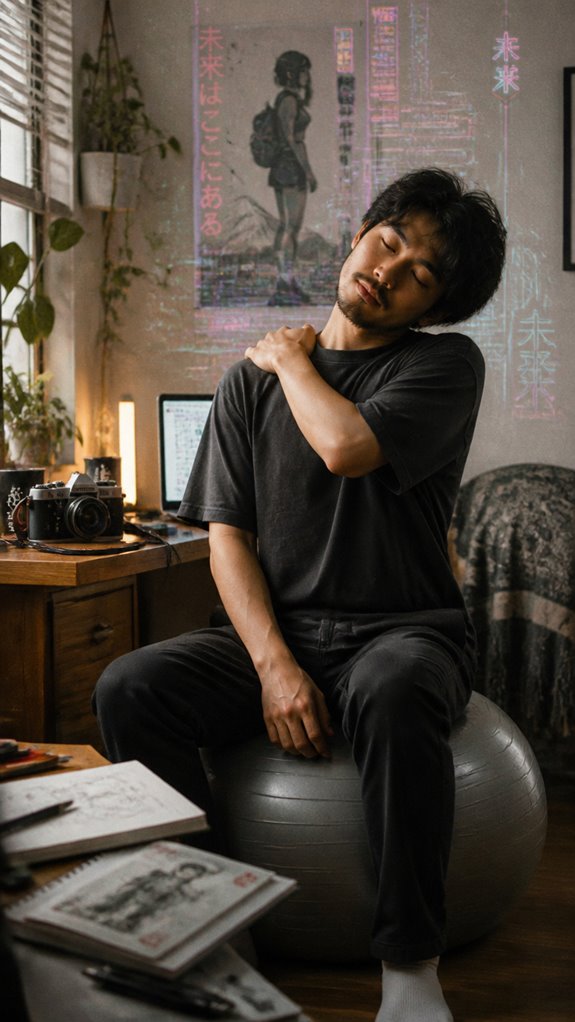
When your sedentary posture management system begins to throw sporadic exceptions—slouching, neck strain, shoulder impingements—it’s a clear sign passive reminders alone aren’t enough to maintain ideal system integrity.
Think of gentle movement exercises as scheduled debug routines. Micro-operations like shoulder rolls, neck tilts, or seated spinal extensions serve as system patches, reinforcing neural pathways and physical protocols.
Without these iterative updates, your hardware—namely, your skeletal framework—defaults to deprecated functions.
Consider this akin to “Ghost In The Shell”: upgrading human hardware’s firmware to bypass runtime errors. It’s not just maintenance; it’s system resilience.
Kindle Sensory Feedback Device
As a seasoned software engineer immersed in debugging persistent system faults, I recognize the futility of relying solely on passive alerts in a human hardware environment prone to sporadic misalignments and glitches.
The Kindle Sensory Feedback Device functions as a crucial subsystem, offering real-time tactile diagnostics—akin to a “Ghost in the Shell” upgrade.
- It decodes posture signals, minimizing false positives from sensor noise.
- Provides calibrated vibrations, supplanting the ambiguous loyalty of mental reminders.
- Enables user-controlled toggling, ensuring agency over environment feedback loops.
In essence, it hands over control, letting the user act as both tester and debugger of their own ergonomic patch.
Difficulty Sensing Spinal Alignment
Attempting to quantify the elusive state of spinal alignment drops you into some murky debugging territory, where sensor noise and immune system interrupts mimic fleeting glitches in a sprawling codebase.
It’s akin to running Ghost in the Shell diagnostics without a thorough UI—your proprioceptive feedback is inherently unreliable. You rely on external tools like mirrors or camera snapshots, but even these are rendered noisy by subtle shifts in muscle tension and postural “version drift.”
Ultimately, your infrastructure — musculature, awareness, and kinesthetic cues — requires patching through conscious checks, much like debugging a legacy system that never quite stabilizes. Incorporating soft desk accessories can enhance your ergonomic setup and aid in maintaining better posture.
Ergonomic Chair Adjustments
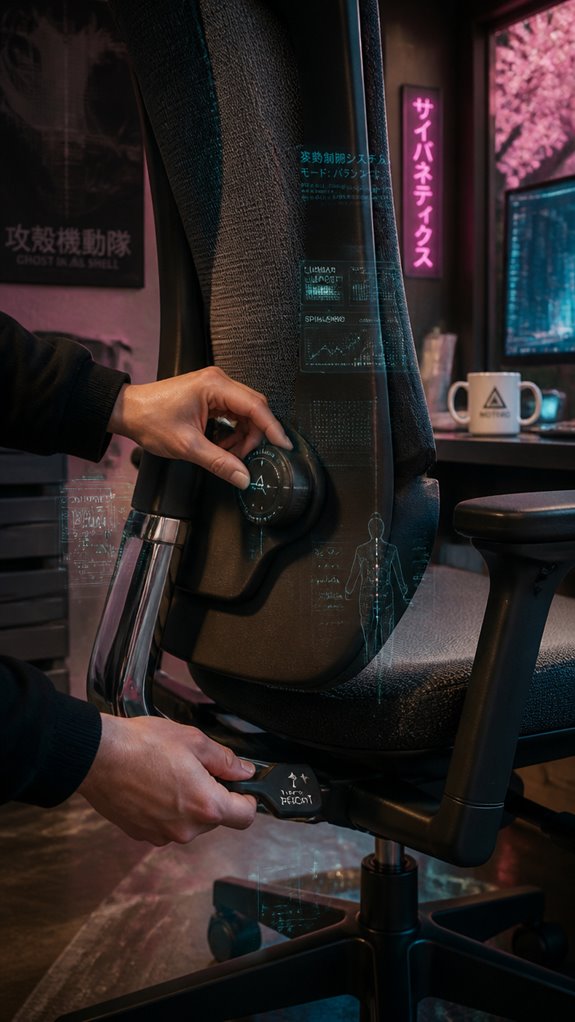
In the complex architecture of your daily workstation, if the chair is misconfigured—akin to a database schema clashing with module dependencies—your entire posture collapses into a cascade of downstream failures.
Consider this:
- Adjust lumbar support as if patching a critical bug—without it, your back throws a fit.
- Tweak seat height like fine-tuning a build parameter—too high or low and you risk a null pointer exception in your neck.
- Confirm armrest position matches your ergonomic API—misaligned, and you’ll get endless 500 errors in your shoulders.
- Remember to periodically stretch your neck muscles to alleviate stiffness from looking down, as neck stiffness can result from prolonged poor posture.
Adjusting Desk Height Properly
When your ergonomic infrastructure isn’t correctly configured, the entire user experience—your daily output—begins to degrade in ways that resemble a poorly executed debugging spree. Your desk height acts as the fundamental syscall for postural integrity; misalignments cascade, causing hardware failures in the form of back pain and repetitive strain errors.
You want this parameter to match your natural limb biomechanics—elbows at 90 degrees, wrists neutral, eyes level with the monitor’s top. Adjusting your desk is like refactoring a core module; failure here leads to system crashes—soreness, fatigue, performance bottlenecks. Think of it as brute-force patching a fragile kernel. Properly configured workspaces enhance desk productivity, promoting better focus and overall well-being.
FAQ
How Can I Maintain Good Posture During Long, Uninterrupted Focus Sessions?
During long focus sessions, you should regularly check your posture, adjust your workspace ergonomics, take micro-movement breaks, stay mindful of tension points, and use support tools like lumbar pillows, vibrating reminders, or standing desks to stay aligned and alert.
Are There Specific Eye Exercises That Support Posture Awareness?
Focus on eye exercises that align your vision, soften your gaze, and strengthen your eye muscles. Practice blinking regularly, shift your focus between near and far objects, and use gentle eye rolls to maintain awareness and support posture control.
How Does Stress Affect My Ability to Keep Correct Posture?
Stress tightens muscles, making it harder to maintain good posture. When you’re stressed, you unconsciously slouch or hunch, so managing stress through deep breathing and breaks helps you stay aware, relaxed, and in proper alignment.
Can Posture Habits Be Improved With Mindfulness Practices?
Yes, posture habits improve through mindfulness because you actively observe and correct your body’s alignment, transforming passive neglect into empowered control. With intentional awareness, you can break poor habits and build lasting, confident postural routines.
What Are Quick Tips for Correcting Posture in a Crowded or Noisy Environment?
You can quickly correct your posture in noisy, crowded settings by discreetly doing quick body scans, engaging your core, adjusting your seat or standing position subtly, and using tactile cues like pressing your feet into the ground for stability.
References
- https://www.healthwriterhub.com/how-to-stay-focused-and-organise-your-research/
- https://writing.wisc.edu/handbook/writingblogpost/
- https://pcur.princeton.edu/2025/10/finding-your-focus-5-tips-on-how-to-narrow-down-your-topic/
- https://www.ysobelle-edwards.co.uk/articles/how-to-research-for-a-blog-post
- https://medlineplus.gov/guidetogoodposture.html
- https://effectiveu.umn.edu/capstone/organize
- https://mountainmojogroup.com/blog/10-things-when-writing-blog-post/
- https://writingcooperative.com/the-2-best-ways-to-narrow-your-topic-e49cd8d1c10c
- https://www.acatoday.org/patients/posture/
- https://lexingtonspinalcare.com/3-tips-for-better-spinal-alignment-and-posture/
- https://www.webmd.com/osteoporosis/ss/slideshow-posture-tips
- https://www.usa.edu/blog/how-to-improve-posture/
- https://lifealignedchiropractic.com/3-tips-for-better-spinal-alignment-and-posture/
- https://ehs.stanford.edu/subtopic/postural-awareness
- https://www.hss.edu/health-library/move-better/improve-posture
- https://spinehealth.org/article/improve-posture-alignment-for-your-spine/
- https://centerforspineandortho.com/four-simple-ways-to-help-you-develop-your-posture/