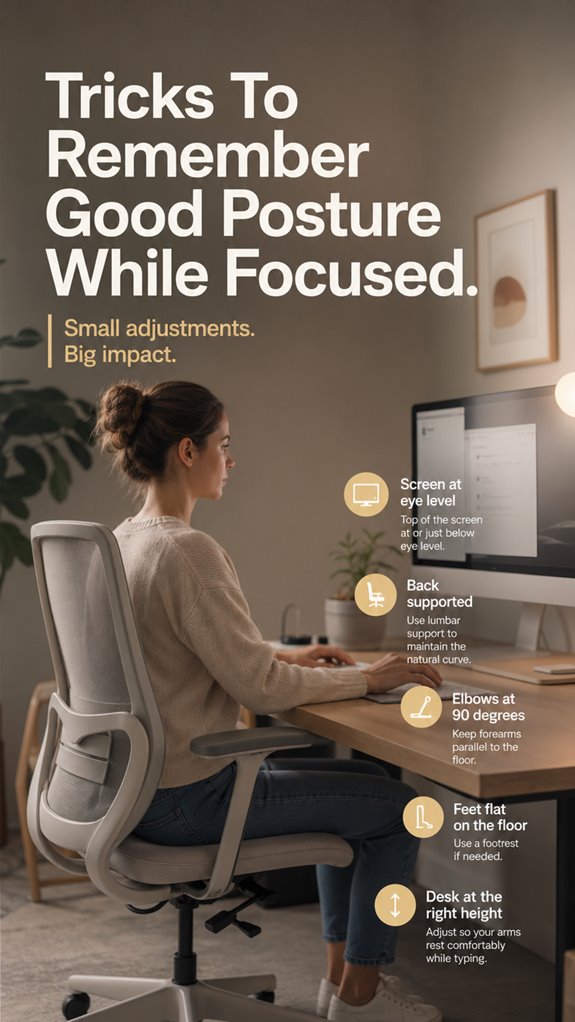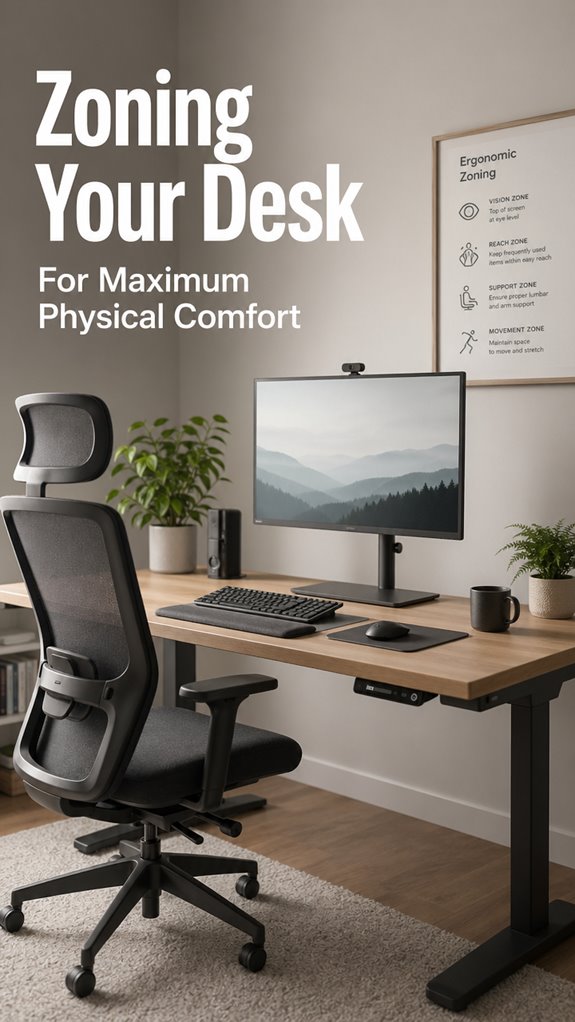

Tired of feeling like a human question mark after eight hours at your desk? I sure was.
My spine had become a Jenga tower mid-collapse. No brace could fix that.
—
I started treating my posture like technical debt. Small, daily commits: 90-second hip flexor stretches between standups. Core work that actually translated to sitting upright without trying.
The irony? Fixing my “infrastructure” took less time than debugging that race condition last sprint.
And yes, I still slouch when production burns. We’re human, not yaml files.
—
The “Ghost In The Shell” reference isn’t random. I watched Major Kusanagi’s fluid combat movements while my own neck craned forward like a turtle discovering WiFi. Anime posture became my unlikely motivator. Targeted exercises, not passive support. Motion over maintenance.
—
How I Fixed My Programmer Posture Without Back Braces After Years of Remote Work Coding Marathon Sessions
Three years of kitchen table coding destroyed me. Shoulders at ears. Pelvis tucked like I was apologizing for existing. My “ergonomic” chair was just expensive discomfort with lumbar delusions.
Then came the wrist pain. The headaches. The 2pm energy crashes that caffeine couldn’t touch.
I tried the brace route first. Felt like wearing a corset made of lies. My muscles atrophied further. The real fix? Movement snacks. Dead hangs from doorframes. Glute bridges during build times. Thoracic rotations between code reviews.
Remote work wellness isn’t about equipment. It’s about interrupting static positions before your fascia becomes concrete. Ergonomics, repetitive strain injury prevention, and mindful movement for developers.
Quick Takeaways
- Focus on strengthening shoulder stabilizers, core, and back muscles through targeted exercises like rows, planks, and Superman movements.
- Practice ergonomic habits, maintaining upright posture with shoulders back and head aligned during daily activities.
- Incorporate regular movement routines, such as micro-stretching and postural resets every 15–30 minutes.
- Use posture sensors and self-audits to monitor alignment and make proactive adjustments without reliance on external supports.
- Address muscular imbalances and flexibility issues, especially in hip flexors and hamstrings, through consistent stretching and targeted strengthening.
Understanding Natural Posture and Its Benefits
If you’ve ever navigated the labyrinthine codebase of your own anatomy, you’ll recognize poor posture as a memory leak—creeping, insidious, corrupting the core system. It’s like running “Ghost in the Shell” with a corrupt kernel—ephemeral but damaging.
Natural posture is the optimized state, a clean code deployment running at peak efficiency, where muscles, bones, and fascia sync like modular code. When maintained, it prevents system crashes—pain, fatigue, dysfunction—at the kernel level. Research has shown that top wrist rollers can significantly enhance grip strength, which is essential for maintaining good posture.
Proper alignment isn’t just cosmetic; it’s the essential design pattern that guarantees your infrastructure can execute complex tasks without debugging endless bugs.
Common Posture Problems and Their Causes
In the relentless runtime of your daily workflow, poor posture acts like a stubborn memory leak—gradually consuming system resources until the entire infrastructure stalls.
Gravity’s debug log persists: slouching, forward head posture, rounded shoulders, and sustained static positioning corrupt your core algorithms.
- Muscular imbalances cause misaligned priorities, often from neglecting foundational stability.
- Chronic static load disrupts proprioceptive signals, corrupting body awareness.
- External supports can mask, not fix, underlying code flaws.
- Lack of transactional movement leads to wear-and-tear, akin to deprecated software.
It’s like trying to run “Ghost in the Shell” on haunted hardware—systems degrade under their own dead weight. Incorporating shallow breathing techniques can significantly improve your overall postural health.
Simple Daily Habits to Improve Posture Naturally
Even amidst a sea of bug fixes and perpetual updates, your postural system is quietly suffering from neglect, much like a deprecated code library buried under layers of legacy spaghetti.
To avoid catastrophic failure, implement micro-optimizations: set timers to trigger ergonomic checkpoints, like cache invalidation routines.
Consciously reset your core loop—sit upright, shoulders back, head aligned, eyes on the horizon, not the monitor’s infinite scroll.
Engage calves during movement, akin to reinitializing dependencies—maintaining natural alignment prevents system crashes. Including top posture correctors can also support your efforts in achieving better postural health.
Key Posture Exercises: Strengthening and Stretching Your Muscles

When considering the architecture of your postural framework, the key lies in methodically debugging and refining the core muscle modules supporting your skeletal infrastructure—much like patching a misfiring kernel across a sprawling, legacy codebase.
You must systematically execute posture-specific exercises to root out inefficiencies.
- Engage scapular stabilizers with rows or wall slides
- Strengthen core integrity via planks
- Stretch hip flexors and hamstrings
- Reinforce lower-back muscles with Supermans
This approach creates a modular, resilient system, akin to debugging a critical kernel in Ghost in the Shell, ensuring your hardware—your body—can run without relentless crash cycles.
Monitoring Your Posture Progress and When to Adjust
Monitoring your posture progress functions much like tracking a long-running background process—silent logs, periodic checkpoints, and alerts for anomalies. You’re the sysadmin overseeing a fragile, biological infrastructure prone to micro-failures, from slouch-induced CPU throttling to neck strain buffer overflows.
Regular self-audits are your debugging tools, akin to inspecting logs for unintended spikes. When output data—such as discomfort or misaligned joints—exceeds thresholds, it’s time to patch variables or deploy a system restart: increased movement, posture correction exercises, or recalibration. To assist in this monitoring, consider incorporating top posture sensors that can provide real-time feedback on your alignment.
Like “Ghost in the Shell,” your system’s integrity hinges on continuous monitoring—an unending process of code adjustment amid the chaos of human hardware.
Trying Posture Correction Straps
Deploying posture correction straps feels akin to installing a driver update in a system compromised by legacy code—potentially stabilizing, yet fundamentally superficial without addressing core vulnerabilities.
In the digital analogy, your neural pathways resemble buggy code, and straps are like superficial patches—good for quick fixes but unlikely to resolve underlying systemic conflicts.
- They externally enforce a more “correct” posture, akin to a UI overlay.
- Calibration is a nightmare, often requiring iterative testing—akin to debugging middleware.
- Overreliance risks dependency, much like a script that fails without the latest library.
- Ultimately, straps are a Band-Aid for a database corruption you need to debug at source.
Surgical Risks From Passive Correction
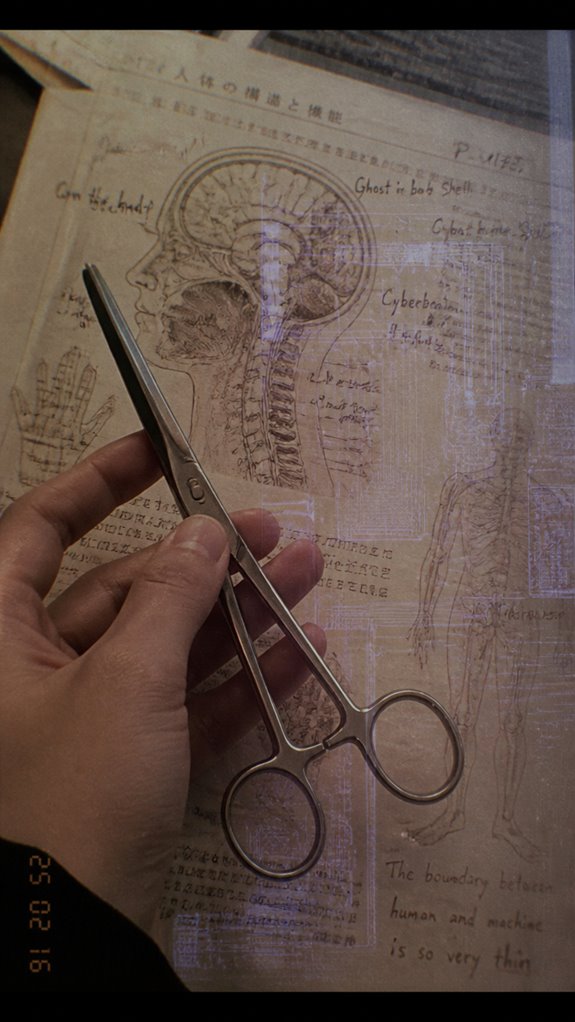
In the grand architecture of passive correction, surgical intervention functions much like a hardcoded patch applied atop a fragile codebase, risking inadvertent system crashes rather than seamless bug fixes. You wield invasive procedures, but beware: nerve and tissue damage become these systems’ “null pointer exceptions,” potentially causing chronic pain or neurological deficits—think of them as memory leaks.
Infection, hemorrhage, and scar formations resemble security breaches or data corruption that, ironically, could lock out your ability to move naturally. Just as Ghost in the Shell warns against “patching” complex neural architecture, these surgeries often ignore the underlying system’s architecture—your muscles—leading to rerouted, unstable code and future reboots.
Moreover, incorporating effective glute bridges can enhance stronger glutes and provide a more holistic approach to improving posture without invasive methods.
Desk Ergonomics Adjustments
This chaos isn’t just aesthetic—it’s a systematic breakdown reminiscent of debugging a legacy codebase riddled with memory leaks and inefficient loops.
Your workstation morphs into a fragile ecosystem, where misaligned monitors cause phantom eye strain, keyboard tilt triggers repetitive stress, and chair height anomalies escalate latency in musculoskeletal responses.
To prevent system failure, recalibrate:
- Top monitor at eye level, akin to setting a high-priority breakpoint
- Keyboard angle optimized for neutral wrist position, avoiding spaghetti code in tendons
- Chair height adjusted so feet rest flat, no dangling pointers here
- Lumbar support aligned, akin to patching memory leaks in a critical subsystem
Incorporating healthy posture habits into your daily routine can further enhance comfort and productivity.
Implement Mindful Posture Breaks
The macro failures of static workstation setups—namely, the creeping wear on your musculoskeletal kernel caused by an endless loop of monitor glare, keyboard dip, and chair sag—are enough to cause system crashes at the most inconvenient moments. To prevent this, implement mindful posture breaks; your code isn’t the only thing that needs refactoring. Strategically intersperse movement routines like walking in place, dynamic stretching, or micro-postural resets. These actions recalibrate your biomechanical subsystems, avoiding long-term liability accumulations. Consider this a debug cycle for your physical infrastructure: Regularly assessing your full-body posture can significantly enhance comfort and productivity.
| Movement Type | Duration | Frequency |
|---|---|---|
| Walking / In-place | 2 min | Every 30 min |
| Stretching | 1 min | Hourly |
| Postural Reset | 30 sec | Every 15 min |
FAQ
How Long Does It Typically Take to See Posture Improvements Naturally?
You can typically see posture improvements within a few weeks to a couple of months by consistently practicing awareness, regular movement, and exercises like walking and chair poses, though individual results depend on commitment and the severity of initial postural issues.
Can Posture Exercises Prevent Future Musculoskeletal Issues?
Posture exercises can prevent future musculoskeletal issues by improving alignment; studies show consistent activity reduces injury risk by 50%. You control your health by actively strengthening muscles and maintaining awareness, ensuring long-term support and reducing discomfort or strain.
What’s the Role of Mental Focus in Maintaining Good Posture Daily?
Your mental focus helps you stay aware of body position, making it easier to correct habits, avoid slouching, and engage muscles properly. Consistent awareness empowers you to maintain good posture naturally, reducing reliance on external supports over time.
How Do Age and Gender Impact Natural Posture Correction?
Age and gender influence your posture correction; as you age, muscle flexibility declines, making correction harder. Women might experience postural shifts due to hormonal changes. You control your efforts—stay active, aware, and adaptable to improve naturally.
Are There Specific Postural Habits for Athletes or Active Individuals?
As an athlete or active individual, you should focus on maintaining proper alignment during activity, incorporate dynamic movements like walking and stretching, and cultivate body awareness to prevent habits that lead to postural issues and optimize performance.
References
- https://thenaturalposture.com/blogs/news/how-to-fix-and-improve-posture
- https://www.youtube.com/watch?v=nb2scS0zqqA
- https://www.ontogendigital.com/how-to-do-research-for-writing.html
- https://news.ycombinator.com/item?id=35177110
- https://arxiv.org/pdf/1612.04888
- https://pureadmin.qub.ac.uk/ws/files/217388840/Assessment_and_Nonlinear_Modeling_of_Wave_Tidal_and_Wind_Energy_Converters_and_Turbines.pdf
- https://www.niu.edu/ceet/_files/senior-design/2020/senior-design-booklet.pdf
- https://pve.proxmox.com/pve-docs/pve-admin-guide.html
- https://openlibrary-repo.ecampusontario.ca/jspui/bitstream/123456789/307/5/Information Systems.pdf
- https://pmc.ncbi.nlm.nih.gov/articles/PMC12426618/
- https://pmc.ncbi.nlm.nih.gov/articles/PMC8915312/
- https://staibabussalamsula.ac.id/wp-content/uploads/2024/03/Johnny-Saldana_-Matthew-Matt-J-Omasta-Qualitative-Research_-Analyzing-Life-Sage-Publications-Inc-2017-staibabussalamsula.ac_.id_.pdf
- https://ngoaingu.vimaru.edu.vn/wp-content/uploads/Anthony-C.-Winkler-Jo-Ray-Metherell-Writing-the-Research-Paper_-A-Handbook-Wadsworth-Cengage-Learning-2011.pdf
- https://www.hifis.net/posts/
- https://github.com/bhargavvader/personal/blob/master/notebooks/text_analysis_tutorial/topic_modelling.ipynb