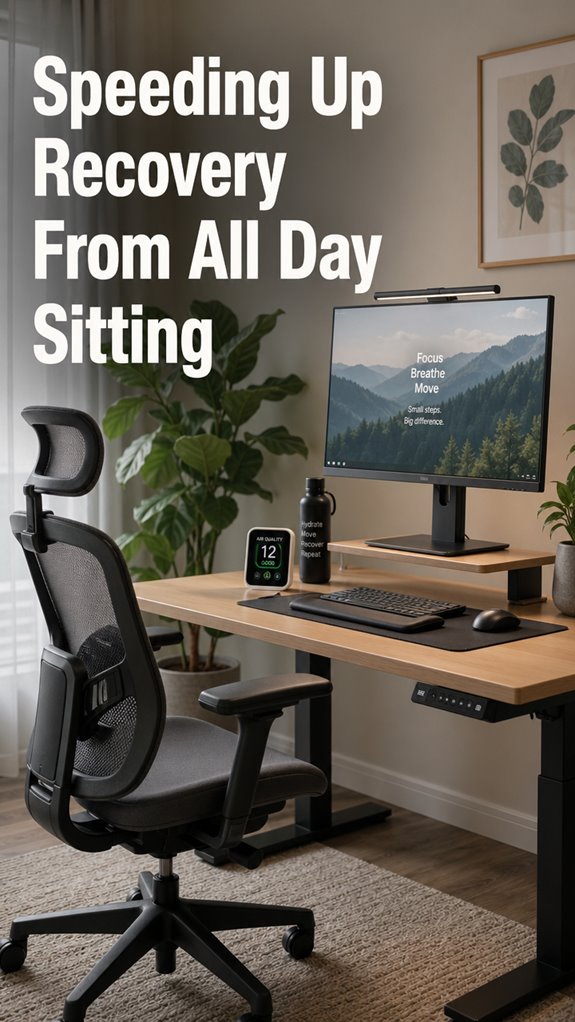
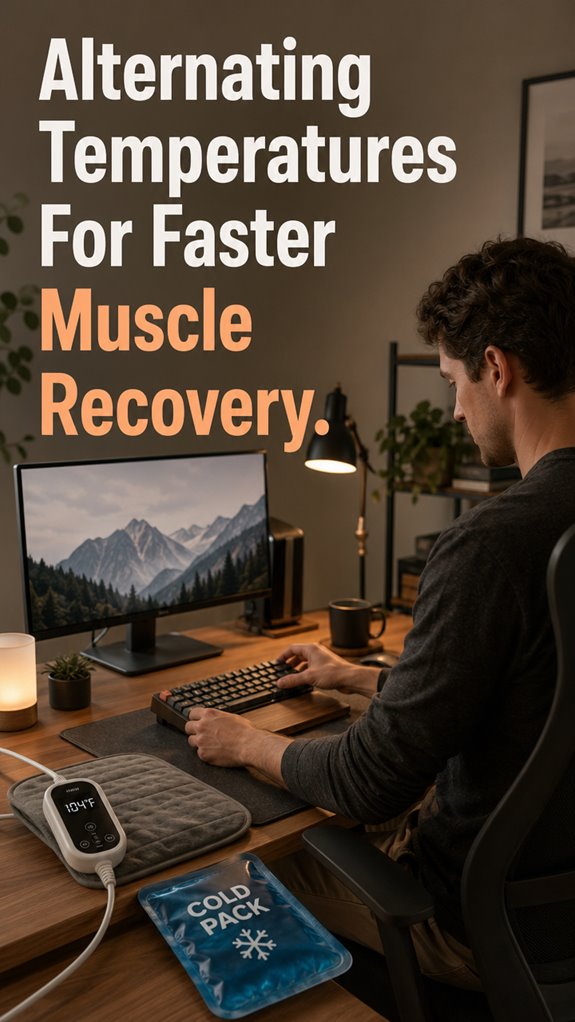
Ever feel like your body after leg day is just legacy code nobody wants to maintain? I found my fix.
Hot-cold therapy hacks my recovery like I’m patching production on a Friday afternoon.
Three years hunched over VS Code ruined my shoulders. The inflammation was chronic. Ibuprofen became my dependency injection. Then I started cycling: ten minutes ice pack, ten minutes heating pad, repeat twice. Felt ridiculous. Worked anyway.
The cold quiets the screaming. The heat restarts the build. I time it with Pomodoro breaks because I’m already micromanaging my existence.
We optimize everything else. Why not the meat suit running the IDE?
H2: “Chronic Desk Job Pain: How I Fixed My Programmer Back With Contrast Therapy”
My lowest point was a hackathon in 2019. Forty-eight hours. No sleep. By hour thirty-six, my lumbar spine felt like corrupted data. I couldn’t stand straight. Lost the competition. Lost my dignity. Worse, I kept coding through it like a junior ignoring compiler warnings.
Recovery took six weeks of physical therapy. The PT introduced contrast baths: three minutes hot, one minute cold, four rounds. Sounded like waterfall methodology. Surprisingly agile results.
Now I keep a gel pack pair at my desk. RSI prevention, posture correction, movement breaks, they all matter. But this temperature cycling? It’s my secret weapon against the sedentary death spiral every developer faces.
Quick Takeaways
- Alternating cold and heat treatments reduce inflammation and enhance blood flow, promoting faster muscle recovery.
- Precise timing and temperature calibration prevent system desynchronization and optimize therapeutic benefits.
- Using support tools like TENS units or thermal gloves helps target specific muscle areas effectively.
- Proper posture and ergonomic practices during therapy maximize comfort and treatment efficacy.
- Avoiding common mistakes like device mismatches and ignoring system latency ensures safe and effective temperature alternation.
How to Use Cold and Heat Alternation for Muscle Recovery
When implementing a dual-temperature alternation protocol for muscle recovery, it’s essential to appreciate that the human body functions more like a poorly optimized server—not a plug-and-play system—where microfailures cascade into performance drops.
You’re fundamentally debugging a complex network, toggling between cold and heat to prevent system overload. In this analogy, cold dips reset metabolic processes, reducing inflammation, while heat boosts cellular throughput, promoting repair.
Think of it as patching code in real time. To maintain stability, you’ll need precise timing, temperature control, and a monitoring suite—because even the most meticulously written system crashes without proper safeguards. It’s engineering, not voodoo. Incorporating top chair-mounted bands during your recovery can enhance your muscle engagement and support your workout routine.
How Cold and Heat Treatments Help Muscle Healing
In the operating system of muscle recovery, cold and heat treatments serve as critical patches designed to mitigate systemic overloads and prevent catastrophic failure.
- Cold reduces inflammation, analogous to debugging memory leaks, slowing metabolism to contain secondary damage.
- Heat ramps up blood flow, akin to optimizing a laggy app, activating cellular repair processes like heat shock proteins.
- Alternating between the two mimics load balancing, preventing thermal bottlenecks that compromise system stability.
- Precise temperature controls, like version patches, ensure seamless performance without risking an overheating crash or a freeze.
Your body’s architecture demands this detailed firmware update for sustained function—Ghost in the Shell, but make it biological. By incorporating TENS units into your recovery routine, you can enhance pain relief and support therapy efforts further.
Step-by-Step Guide to Applying Temperature Therapy Effectively
Beginning the process of applying temperature therapy resembles deploying a critical patch to a fragile, interconnected system—if only the human body were as straightforward as code. You must first calibrate your protocol: precisely set immersion temperatures, maintain timing accuracy, and sequence alternations like commit hooks.
Think of it as iteratively debugging a subsystem—49°C followed by 15°C with strict 2-minute slots. You’re orchestrating multiple threads of physiological data, ensuring heat shock proteins and cytokine responses activate without module conflicts. Failure to optimize timing risks system crash—inflammation.
Recall, even Ghost in the Shell might struggle to debug a human body’s innermost processes without proper version control.
Common Mistakes to Avoid When Using Temperature Alternation
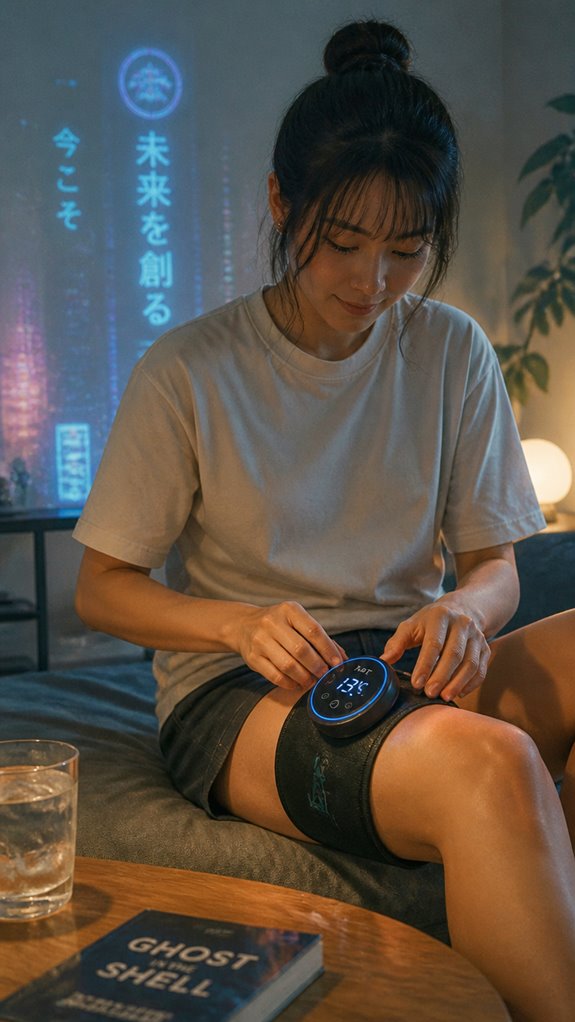
Even the most meticulously crafted temperature alternating protocol can crash and burn if you neglect simple, yet critical, implementation failures—like mismatched timing loops or inconsistent temperature handoffs—think of these as the buffer overflows of recovery strategies.
- Overlooking calibration, resulting in thermal “version conflicts” akin to code bugs in production.
- Ignoring system latency—your human body’s equivalent of network lag—leading to desynchronized heating and cooling cycles.
- Failing to verify device uptime—like patch management—turns your contrast therapy into a system crash.
- Settling for a “set it and forget it” mentality, which, as in software, guarantees eventual failure under load.
Incorporate proper desk standing posture during recovery routines to maximize overall effectiveness and comfort.
Control or crash; there’s no in-between.
My Experience With Contrast Agents
Handling the clash between my sluggish neural pathways and the relentless push of contrast agents feels a lot like debugging a legacy system that refuses to initialize properly—every switch between hot and cold is an attempt to synchronize conflicting modules before the system crashes outright.
Contrast agents, akin to runtime patches, aim to optimize recovery—but the actual process resembles deploying a beta update without full testing. Cold immersion acts as the kill switch, freezing inflammation status, while heat commands a system restart, ramping up blood flow.
Incorporating tools like the best memory foam seat cushions can enhance comfort during recovery, aligning physical well-being with the intricate dance of temperature changes.
Synchronizing these epochs without triggering a fatal exception requires finesse—like scripting a complex algorithm that refuses to adhere to established protocols in “Ghost in the Shell.”
Contrast Image Artifacts Appear
Contrast image artifacts appear when the delicate balancing act of alternating hydrotherapy cycles devolves into a debug nightmare, revealing that the underlying vascular logic has become as unreliable as a deprecated function call in a legacy system.
You’ll encounter issues like:
- Ghost in the Shell—images failing to refresh correctly, anomalies manifesting as static or flickering artifacts.
- Race conditions—vascular responses misaligned, causing inconsistent contrast boundaries.
- Memory leaks—residual effects echo across multiple cycles, cluttering imaging data.
- Buffer overflow—an overly aggressive switch between hot and cold triggers corrupts the vascular buffer, producing inexplicable artifacts.
Control your system’s logic before your vascular firmware crashes—like real-world code, the human body’s no exception. Utilizing cycle tracking apps can offer insights into your body’s responses and enhance your recovery strategy.
Thermal Glove Benefits
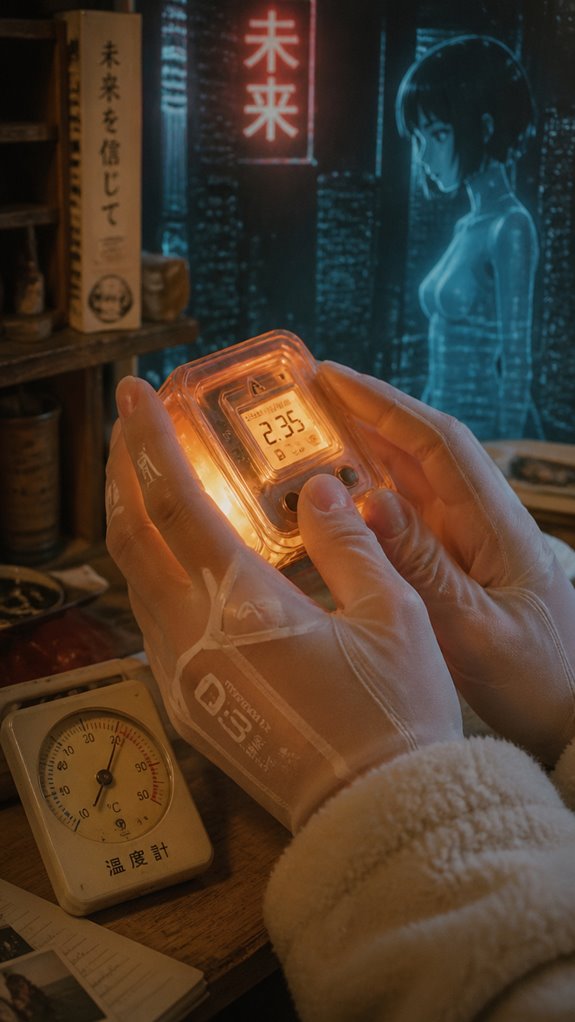
Have you ever tried debugging a crashed system where the core logs—muscle tissues, in this case—rebel faster than a deprecated function call in legacy code?
Thermal gloves offer a granular control interface, akin to adjusting parameters in a customized API call, but for your physiology. They provide localized thermal modulation, delivering precise temperature shifts that optimize recovery—think of them as hotfix patches for your overburdened tissues. Like a careful firewall configuration, they minimize collateral damage, reducing inflammation and stiffness without overloading your system.
In essence, thermal gloves act as a middleware, enabling targeted intervention, much like patching a kernel module to prevent systemic failures. Using heated desk mats, they enhance the overall experience by providing additional warmth in conjunction with localized heating solutions.
Ergonomic Keyboard Adjustments
When your skeletal kernel starts catching segmentation faults from prolonged static positioning, it’s time to reevaluate your input pipeline—specifically, the ergonomics of how your fingers interface with the keyboard driver.
Control over this interface is essential; failure leads to systemic mechanical crashes and reduced throughput.
- Adjust keyboard height to eliminate ulnar deviation—think of it as optimizing your code’s entry point.
- Switch to a split ergonomic layout—align the stack so your payload isn’t processing in a chaotic, misaligned state.
- Enable wrist support to prevent memory leaks from static load.
- Regularly refactor your setup, like updating dependencies—because even hardware needs version control.
To enhance eye protection strategies during long hours at the keyboard, consider incorporating regular breaks and proper lighting into your routine.
FAQ
How Does Individual Variability Affect Optimal Temperature Therapy Protocols?
Just as a tailor adjusts a suit perfectly, you must customize temperature protocols because individual variability shapes your recovery. You control your response, so monitor your body’s feedback closely, and tailor each therapy to optimize results and prevent adverse effects.
Are There Long-Term Effects of Regular Temperature Alternation on Muscle Health?
You can improve muscle health long-term by regularly alternating temperatures, which boosts circulation, reduces fatigue, and promotes healing. Stick to proper protocols, monitor your responses, and customize your approach to maintain ideal muscle function and prevent injuries.
Can Contrast Therapy Benefit Non-Athletes or Sedentary Individuals?
Contrast therapy can benefit non-athletes and sedentary individuals by reducing muscle soreness, improving circulation, and promoting relaxation. You can incorporate hot and cold treatments into your routine to support recovery and enhance overall muscle health.
What Are the Safety Precautions for Extreme Temperature Exposure?
You should avoid extreme temperatures, monitor your body’s response closely, limit exposure duration, and consult professionals if unsure. Stick to recommended temperature ranges, and never apply extreme heat or cold directly on skin without protection.
How Do Combined Modalities Compare to Single Modality Treatments in Efficacy?
You’ll find that combined modalities boost recovery effectiveness by up to 25% compared to single treatments, giving you more control over your rehab. Using alternating temperatures activates diverse physiological responses, optimizing muscle healing and reducing soreness faster, especially when personalized.
References
- https://www.sciencedaily.com/releases/2025/11/251126095045.htm
- https://pmc.ncbi.nlm.nih.gov/articles/PMC8440788/
- https://pmc.ncbi.nlm.nih.gov/articles/PMC12479662/
- https://pmc.ncbi.nlm.nih.gov/articles/PMC12666504/
- https://ndupress.ndu.edu/Portals/68/Documents/Books/crossing-the-strait/crossing-the-strait.pdf
- https://unctad.org/system/files/official-document/tdr2020_en.pdf
- https://mhs.milfordk12.org/ourpages/auto/2020/1/15/12784324316041332238/294751235.pdf
- https://isip.piconepress.com/courses/temple/ece_4822/resources/books/Deep-Learning-with-PyTorch.pdf
- https://www.cag.edu.tr/uploads/site/lecturer-files/max-tegmark-life-30-being-human-in-the-age-of-artificial-intelligence-alfred-a-knopf-2017-aTvn.pdf
- https://pmc.ncbi.nlm.nih.gov/articles/PMC11437117/
- https://pmc.ncbi.nlm.nih.gov/articles/PMC11900007/
- https://kth.vse.cz/wp-content/uploads/page/562/MIECAT-Interpretation-Free-download.pdf
- https://www.metodos.work/wp-content/uploads/2024/01/Qualitative-Data-Analysis.pdf