Ever feel like your brain’s running on 90% CPU with seven tabs of anxiety open?
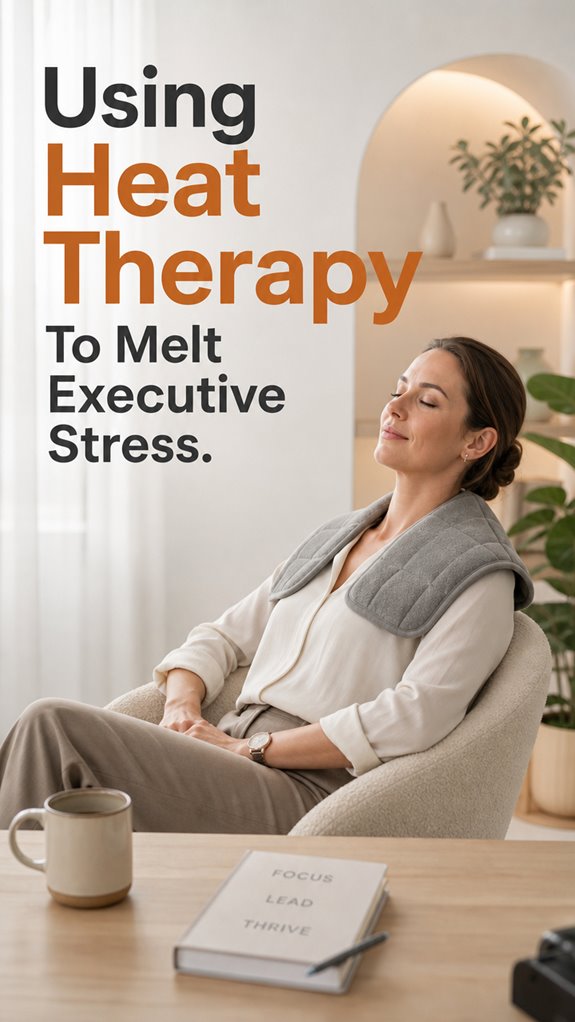
Heat therapy’s my hard reset.
I used to end days with a spine like a corrupted JSON file. Neck tense. Stress compiled but never executed. Then I tried a heating pad during standups. Game changer. Warmth hits those locked-up shoulders. Blood flow returns. Suddenly I’m not debugging my own nervous system.
The science? Vasodilation. Beta-endorphins. Actual relaxation instead of doom-scrolling through Stack Overflow at 2am.
Sauna’s better if you can swing it. 20 minutes. Sweat out the sprint retrospectives. Your lizard brain finally logs off.
It won’t fix your PM’s roadmap. But your hardware stops threatening to blue screen. Worth a deploy?
—
Heat Therapy for Remote Developers: Escaping the Desk Trap
Last March my left shoulder staged a full production outage. Sixteen-hour days. No ergonomic setup. Just me, a MacBook, and a chair from Craigslist that hated my spine. The pain radiated down my arm like a failed dependency tree.
I tried everything.Standing desk. Wrist braces. Even one of those bizarre posture correctors that make you look like you’re wearing a tactical harness. Nothing stuck.
Then my partner forced me into her infrared sauna routine. I protested. “That’s for wellness influencers,” I said, like a fool. First session: 25 minutes, 65 Celsius, podcast about serverless architecture. Exited feeling like someone had run `git reset –hard` on my nervous system.
The shoulder unlocked. Sleep improved. Even my code reviews got less passive aggressive. Hydration, electrolytes, cold shower finish. Non-negotiable now. Physical therapy, fascia release, and ergonomic audits matter too. But heat’s the commit I won’t revert.
Quick Takeaways
- Heat therapy activates the parasympathetic nervous system, reducing cortisol and adrenaline to lower executive stress levels.
- Regular sessions like sauna or hot baths relax muscles and improve blood flow, easing physical tension contributing to stress.
- Incorporating heat therapy into daily routines establishes predictable stress relief protocols, enhancing mental clarity and emotional resilience.
- Using ergonomic setups and micro-breaks alongside heat therapy supports sustained relaxation and prevents stress-related musculoskeletal issues.
- Automated timing and targeted heat application optimize stress reduction without overwhelming the body’s regulatory systems.
How Heat Therapy Eases Stress and Tension for Busy Professionals
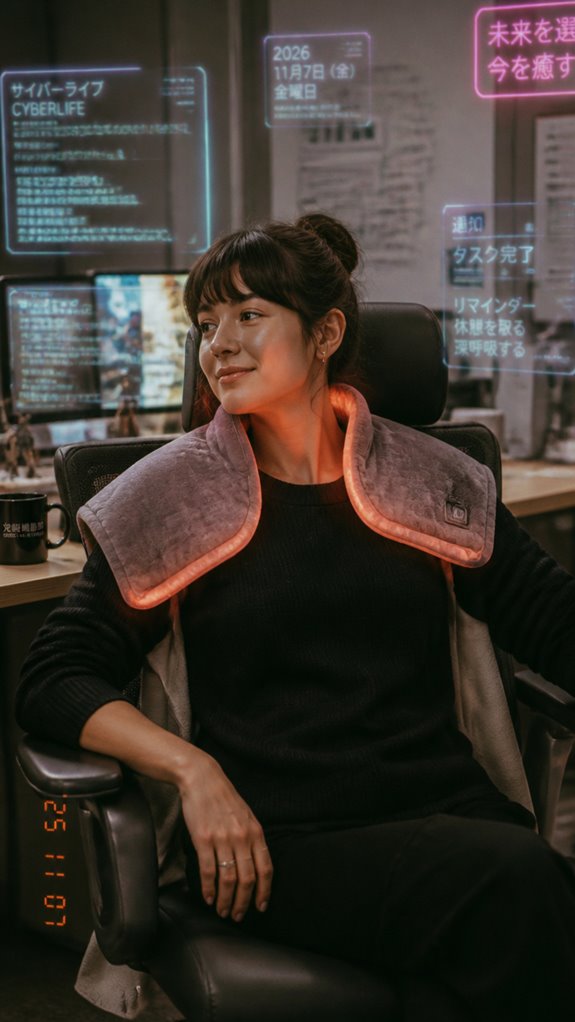
In the relentless runtime environment of a busy professional’s mind, stress functions like a memory leak—gradually degrading system performance until even the simplest tasks become insurmountable.
Warmth signals the autonomic nervous system to shift into “rest and digest,” flawlessly interrupting the cascade of cortisol and adrenaline overloads. It’s akin to patching a memory corruption bug; muscles relax, blood flow redistributes, and beta-endorphins load like a background process buffering in RAM.
This physical reset—much like debugging after a system crash—restores internal equilibrium. Somewhere, “Ghost in the Shell” would call this a human upgrade—if only the code were that simple to debug. Additionally, incorporating wide armrests can further enhance posture and reduce strain on the shoulders, mitigating tension that accumulates throughout the day.
Choosing the Best Heat Therapy Method for Stress Relief
When your mental CPU hits the dreaded kernel panic—a cascade of stress signals flooding your socio-cognitive memory heap—rebooting with a heat therapy process might seem like patching a memory leak with duct tape.
Choose your method with precision:
- Sauna: Deep system refresh—150–180°F, 15–30 minutes, two to four times weekly—like code refactoring for the skin.
- Hot Bath: Gentle patch—104°F, 15–20 minutes—to uninstall tension dependencies.
- Heated Yoga: Controlled environment—80–100°F, one hour—to debug muscular spaghetti.
- Whole-Body Hyperthermia: Targeted system upgrade—core temp to 101.3°F—akin to a firmware update in clinical iterations.
Additionally, consider integrating wrist pain relief strategies to enhance your overall comfort while unwinding.
The control is in your hands.
Safe and Effective Ways to Use Heat Therapy at Work
While debugging code often feels like chasing elusive bugs in a multilayered system, the human body operates as an equally complex, albeit less documented, backend. To execute heat therapy safely at work, you must configure parameters with surgical precision—think sauna sessions, hot packs, or heated neck wraps—avoiding system overload.
Use temperature controls sparingly, verifying material tolerances like a rigorous QA process. Integrate these routines into your work schedule, akin to patch deployment, ensuring they don’t crash your mental architecture.
Recall, like “Ghost in the Shell,” your system’s core processes—circulation, nervous regulation—must be patched with clinical exactness, not haphazard flair. Massage balls can also enhance your relaxation routine by targeting specific muscle groups while you work.
The Top Benefits of Regular Heat Therapy for Stress Management

Executing steady stress management is akin to managing an elaborate software system that’s riddled with memory leaks and bottlenecks; neglect the fundamentals, and your cognitive architecture risks crashing before you’ve even initiated a patch.
Regular heat therapy acts as a critical firmware update—calming the nervous system, upgrading neural circuits, and optimizing blood flow.
Key benefits include:
- Resetting the parasympathetic pathways—like rerouting data flow to prevent overloads.
- Releasing muscle tension—akin to freeing up system resources.
- Boosting neurochemicals—similar to applying a patch to enhance performance.
- Improving autonomic regulation—like stabilizing the core system kernel.
Moreover, incorporating lumbar pillows into your workspace can enhance posture support during these heat therapy sessions.
Simple Steps to Incorporate Heat Therapy Into Your Daily Routine
In the perpetual runtime of modern stress, your neural architecture often resembles a poorly managed codebase—memory leaks creeping into the parasympathetic gateway, causing system overloads that resemble a “Ghost in the Shell” malfunction.
To integrate heat therapy efficiently, establish daily routines like scheduled “system checks.” Sink into a hot bath or sauna—think of it as a patch update—around the same time each evening.
Set explicit parameters: 15-20 minutes at 104°F post-workout or in pre-sleep mode. Incorporating best posture correctors can also aid in promoting better alignment and reducing tension during your heat therapy sessions.
Automate—use timers or apps—like a daemon process—silencing stress bugs before they spawn.
Control is achieved through disciplined, repeatable protocols, not wishful thinking.
Applying Heat Pack During Meetings
Ever wonder if you can patch your stress infrastructure mid-meeting without causing a critical failure?
Applying a heat pack during a meeting is like hotfixing a memory leak on live code—risky but sometimes necessary.
- Engage the parasympathetic system—think of it as pressing the “pause” button on your internal “Ghost in the Shell” CPU overload.
- Relax tense muscle threads—your personal version of disabling unnecessary background services.
- Boost circulation—redistribute the “load” away from stress hotspots.
- Reboot your neural network—elevate beta-endorphins to temporarily debug pain signals.
Because sometimes, your system just needs a controlled thermal restart. Using a heating pad can provide significant comfort and relief during those heated discussions.
Heat Pack Adhesion Issues
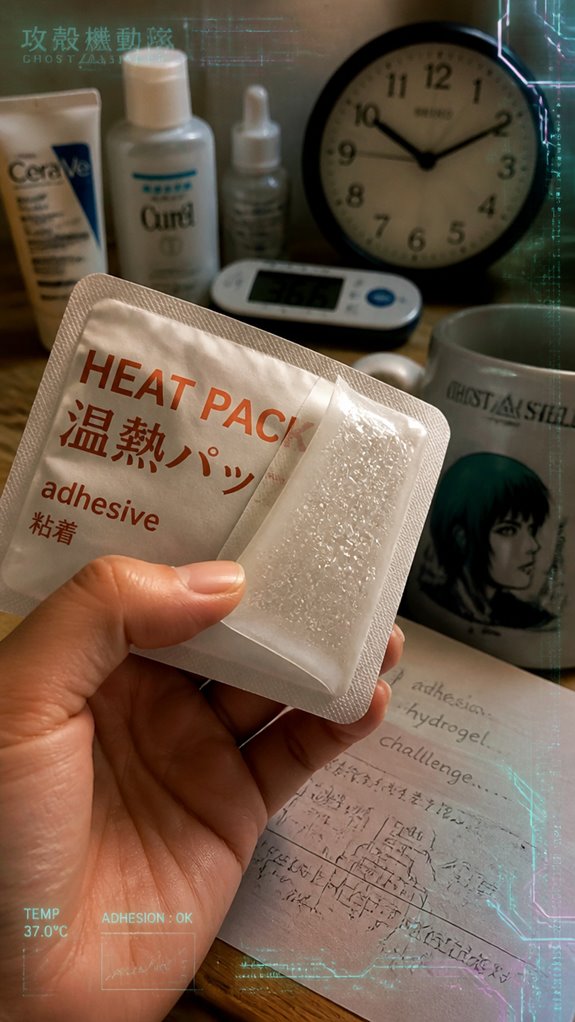
When it comes to maintaining the integrity of your heat pack’s adhesion, you might as well be debugging a legacy codebase suffering from decades of partial refactors and memory leaks—all while trying to execute a core function amid the chaos.
Skin microtopography, bony prominences, and variable moisture levels create dynamic shear forces that exceed the peel strength of hydrogel-based adhesives, akin to code breaking under pressure. Moisture, lotions, and sweat reduce tack by 40–60%, and repeated heating cycles induce microcracks, akin to a system with a memory leak.
Without proper optimization, your adhesion degrades faster than a deprecated API in a Ghost in the Shell echo chamber. To enhance user experience, consider investing in top vertical mice, which offer ergonomic benefits during prolonged use.
Neck Warmth Reduces Tension
While it might seem like a trivial patch—just slapping a heat wrap around your neck in the chaos of back-to-back meetings—the act addresses a fundamental system bottleneck: muscle tension as a failure point under load.
Neck warmth modulates the autonomic subsystem, activating parasympathetic pathways that manage stress spikes.
Key points:
- Logic: local warmth resets tension, prevents brute-force muscle spasms.
- Data: increases vasodilation—blood flow relief akin to a memory leak fix.
- Hardware: relaxes skeletal muscles—akin to freeing up CPU cycles.
- System state: stabilizes neural signals—like rebooting a sluggish OS.
Sometimes the simplest patches repair the core architecture, and effective nootropic stacks can further enhance cognitive resilience against stress.
Tips for Better Posture
In the relentless runtime of a day behind the terminal, your ergonomic infrastructure often devolves into a chaotic array of unresolved dependency conflicts—misaligned posture, muscle fatigue, and neural lag all conspiring to trigger catastrophic system errors.
Like debugging Ghost In The Shell’s cybernetic interface, you recognize that poor form corrupts performance at a fundamental level. To optimize, elevate your monitor and adjust your chair to maintain a neutral spine.
Regular micro-reboots—stretching, micro-breaks—serve as patches to prevent memory leaks of discomfort. Just as code refactoring prevents memory bloat, proper posture guarantees your hardware uptime doesn’t crash under the weight of endless compile queues. Implementing full-body posture tips can further enhance your comfort and productivity, ensuring you remain in peak coding condition.
FAQ
Can Heat Therapy Help With Long-Term Anxiety or Depression?
Heat therapy acts like a reset button, helping you control long-term anxiety or depression by activating relaxation responses, reducing inflammation, and boosting brain chemicals, empowering you to manage stress and improve mood naturally and effectively.
Are There Any Risks Using Heat Therapy During Medication?
Using heat therapy during medication can pose risks like burns or overheating, especially with blood-thinning meds. You should consult your healthcare provider first, guarantee proper temperature control, and never leave heat therapy unattended while on medication.
What Temperature Is Safe for Extended Heat Therapy Sessions?
You can safely extend heat therapy sessions at 104–110°F, but always listen to your body. Keep sessions manageable, stay hydrated, and stop if you feel uncomfortable—taking control guarantees safe, stress-reducing benefits every time.
How Quickly Do Benefits From Heat Therapy Typically Appear?
You’ll usually notice benefits like relaxation and mood improvement within just one or two sessions. Consistent heat therapy over a few weeks can further reduce stress, improve sleep, and enhance overall emotional well-being, giving you greater control over your stress response.
Is Heat Therapy Suitable for People With Certain Medical Conditions?
Heat therapy may not be suitable if you have cardiovascular issues, skin conditions, or nerve sensitivities. Always consult your healthcare provider first to make certain it’s safe for your specific conditions and won’t exacerbate any health concerns.
References
- https://www.uclahealth.org/news/article/heat-therapy-may-alleviate-depression-study-suggests
- https://globalwellnessinstitute.org/global-wellness-institute-blog/2024/02/27/heat-therapy-may-lead-to-better-outcomes-in-treating-depression-than-cold-exposure/
- https://www.restore.com/blog/everything-you-need-to-know-about-heat-therapy
- https://www.slownorth.com/blogs/journal/science-behind-heat-therapy
- https://centerforspecialtycare.com/benefits-of-heat-therapy/
- https://www.jazzhandsmassages.com/post/heat-therapy-why-it-works-and-how-to-maximize-the-benefit
- https://www.vailhealth.org/news/can-heat-help-heal-depression-vail-health-is-researching-the-possibilities
- https://pmc.ncbi.nlm.nih.gov/articles/PMC8285605/
- https://uspainfoundation.org/news/the-benefits-of-heat-and-cold-therapy-for-chronic-pain/
- https://www.therabody.eu/en/blogs/news/heat-therapy-for-performance-recovery-science-backed-benefits-and-best-practices
- https://pmc.ncbi.nlm.nih.gov/articles/PMC12819961/
- https://pmc.ncbi.nlm.nih.gov/articles/PMC12112625/
- https://www.178wing.ang.af.mil/Portals/69/documents/afh33-337.pdf
- https://catalog.sjsu.edu/mime/media/23/6870/2023-2024+Academic+Catalog.pdf
- https://www.scribd.com/document/664774180/Hava-E-Vidergor-Carole-Ruth-Harris-Eds-Appl-Book4you-org