Ever feel like your nervous system is running on spaghetti code written by an intern at 3am? That’s me before I found Box Breathing.
Picture this: I’m debugging a production crash, heart hammering, shoulders glued to my ears. My sympathetic nervous system was essentially throwing a tantrum. Not cute.
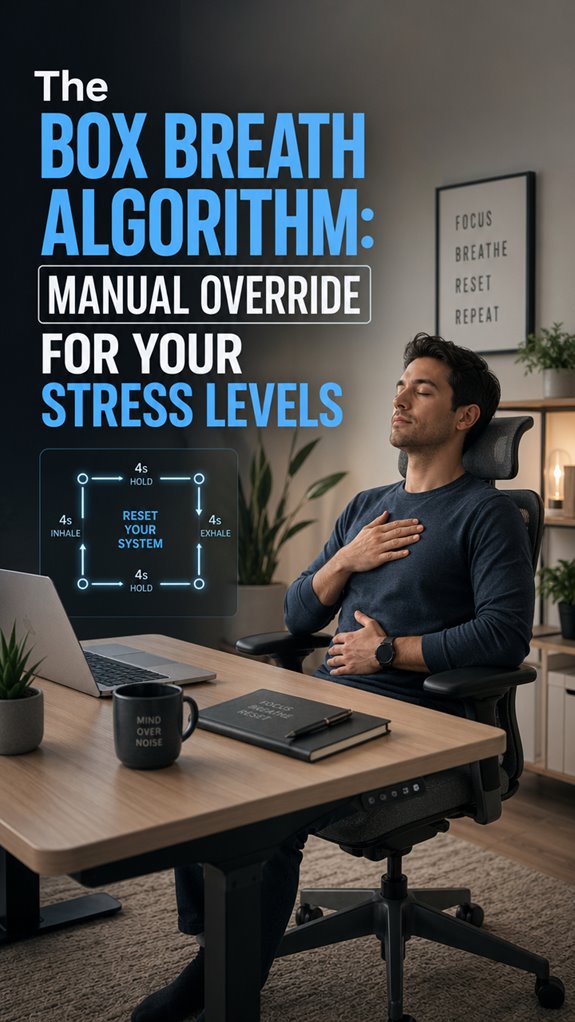
The fix? Four counts in. Hold. Four out. Hold. Repeat.
It’s like CTRL+ALT+DEL for your physiology. No meditation app required. Just breath as infrastructure.
I’ve stopped treating my body like borrowed hardware I can abuse. Turns out, continuous deployment works better without the constant panic. Who knew?
—
Box Breathing for Developers: When Your Body Starts Throwing 500 Errors
Last sprint, my Jira tickets were multiplying like unhandled exceptions. My posture had devolved into something approaching a question mark. Shoulder pain. Jaw clenched. Classic burnout architecture.
I started anchoring Box Breathing to my Pomodoro breaks. Inhale at my standing desk. Hold while reviewing pull requests. Exhale slowly. The physiological sigh thing actually works.
Pair it with ergonomic adjustments and occasional mobility work. Your nervous system isn’t legacy code you can ignore. It’s the production environment.
Version yourself sustainably.
Quick Takeaways
- The Box Breath Algorithm is a controlled breathing technique that resets the autonomic nervous system to manage stress.
- It involves inhaling, holding, exhaling, and holding each for 4 seconds to promote calmness.
- Serves as a manual override to reduce nervous system overload and restore emotional regulation.
- Regular practice functions as system debugging, reducing anxiety and improving focus.
- Incorporating tools like mindfulness and ergonomic practices enhances the effectiveness of the breathing reset.
What Is the Box Breath Algorithm and How Does It Help Manage Stress?
In the grand architecture of your autonomic nervous system, stress acts like an unhandled exception, crashing critical functions with alarming frequency.
The box breath algorithm functions as a manual system override, realigning respiratory patterns and enhancing emotional resilience. Additionally, utilizing acupressure mats can significantly aid in relaxation, complementing the benefits of controlled breathing techniques. Like debugging a faulty script, it cycles through structured inhale, hold, exhale, and hold phases—each meticulously timed—countering the chaos of hyperactivation. Incorporating relaxation techniques such as air compression therapy can further help soothe your muscles and improve overall well-being.
Understanding the Science Behind the Box Breath Technique
When your autonomic nervous system operates like a legacy codebase riddled with bugs—unpredictable, overactivated, spiraling into meltdown—it’s clear a simple patch won’t cut it, only a logic reset.
Breathing patterns, integral to this system, manipulate the nervous system’s threads, toggling between stress and calm states with algorithms akin to a debug sequence.
Breathing acts as a manual debug, stabilizing the nervous system’s chaotic code into a calm, predictable loop.
Box breathing’s precise 4-second inhale, hold, exhale, and hold serve as manual overrides, activating parasympathetic responses and silencing the chaos. Incorporating vagus nerve stimulators into your routine can further amplify these calming effects.
Think of it as bypassing the Ghost in the Shell, forcing nervous system processes into a stable, predictable loop—end-user experience restored.
Studies have shown that effective breathing trainers can significantly enhance lung health, making techniques like box breathing even more impactful.
How to Implement the Box Breath Algorithm in Your Daily Routine
Deploying the box breath algorithm into your daily routine is akin to patching a malfunctioning operating system—essential for restoring system stability amid cascading failures of the autonomic nervous system. This technique, often used in mindfulness practices, allows you to cultivate a greater sense of control over your stress levels.
You target breathing awareness as the debugger, applying relaxation techniques as code revisions.
Think of each cycle as a command, executed precisely: four seconds inhale, hold, exhale, and hold—like running a for-loop with controlled precision. Consistently practicing this can significantly reduce anxiety and improve focus, leading to enhanced productivity.
While your neural infrastructure struggles under relentless data overload, this deliberate protocol resets the system’s stress responses, a necessary manual override. Engaging with the vagus nerve reset helps mitigate stress-induced chaos by enhancing your body’s ability to regulate its underlying state.
Just like debugging Ghost in The Shell, you regain control before chaos triggers a total system shutdown.
Common Challenges and Solutions When Using the Box Breath Algorithm

Faced with the inevitable runtime exceptions—those nagging physiological glitches sabotaging your mental stack—users attempting box breathing often encounter buffer overflows of anxiety, brief mode crashes, or outright stack corruption in their autonomic response protocols.
When box breathing triggers system errors, stress overloads cause mental bugs and protocol crashes, demanding quick recalibration.
Breath synchronization becomes unreliable, causing stress modulation algorithms to falter under load, reminiscent of ghostly system errors in “Ghost in the Shell.” Incorporating proper eye care techniques can help alleviate discomfort from screen time, allowing for easier focus during stress management.
Low-level physiological signals—heart rate variability, cortisol spikes—serve as debug logs exposing system instability.
To mitigate, recalibrate timers, streamline inhale-exhale-hold cycles, and update your mental firmware. Incorporating eye training techniques can enhance focus during this process, enabling a more effective stress management protocol.
Without such patches, your stress response architecture remains vulnerable to random segmentation faults, rendering the entire protocol an elaborate placebo—like a beta release, forever stuck in debugging.
Enhancing Stress Relief With Manual Overrides: Tips and Tools
In the sprawling, glitch-ridden ecosystem of human physiology, deploying a strict box breathing protocol is akin to running legacy code on incompatible firmware—fragile, susceptible to runtime errors, and often interrupted by sporadic system failures like cortisol spikes or erratic heart rate variability.
Adjusting breathing patterns to counter stress triggers resembles patch deployment during a zero-day exploit, where static code simply crumbles under pressure. Incorporating effective stress relief tools, such as rechargeable hand warmers, can amplify comfort during these challenging moments.
To optimize stress relief, manual overrides serve as critical debugging tools—disabling automatics, reinitializing focus modules, and bypassing system noise—ensuring you don’t become the human equivalent of “Ghost in the Shell,” trapped amidst cascading physiological bugs that threaten operational integrity. Regular practice of breathing exercises can also help prevent muscle strain and discomfort from repetitive motions, like thumb pain from scrolling.
My First Calming Session
When confronting the inevitable chaos of a body operating on deprecated firmware—think cortisol spikes, erratic heart rate variability, and the ever-present risk of system crashes—I remind myself that the first step is often a manual override.
My first calming session was akin to debugging a stubborn code: I reset breathing patterns, introduced quantifiable stress triggers, and visualized the “box” algorithm as a critical system patch.
| Stage | Function | Duration | Focus | Result |
|---|---|---|---|---|
| Inhale | Initiate system sync | 4 seconds | Count and visualize the box | Calm exists |
| Hold | Buffer against false alarms | 4 seconds | Maintain focus on breath control | Tension drops |
| Exhale | Release system overload | 4 seconds | Slow exhale, ensure complete venting | Reset attainable |
| Hold | Verify system stability | 4 seconds | Prepare for next cycle | Baseline established |
Difficulty Maintaining Steady Rhythm

Just like debugging a rogue script, maintaining a steady rhythm during box breathing often reveals the internal chaos beneath system stability; the root isn’t misaligned input but the unpredictable hardware—your physiological responses—that destabilize even the most sophisticated timing loops.
- Visualization techniques act as system calls, ensuring clarity amidst asynchronous interruptions. Additionally, bolt score breathing provides a structured approach to assess your current state and track improvements over time.
- Breathing pattern adjustments serve as parameter tuning, accommodating latency in your autonomic responses.
- Incremental modifications mirror iterative testing—small, deliberate changes to stabilize and reset your internal state.
Like Ghost in the Shell, your biofeedback loops require constant patching. Without seated precision, your hardware will crash, and the algorithm’s demands become a distant, dystopian dream. Incorporating foam rollers can enhance recovery and improve your physical readiness, aiding in overall performance stability.
Mindfulness Apps for Breathing
Mindfulness apps for breathing act as patches—software modules optimizing relaxation techniques and breathing exercises. They serve as manual overrides, executing precise 4-count routines to suppress the chaos of the autonomic nervous system. Additionally, these apps often incorporate strategies for managing PMDD symptoms that can further enhance focus during stressful moments.
Yet, beneath the sleek UI lies fragile code—algorithms designed to manage emotional states while your hardware (your brain) stutters and sputters under load. The irony? No app can fully stabilize a system whose core architecture is fundamentally unoptimized. Meanwhile, research shows that high refresh rate monitors can help improve response times in competitive gaming, providing users with a smoother experience that could translate into more effective relaxation during breaks.
Ergonomic Breathing Tips
In the labyrinthine architecture of your neural hardware, systemic failures often begin with suboptimal input—poor posture, static load bearing, and an environment designed more for code than cognitive clarity.
Optimize your biomechanics for biological optimization, deploying ergonomic principles that serve as debugging routines for your stress management.
Align your body code—ergonomics as the ultimate debugging tool for stress and system crashes.
- Adopt a neutral spine position, akin to clean code—minimize exceptions.
- Use lumbar support and adjustable desks to avoid memory leaks via musculoskeletal strain.
- Incorporate breath-focused pauses, like breakpoints, to reset neural threads and implement a real-time stress signal. This approach can significantly enhance overall cognitive function by allowing your mind to recover from prolonged focus.
For peak performance, hack your physical chassis, much like patching legacy code, to prevent an inevitable crash. Remember, fostering developer comfort through such ergonomic practices enhances overall productivity and well-being.
FAQ
Can the Box Breath Algorithm Be Customized for Different Stress Levels?
Yes, you can customize the box breath algorithm with personalized options like adjusting inhale/exhale duration, holding times, or using stress adaptation techniques, empowering you to target and control different stress levels for maximum resilience and mental clarity.
Is It Safe to Practice Box Breathing During Physical Activity?
You can practice box breathing during physical activity if your breathing pace matches the intensity and environmental factors are safe. Stay focused, control your breaths actively, and avoid overexertion to harness power and maintain ideal performance.
How Does Automated Feedback Enhance Box Breathing Effectiveness?
Automated feedback elevates box breathing by sharpening your mindfulness meditation, empowering emotional regulation. You gain real-time understanding, allowing you to refine your technique, maximize stress reduction, and harness focused mental strength for unstoppable resilience.
What Are Signs You Should Stop or Pause the Breathing Exercise?
Visualize your chest tightening like a trapped storm; if you experience breathing fatigue or find your focus slipping into dangerous distraction risks, stop immediately. Prioritize your power and safety—pause, breathe normally, and reassess your readiness to continue.
Can This Technique Be Integrated With Other Relaxation Methods?
Yes, you can integrate box breathing with mindfulness meditation and progressive relaxation for intense relaxation power. Combine focusing on your breath with body awareness techniques to deepen mindfulness, amplify stress relief, and establish a commanding sense of calm.
Summary
As a senior dev steering the labyrinth of neural loops and system errors, you recognize that manual overrides — like box breathing — are the patch fixes for systemic stress failures. Despite the allure of perfect algorithms, the human hardware still hallucinates chaos even when executing meticulously structured routines. Emulating Ghost in the Shell’s cybernetic ethos, the truth remains: a well-timed reset might not fix runtime bugs but could reboot your own errant mental processes — if only you could deploy that patch more reliably.
References
- https://www.goodrx.com/health-topic/mental-health/box-breathing-benefits
- https://www.healthline.com/health/copd/box-breathing/
- https://health.clevelandclinic.org/box-breathing-benefits
- https://www.calm.com/blog/box-breathing
- https://dhwblog.dukehealth.org/mastering-box-breathing-a-simple-technique-to-relieve-stress/
- https://www.webmd.com/balance/what-is-box-breathing
- https://www.medicalnewstoday.com/articles/321805
- https://pmc.ncbi.nlm.nih.gov/articles/PMC9873947/
- https://www.youtube.com/shorts/n-efkFm0uWU
- https://pmc.ncbi.nlm.nih.gov/articles/PMC12622787/
- https://www.youtube.com/watch?v=tEmt1Znux58