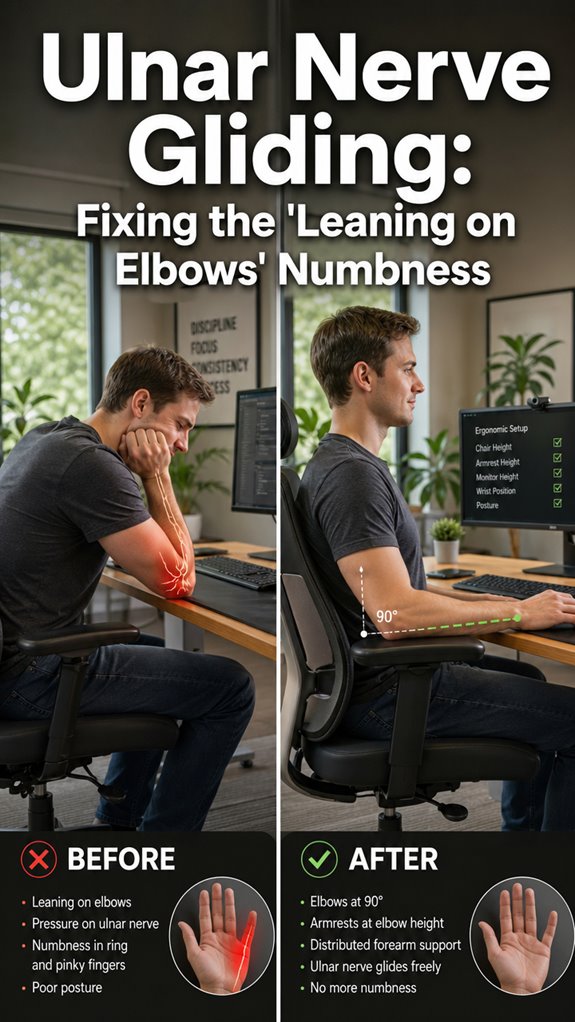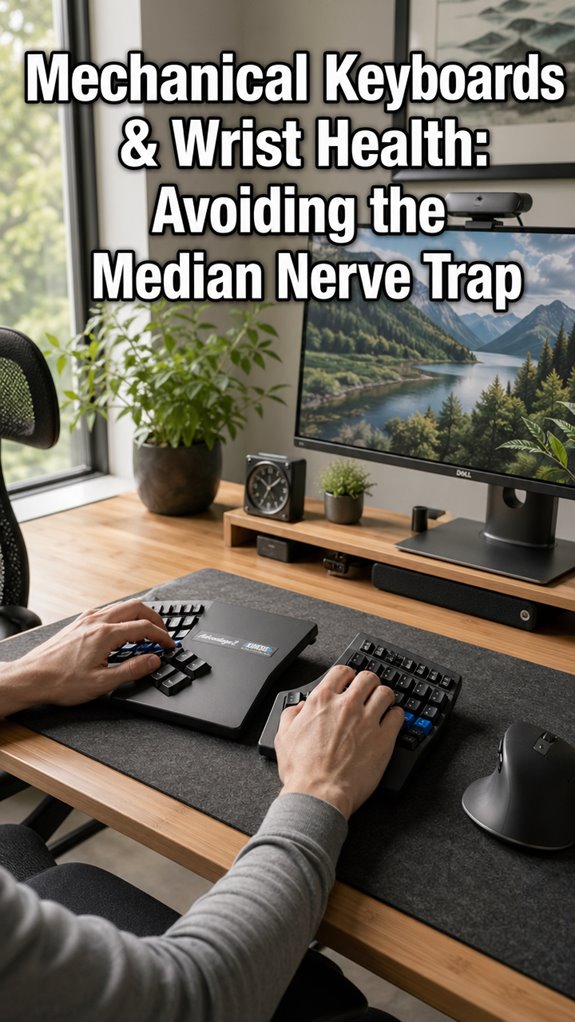
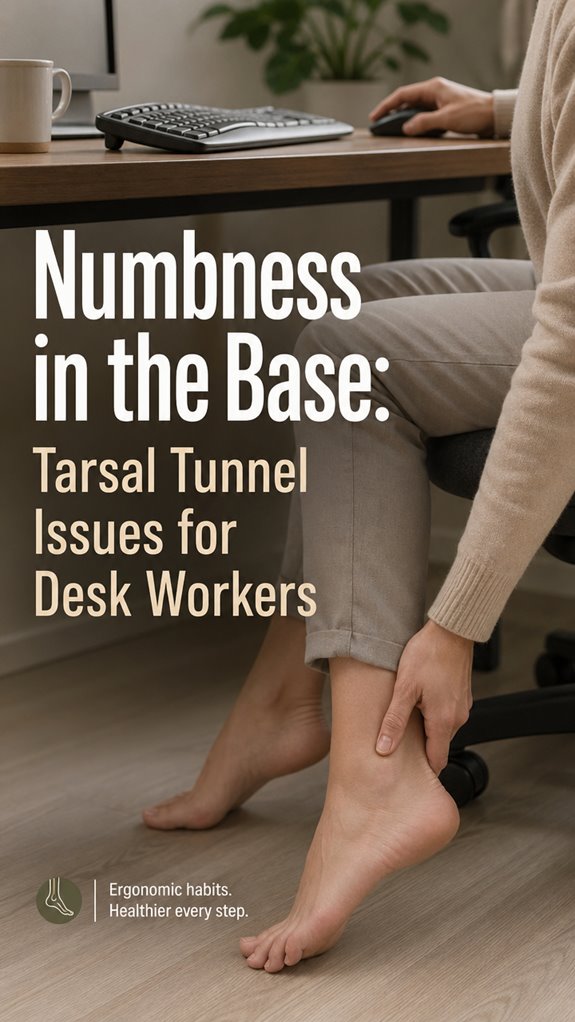
Ever feel like your foot’s gone to sleep and refuses to wake up? That’s not just pins and needles, that’s your tibial nerve screaming under your desk.
I learned this the hard way after twelve hours of coding in my thrifted IKEA chair, legs folded like a pretzel under me. The burning started subtle, almost ignorable. Then my big toe went numb. Classic tarsal tunnel, compressed right behind my medial malleolus. Turns out my “ergonomic setup” was about as optimized as legacy spaghetti code.
My body sent error logs for months. I ignored them. Now? Scheduled stretch breaks, footrest at proper angle, no more leg-crossing marathons. Debug your workspace before your nerves force a system shutdown.
Want fewer crashes? Listen earlier than I did.
—
Tarsal Tunnel Symptoms for Remote Developers: My ER Adventure
My denial peaked during a sprint deadline in 2022. Three weeks of fourteen-hour days, coffee, and completely ignoring the electric shocks shooting into my arch. I convinced myself it was “just circulation.”
It wasn’t. I collapsed getting midnight cereal. Emergency room, full workup, nerve conduction study. The specialist asked about my desk setup and laughed when I described my laptop-on-coffee-table arrangement. Sitting disease, meet chronic nerve compression. My EMG results looked like a failed unit test, red flags everywhere.
Now I parallel this with carpal tunnel awareness, repetitive strain injury protocols, and peripheral neuropathy prevention. Standing desks help, but only with proper footwear. Compression socks became my new commit habit. The guilt of that hospital bill still stings worse than the original symptoms.
Quick Takeaways
- Prolonged improper foot positioning and poor ergonomics can compress the medial nerve, causing numbness in the tarsal tunnel area.
- Signs include burning, tingling, or shooting pain, often worsening after long periods of sitting or at night.
- Flat feet, pronation, or inadequate footwear may contribute to nerve compression and nerve conduction issues.
- Regular breaks, foot exercises, and ergonomic supports can alleviate pressure and improve nerve health.
- Persistent numbness requires diagnostic testing, such as ultrasound or nerve conduction studies, to identify underlying nerve entrapment.
What Is Tarsal Tunnel Syndrome, and How Do You Know If You Have It?
Have you ever wondered if your biological system has a debug mode? Think of nerve entrapment as a `null pointer exception` in your neural code, triggering neuropathy and crippling throughput.
Tarsal Tunnel Syndrome is no different from debugging a corrupted process—pinpointing nerve compression beneath the medial malleolus, where inflammation causes “system lag.” Symptoms, like phantom glitches—tingling, burning, shooting pain—signal your sensor array’s failure.
If you’ve been running high-load, prolonged sitting routines, your neural infrastructure might be suffering from relentless neuropathy triggers. Recognize the signs before your system crashes—think of it as patching a critical vulnerability before catastrophic failure ensues. Additionally, using a best sleep mask could help improve your overall sleep quality, aiding in recovery from symptoms.
Common Causes of Foot Numbness in Desk Workers
When you’re tethered to a desk all day, the root cause of foot numbness often resembles a classic unresolved dependency—an unhandled exception lurking somewhere in the system architecture. This extends from macro-system issues (poor ergonomics, prolonged static states) to granular hardware failures (restricted circulation, nerve compression). Investing in top vertical mice can help improve wrist and hand positioning, which may reduce the likelihood of nerve-related issues that contribute to foot numbness.
| Cause | Symptom | Solution |
|---|---|---|
| Inadequate circulation | Tingling, burning | Circulation exercises, foot massage |
| Prolonged immobility | Numbness, hyperesthesia | Micro-movements, stretching |
| Structural issues (flat feet, pronation) | Weakness, atrophy | Custom orthotics, ergonomic tweaks |
| Inflammation/swelling | Sharp pain, swelling | Anti-inflammatory protocols, rest |
How Poor Posture and Ergonomics Contribute to Tarsal Tunnel Problems
Poor posture and ergonomic neglect serve as the ‘null pointer exceptions’ in the human-computer interface, quietly corrupting the system’s core modules—namely, neural pathways and musculoskeletal stability. As a senior developer debugging your own bio-workflow, you know the cascade of failures that introduce latency and bugs.
Unchecked ergonomics cause system crashes in neural pathways, silently corrupting the body’s core modules and slowing your workflow.
- Posture correction protocols act like patch updates, preventing unresolved conflicts in nerve signaling. Incorporating postural assessments into your routine can help identify specific areas that require adjustment.
- Ergonomic accessories serve as middleware, buffering the system from physical overload.
- Ignoring these fail-safes leads to the silent crash of your tibial nerve, akin to a ghost in the shell skimming through the cracks of your fallback routines. Integrating balance boards at work can further enhance your physical stability, restoring fluidity to your ergonomic setup.
Self-Tests to Detect Tarsal Tunnel Numbness at Your Desk
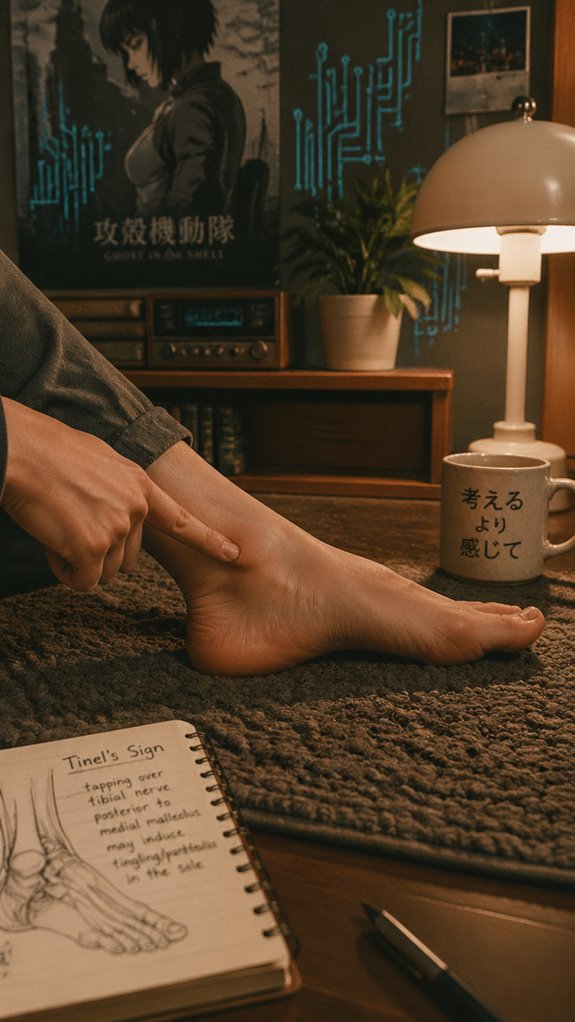
In the grand debug session of your daily ergonomics, detecting tarsal tunnel numbness functions much like running a stealthy unit test—except instead of code, you’re troubleshooting biological latency.
Begin with a rooted foot self assessment: gently tap over the posterior tibial nerve at the medial malleolus, mimicking your own in-built Tinel’s sign.
Next, deploy nerve testing techniques—dorsiflexion-eversion or resistance tests—akin to sending a ping to isolate the failing subsystem.
If symptoms flicker like a broken build, escalate diagnostics with ultrasound. Because, like Ghost in the Shell, your human infrastructure demands constant validation—on the fly.
Easy Strategies to Relieve Foot Numbness During Work
Despite the sleek facade of your ergonomic workstation, underlying system failures occur in the form of neural bandwidth throttling—namely, foot nerve compression punctuated by numbness and tingling that disrupt your workflow. To optimize human hardware, modify footwear choices for maximum support and agility, akin to patching firmware vulnerabilities. Consider incorporating an effective hand massager as part of your routine to alleviate tension, which can contribute to overall discomfort.
Implement circulation exercises—think of them as memory leaks cleared through iterative code—that promote unimpeded nerve flow. Listening to white noise can also help create a more focused environment, reducing distractions that contribute to discomfort.
- Switch to supportive, motion-permissive footwear
- Integrate micro-breaks with targeted circulation routines
- Adjust ergonomics to prioritize dynamic repositioning
Eliminate bottlenecks before the system crashes—artificial intelligence still can’t fix flawed human infrastructure.
When to See a Doctor for Persistent Foot Numbness
When persistent foot numbness begins to resemble a stubborn bug in your code—lingering despite repeated patches—it indicates a systemic failure beneath the surface.
You must escalate diagnostics if numbness hashes out in patterns resistant to your usual remedies: Adjust footgear, prioritize arch support, and avoid data corruption caused by subpar footwear choices. Additionally, consider investing in top orthotic insoles as they can provide enhanced comfort and support for your feet.
Here’s a snapshot:
| Symptom Severity | Trigger Factors | Intervention Priority |
|---|---|---|
| Mild | Prolonged sitting, poor footwear | Low |
| Moderate | Flat feet, inadequate arch support | Moderate |
| Severe | Night pain, weakness, atrophy | Critical |
Failure to upgrade your system could lead to catastrophic performance degradation.
Custom Orthopedic Insoles
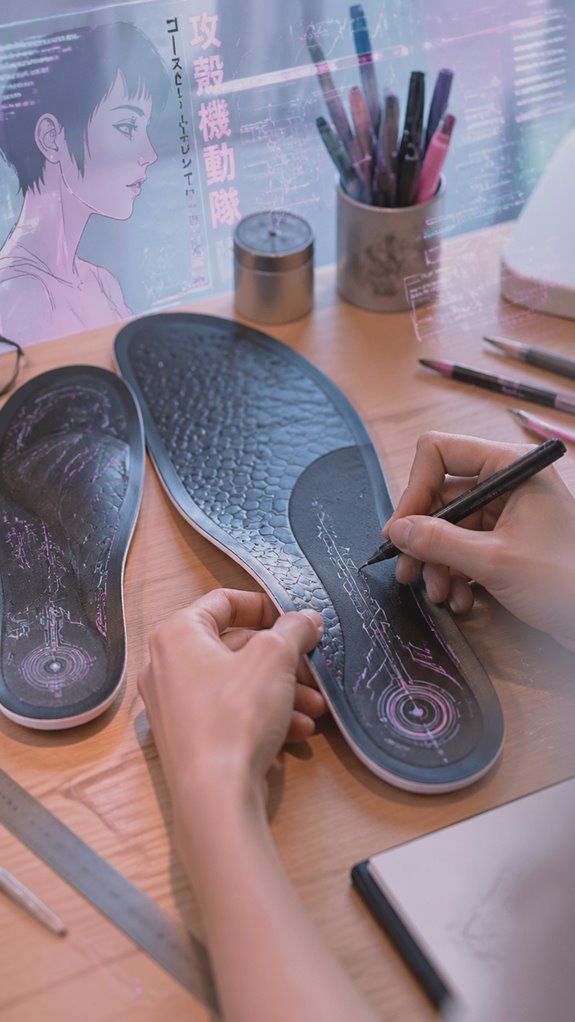
Custom insoles, designed for precise foot support, serve as the debugging tools in this biomechanical Rube Goldberg machine. They recalibrate the input, reducing manual override failures and telegraphing stability back to the neural gateway. They aggressively optimize alignment, counteracting the notorious flat feet bug, and suppressing pronation-induced memory leaks that surface as numbness and pain. For those of us running legacy hardware—aka seated at a desk—custom orthopedics are the firmware update our feet desperately need to maintain system integrity under prolonged load. Incorporating regular walking breaks can further enhance your remote work experience and improve overall foot health.
Early Nerve Compression Signs
In the debugging process of our bodily architecture, early nerve compression signs function like system logs—initial, seemingly innocuous anomalies hinting at underlying kernel failures. When your tarsal tunnel anatomy begins misfiring, it manifests as tingling or pins and needles on the foot’s plantar surface, akin to a minor bug in signal transmission.
These symptoms, reflecting compromised nerve conduction, serve as warning flags—burning sensations intensify at night, and electrical shocks may radiate. Like debugging code with an unreliable IDE, recognizing these early signs prevents system collapse, enabling a necessary update before the entire infrastructure, or “Ghost in the Shell,” crumbles under load.
Peripheral Neuropathy Awareness
Peripheral neuropathy functions much like a corrupted API endpoint—an insidious backend failure that silently degrades system communication, often unnoticed until performance crashes.
Peripheral neuropathy disrupts neural signals like a corrupted API, silently impairing communication until system failure.
You can mitigate this systemic flaw with targeted circulation exercises and optimized footwear choices—hardware upgrades for your biological infrastructure.
Imagine your nerves as tightly integrated modules, suddenly experiencing latency or packet loss, impairing motor and sensory data flow.
To troubleshoot:
- Analyze footbed ergonomics like code audits
- Implement circulation exercises as routine system checks
- Choose supportive, tailored footwear to prevent bottlenecks
Remember: Ghost in the Shell was just a glitch in the system; your nerve data isn’t so different.
Ergonomic Keyboard Positioning
The systemic failure of your physical infrastructure begins with inadequate ergonomic alignment, much like a malfunctioning API endpoint that silently corrupts data packets before they even reach the processor. Keyboard ergonomics, in this framework, resembles poorly configured code—overflowing with unnecessary redundancies—resulting in foot biomechanics errors that cascade into numbness and nerve compression at the tarsal tunnel.
Without precise calibration, your upper and lower systems fight against each other, mimicking a poorly tested patch. Properly adjusting your keyboard setup isn’t just user preference; it’s the debugging necessary to prevent an operational meltdown—because in this software-driven body, neglecting ergonomics is asking for an unavoidable system crash. Ensuring an optimal workspace environment can significantly improve desk productivity and promote better overall health. Regularly incorporating protective eye practices into your daily routine can also help mitigate additional strain on your overall body mechanics.
FAQ
Can Sitting All Day Cause or Worsen Tarsal Tunnel Syndrome?
Sitting all day can worsen tarsal tunnel syndrome by impairing foot circulation, increasing nerve compression, and adding strain to your ankle. To prevent this, take active breaks, elevate your feet, and improve ergonomics for sustained health.
Are There Specific Ergonomic Adjustments to Prevent Foot Numbness at a Desk?
Don’t let foot numbness hold you back; use proper foot positioning and ergonomic cushions to activate your power. Elevate your feet, switch positions frequently, and invest in supportive cushions to prevent tarsal tunnel issues and boost your productivity.
How Long Does It Typically Take to Recover From Tarsal Tunnel Issues?
Recovery depends on nerve compression severity and circulatory issues, but with prompt treatment, including ergonomic adjustments, rest, and therapy, you can often see improvements within a few weeks to months, restoring strength and reducing numbness powerfully.
Can Certain Footwear Increase the Risk of Developing Tarsal Tunnel Syndrome?
Like wielding a sword, your footwear selection can cut into your health; stiff shoes and poor materials can constrict your nerve, increasing tarsal tunnel syndrome risk. Choose supportive, flexible shoes to protect your power and mobility.
What Lifestyle Changes Help Manage or Prevent Chronic Foot Numbness?
You can manage or prevent chronic foot numbness by doing foot stretches regularly, correcting your posture, and avoiding prolonged sitting. Stay active, elevate your feet, and incorporate ergonomic practices to strike back against nerve compression and promote circulation.
Summary
In the grand architecture of your ergonomic system, neglecting proper posture and foot support is akin to deploying a flawed kernel update—inevitable crash inevitable. As a developer debugging a persistent memory leak, you’ll find that the root cause often lies deep within peripheral pathways, not just superficial discomfort. Recognizing early warning signals—like numbness—is your code’s exception handler. So, patch your workspace before your neural network, or in this case, your nerve infrastructure, stalls completely.
References
- https://www.iowainjured.com/library/tarsal-tunnel-syndrome-at-work-in-iowa.cfm
- https://www.illinoisworkerscomplaw.com/2011/05/work-related-tarsal-tunnel-syndrome/
- https://www.physio-pedia.com/Tarsal_Tunnel_Syndrome
- https://www.healthpartners.com/blog/tarsal-tunnel-syndrome/
- https://emergeortho.com/news/tarsal-tunnel-syndrome-symptoms-and-treatments/
- https://www.gothamfootcare.com/blog/the-hidden-ways-your-desk-job-could-be-hurting-your-feet/
- https://www.westsidepodiatrycenter.com/rewriteblog/1569-tarsal-tunnel-syndrome-an-occupational-hazard
- https://ptsmc.com/diagnosis/tarsal-tunnel-syndrome/
- https://www.baltimoreperipheralnervepain.com/video/our-tarsal-tunnel-self-exam.cfm
- https://pmc.ncbi.nlm.nih.gov/articles/PMC11971194/
- https://med.stanford.edu/stanfordmedicine25/the25/tarsaltunnel.html
- https://www.inspirahealthnetwork.org/news/healthy-living/when-numbness-strikes-recognizing-and-treating-tarsal-tunnel-syndrome
- https://firstpodiatry.com/blog/causes-and-symptoms-of-tarsal-tunnel-syndrome
- https://radsource.us/tarsal-tunnel-syndrome/
- https://www.hingehealth.com/resources/articles/tarsal-tunnel-syndrome/