Ever notice how your hands feel like they’re running on legacy code after eight hours at the keyboard? Mine definitely do.
My palms used to seize up like a frozen server mid-deploy, all tingling and stubborn resistance. I’d ignored the warning logs for months, fingers still hammering away at my mechanical keyboard like nothing was wrong. The fascia had other plans. Dense, stubborn, full of adhesion bugs that needed manual patching.
I started small. Lacrosse ball between meetings. Finger extension stretches while waiting for builds. Trigger point work with a theracane during standups that could’ve been emails.
The refactor took weeks. But my hands? Finally compiling smoothly again.
Why My Developer Hands Nearly Became Legacy Hardware: A Cautionary Tale
Three years ago I couldn’t open a jar without wincing. The diagnosis was de Quervain’s tenosynovitis meeting stubborn palmar fascia thickening, basically repetitive strain injury‘s angrier cousin. I’d normalized the dysfunction, coffees growing cold while I massaged my own thenar eminence under my standing desk.
My breaking point came during a hackathon. Forty-eight hours of nonstop typing and my right hand simply… logged out. Numb, curled, useless. I finished that project one-handed, humiliated, watching younger devs with their pristine nerve glides and ergonomic splits.
Physical therapy revealed the full damage: my flexor retinaculum had essentially hardcoded itself tight, compressing the median nerve. Carpal tunnel syndrome was knocking. The recovery involved graston technique, nerve flossing, and confronting how aggressively I’d ignored my own body’s error messages. That vulnerability still surfaces, sometimes, gripping my mouse at 2 AM during a production incident.
Quick Takeaways
- Perform gentle palm and finger stretches to release fascial adhesions and improve mobility.
- Use targeted manual techniques like massage and trigger point therapy to break fascia cords and reduce stiffness.
- Incorporate finger lifts, tendon glides, and palm stretches regularly to maintain fascial flexibility.
- Apply soft tissue tools such as massage rollers or therapy balls to aid fascia remodeling and adhesion release.
- Seek professional evaluation for persistent or worsening tightness to prevent fibrotic contractures and optimize hand function.
What Fascia Is and Why It Matters for Hand Movement
Much like debugging a sprawling codebase with patch after patch, understanding the human body’s connective tissue—specifically fascia—is essential for maintaining ideal hand function amidst inevitable system degradation.
Fascia acts as the skeletal framework’s API, providing fascial elasticity that preserves system integrity. When connective tissue health falters—akin to memory leaks—it causes tightness and restricted mobility, resembling a Ghost in the Shell where the interface breaks down. Using top vertical mice can help alleviate strain on the hands and wrists, promoting healthier fascia movement.
These granular failures manifest in the hand’s surface, where thickened fascia turn into binding cords.
You must optimize this subroutine, ensuring fascia remains agile, flexible, and resilient—lest the entire system grind to a halt in frictional stasis. Continuous Glucose Monitoring can provide insights into body’s metabolic responses, which may indirectly reflect overall health and bodily function, including fascia condition.
Causes of Tight Fascia in Your Hands and Fingers
When the body’s connective tissue system encounters a memory leak or bugs—think carpal tunnel alerts or repetitive strain beneath the interface—things start to slow, jam, and become unresponsive.
Hand tissue’s fascial elasticity degrades under relentless micro-bugs: sustained static load, improper ergonomics, or a glitchy work environment, akin to “Ghost in The Shell” glitches in human hardware. The failing substrate compromises connective integrity, causing thickening and tightening of fascia. Moreover, this condition can lead to shoulder leaning pain, as tension builds along the fascial lines connecting the entire upper body.
This cascade disrupts the hierarchical, finely-tuned architecture of hand function, turning a fluid interface into a stiff, unresponsive brick wall. Basically, your fascia’s firmware is corrupted, and manual fixes are desperately needed. Additionally, incorporating L-Theanine and coffee can help enhance focus and improve the cognitive function needed for effective fascia management.
How Manual Techniques Can Loosen Your Palmar Fascia
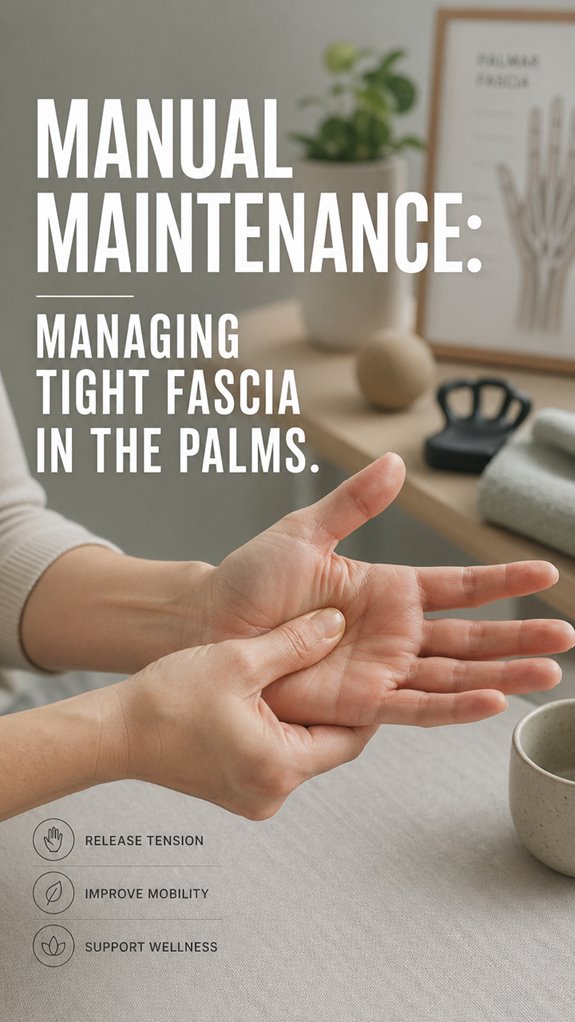
Have you ever felt like your hand’s firmware has been corrupted by an endless stream of macro failures—those embedded micro-errors progressively causing fascia layers to thicken, tighten, and run rogue? Trigger points resemble undefined bugs—small but catastrophic code snippets—that lock down connective tissue, making manual control impossible.
Manual techniques, akin to debugging scripts, can identify and release these faulty modules. Gentle massage scripts and targeted stretching act as system patches, rerouting data flow and unblocking fascia pathways.
Like Ghost in The Shell’s cybernetic repairs, precise interventions can recalibrate fascial architecture, restoring operational fluidity—if only temporarily before the next system crash.
Effective Hand Exercises to Release Fascia Tension
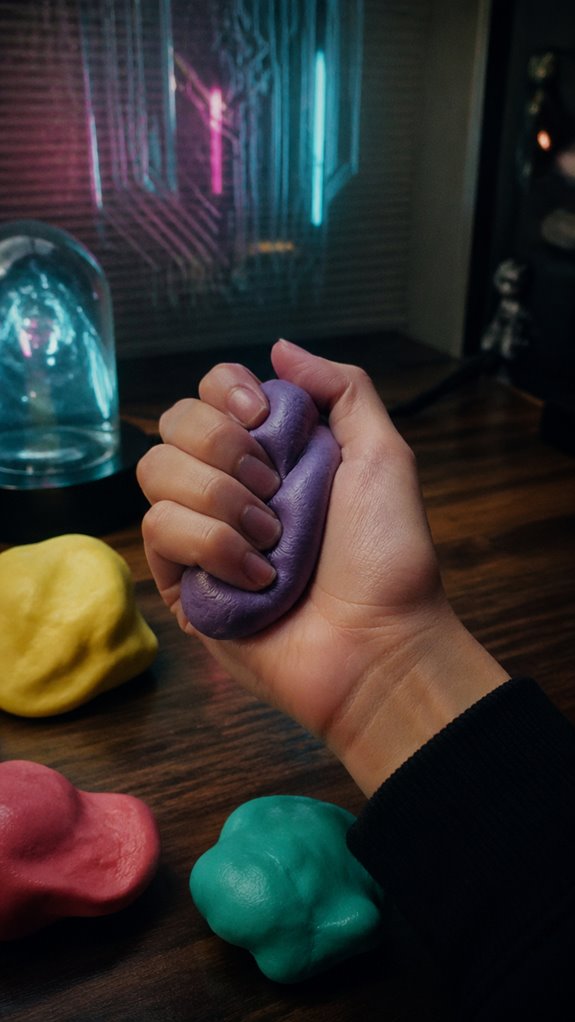
In the grand debugging process of the human musculature—much like updating a legacy codebase riddled with spaghetti—effective hand exercises serve as the essential patch to release fascial tension and prevent system lockups.
You initiate with targeted movements to optimize fascial elasticity and re-establish hand flexibility, akin to patching an API glitch before cascading failures. Finger lifts, tendon glides, and palm stretches function like memory leaks under control, preventing degenerative overflows. Utilizing hand therapy putty can significantly enhance strength and flexibility during these exercises.
Incorporating tools like noise machines for sleep can enhance overall relaxation and recovery, further supporting effective musculature maintenance.
Much like debugging “Ghost in the Shell,” these micro-refactors reinforce the physical framework, ensuring your ergonomic infrastructure remains resilient against the relentless onslaught of coders’ habits and static environments.
Tools and Props to Support Fascia Care
Supporting fascia care in a human interface designed for prolonged static engagement is akin to installing patch updates in a legacy system—nobody wants it to fail during production. When fascia’s fascial elasticity degrades, and hand fascia hydration dips below ideal thresholds, the entire system slows. Tools like massage rollers, soft baby sponges, and therapeutic putty act as essential firmware patches, enhancing tissue responses while reducing systemic lag. Like debugging code, these props prevent microfractures of adhesion—sidestepping catastrophic failures akin to “Ghost in The Shell” scenes. Additionally, incorporating high-resolution earbuds can improve focus and alleviate stress during fascial care routines, mirroring the benefits of enhanced sound quality. Using massage balls also provides targeted relief and promotes circulation, further supporting overall fascia health.
Neglecting these upgrades results in a brittle infrastructure, where even basic tasks cause runtime errors.
When to Seek Professional Help for Hand Fascia Issues
Ever wonder why your hand’s firmware is steadily declining into a systemic malfunction? If fascial elasticity has become a deprecated module, degradation in tissue hydration signals a critical bug in core infrastructure—your connective tissue, not just muscle. Top toe spacers can improve overall alignment, which may also help in the management of fascial tension throughout the body.
When manual maintenance routines hit immutable walls, and latency spikes impair fine motor function, it’s time to escalate to professional debugging. Ignoring these alerts risks a firmware crash into contracture territory, akin to a “Ghost in the Shell” system glitch.
Seek expert intervention to recalibrate tissue behavior and restore the delicate hierarchy of fascial systems—before your grip becomes a hard reset. Regular assessment of swollen ankles in desk work can also provide insights into overall physical health that influence hand performance.
Specialized Hand Therapy Tools
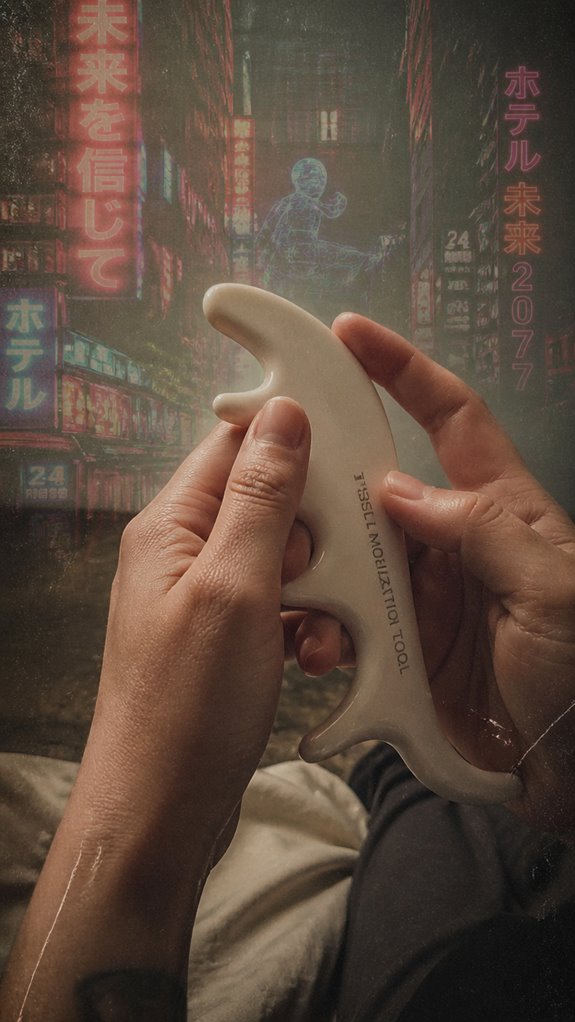
Have you ever attempted a debug sequence only to realize your tools are as outdated as a BIOS from the late 90s?
In managing fascial elasticity and hand flexibility, we’re fundamentally debugging a biological system code. Specialized hand therapy tools—TheraBands, soft tissue mobilizers, and grip strengtheners—are like the latest firmware patches, optimizing the underlying firmware of your fascia. They serve as interface layers, reducing system lag in mobility and preventing brittle appendage crashes—akin to patching memory leaks in a sluggish kernel. Monitoring your heart rate can also help ensure your body remains in an optimal state while performing these exercises.
Without these upgrades, your hand’s architecture devolves into chaos—an unresponsive ghost in the shell. Incorporating red light therapy can further enhance your recovery by stimulating cellular repair and promoting overall wellness.
Palmar Fascia Stiffness Issues
When addressing the persistent issues of palmar fascia stiffness, it’s akin to debugging a legacy codebase riddled with memory leaks—each layer of fibrosis acts as a corrupted subroutine, progressively bloating until the entire system grinds to a halt. These fascial stiffness causes trigger fibrous tissue remodeling, creating a labyrinth of tangled cords that pull fingers inward. Think of the cords as deprecated functions, rendering the hand’s interface unresponsive. A failed patch or missed optimization causes the system to freeze, just like the progression of contractures that yank tendons through dense fiber networks. Additionally, the choice between Walking Pad vs Treadmill can impact overall hand and arm health, providing crucial cardiovascular benefits that may alleviate some stiffness. Regular breaks and the 20-20-20 rule can also help counteract strain on the hands and wrists when engaged in repetitive tasks.
| Cause | Effect | Manifestation |
|---|---|---|
| Fibrous tissue remodeling | Cords tighten, fingers curl | Reduced ROM, palpable nodules |
| Mechanical stress | Accelerates fibrosis development | Increasing contracture severity |
| Genetic predisposition | Alters natural wound repair pathways | Recurrent fibrosis, stubborn stiffness |
| Environmental factors | Exacerbate immune response, intensify fibrosis | Progressive fascial thickening |
Fascial Adhesion Techniques
In the relentless debugger that’s the human body, fascial adhesions are like legacy code—residual bugs causing the interface between tissues to become unresponsive or tangled, thwarting smooth hand mobility.
Fascial release acts as the patch, optimizing tissue communication and reducing latency. You need to execute targeted adhesion removal routines, akin to debugging a stubborn codebase. Gentle manual techniques, akin to code refactoring, break adhesion chains, restoring fluidity.
Think of it as a system upgrade—without it, your hand’s API remains sluggish, codenamed “Fibrosis.” Effective adhesion management is your best shot at regaining real-time responsiveness, avoiding system crashes in the marathon that’s manual palm maintenance.
Ergonomic Keyboard Setup Tips
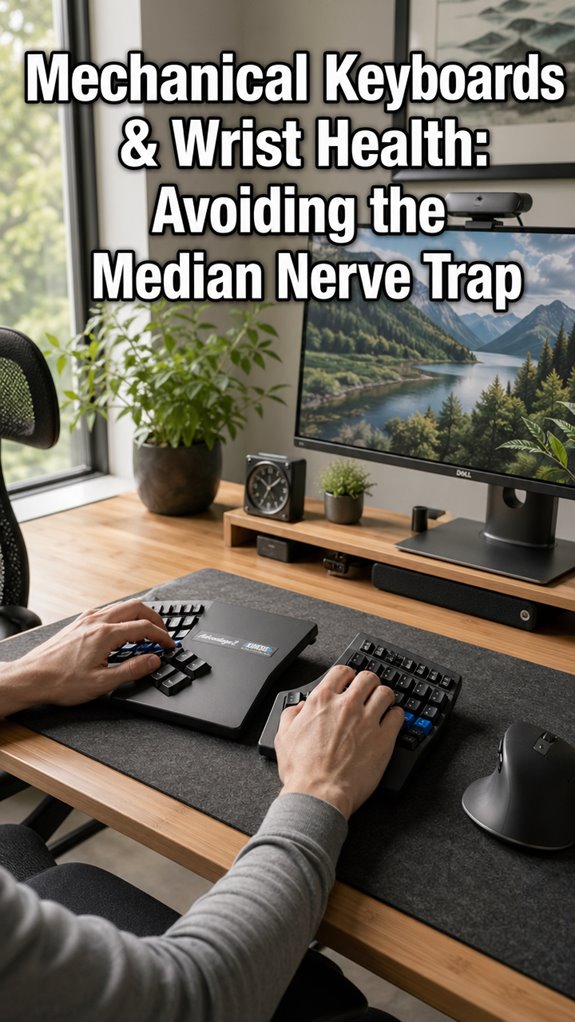
Effective ergonomic keyboard setup transcends mere furniture arrangement; it’s the critical middleware preventing catastrophic firmware crashes within your biological hardware. You’re fundamentally debugging yourself, prioritizing hand strengthening routines and fascia flexibility, lest your system’s architecture become brick-walled by repetitive strain injuries. Additionally, ensuring a well-optimized workspace can foster a productive and healthy environment.
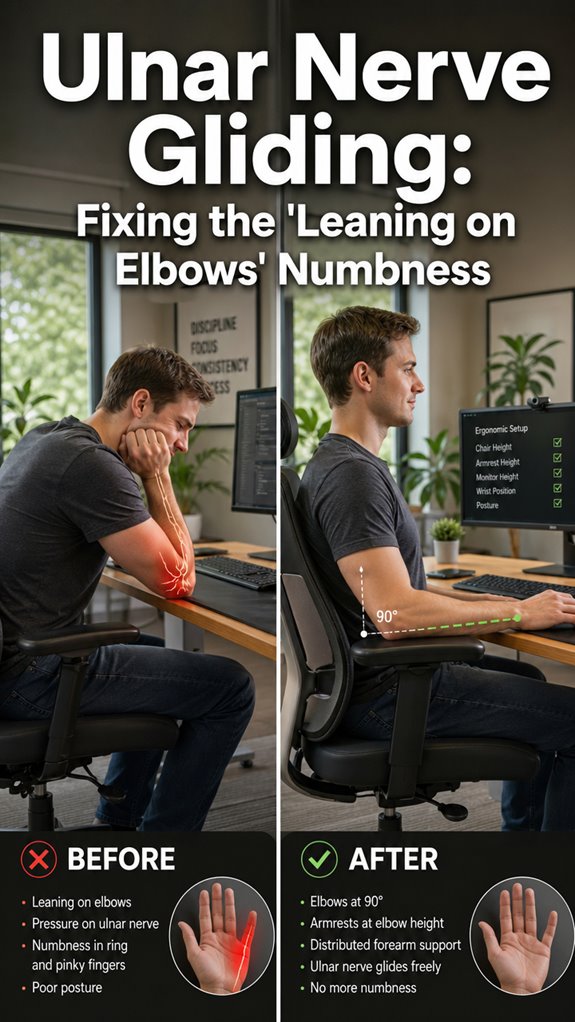
Position your split keyboard to align ulnar nerves, promoting seamless data flow and minimizing bottlenecks. Use tools—like resistance bands or grip trainers—as deployable patches for weaker links.
Shift away from the absurdity of “human as hardware” by integrating these micro-optimizations, because, as Ghost In The Shell implies, the interface between software and flesh isn’t just a metaphor—it’s a priority. Additionally, paying attention to full-body posture can significantly enhance your comfort and productivity during long coding sessions.
FAQ
Can Manual Techniques Fully Reverse Fascia Thickening in the Palms?
Manual techniques can improve fascial flexibility and enhance self-massage efficacy, but they can’t fully reverse fascia thickening. You’ll need consistent effort, combined with therapy, to optimize mobility and prevent progression of tight fascia in your palms.
How Often Should I Perform Hand Stretching Exercises?
You need to perform hand stretching exercises daily, like fueling a fire steadily. This keeps finger flexibility alive and powers grip strength gains, transforming your hand into a resilient force, unwavering and ready for any challenge.
Are There Risks of Overstretching or Injuring Fascia During Self-Massage?
Yes, overstretching during self-massage risks fascia injury and reduces fascial elasticity. To prevent injury, listen to your body, avoid forceful movements, and keep gentle pressure—powerful results come from careful, controlled technique, not force.
What Signs Indicate the Need for Professional Fascia Therapy?
If signs show persistent pain, increasing finger curling, or worsening grip strength, then it’s time for professional fascia therapy; regain fascia elasticity, restore hand strength, and seize control to prevent further degeneration and reclaim your power.
Can Home Treatments Prevent Progression of Dupuytren’s Contracture?
You can hinder Dupuytren’s progression with power by embracing alternative therapies like targeted massage and stretching, plus making dietary adjustments to reduce inflammation. These proactive steps help maintain flexibility, but consult professionals to maximize results and prevent worsening.
Summary
Without addressing the systemic issues of fascial mismanagement, your biomechanical middleware becomes as unstable as a deprecated kernel panic. Think of your palms as the fragile codebase of Ghost in the Shell—run constant maintenance routines to prevent catastrophic hand-rendering failures. Manual therapy, exercises, and ergonomic patches are essential patches in this ever-iterating software of human function. Neglect them, and you’ll face a perpetual crash loop of stiffness, reminiscent of debugging a legacy system stuck in a loop of relentless, preventable errors.
References
- https://nielasher.com/blogs/video-blog/dupuytrens-contracture-conservative-treatment
- https://www.healthline.com/health/dupuytrens-contracture-hand-exercises
- https://www.hingehealth.com/resources/articles/dupuytrens-contracture/
- https://www.surreyphysio.co.uk/top-5/best-5-exercises-for-dupuytrens-contracture/
- https://thearmdoc.co.uk/wp-content/uploads/2024/05/Dupuytren_s-Contracture.pdf
- https://www.pritchettephysicaltherapy.com/blog-entries/2023/7/10/regaining-mobility-a-guide-to-understanding-and-treating-dupuytrens-contracture
- https://www.mytherapycenteronline.com/Injuries-Conditions/Hand/Hand-Issues/Dupuytrens-Contracture-Patient-Guide/a~4516/article.html
- https://www.mayoclinic.org/diseases-conditions/dupuytrens-contracture/diagnosis-treatment/drc-20371949
- https://www.drbrutus.com/wp-content/uploads/2018/09/DUPUYTREN-Ebook-Anglais.pdf
- https://pmc.ncbi.nlm.nih.gov/articles/PMC8849405/
- https://www.unboundmedicine.com/5minute/view/5-Minute-Clinical-Consult/116193/all/Dupuytren_Contracture
- https://pmc.ncbi.nlm.nih.gov/articles/PMC2721944/
- https://www.betterhealth.vic.gov.au/health/conditionsandtreatments/dupuytrens-contracture
- https://www.youtube.com/watch?v=4PM8y7wU8m0
- https://my.clevelandclinic.org/health/diseases/16941-dupuytrens-contracture
- https://pmc.ncbi.nlm.nih.gov/articles/PMC4996878/
- https://dupuytrens.org/DupPDFs/2005_Rayan.pdf
- https://www.osmosis.org/answers/dupuytren-contracture