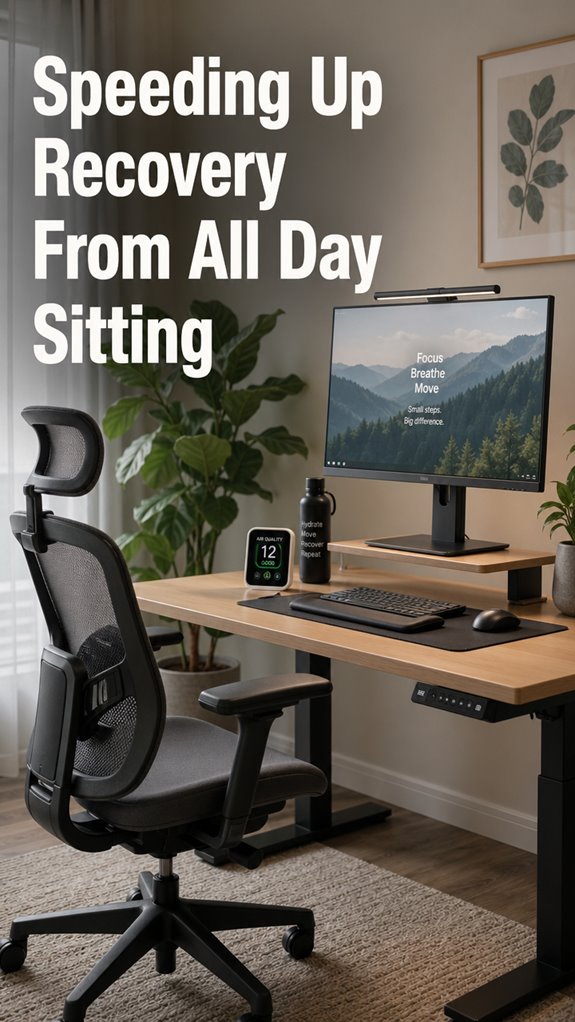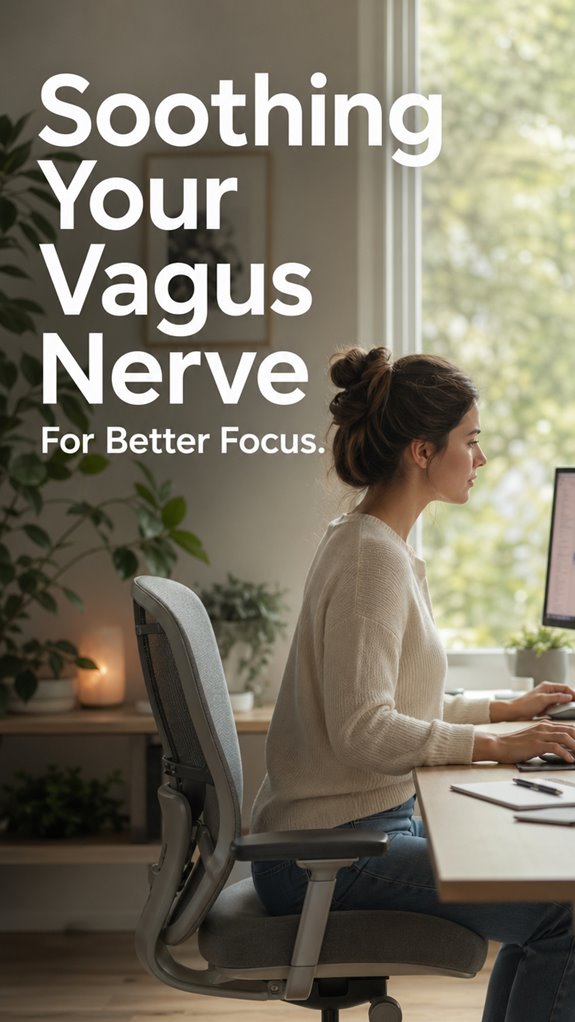
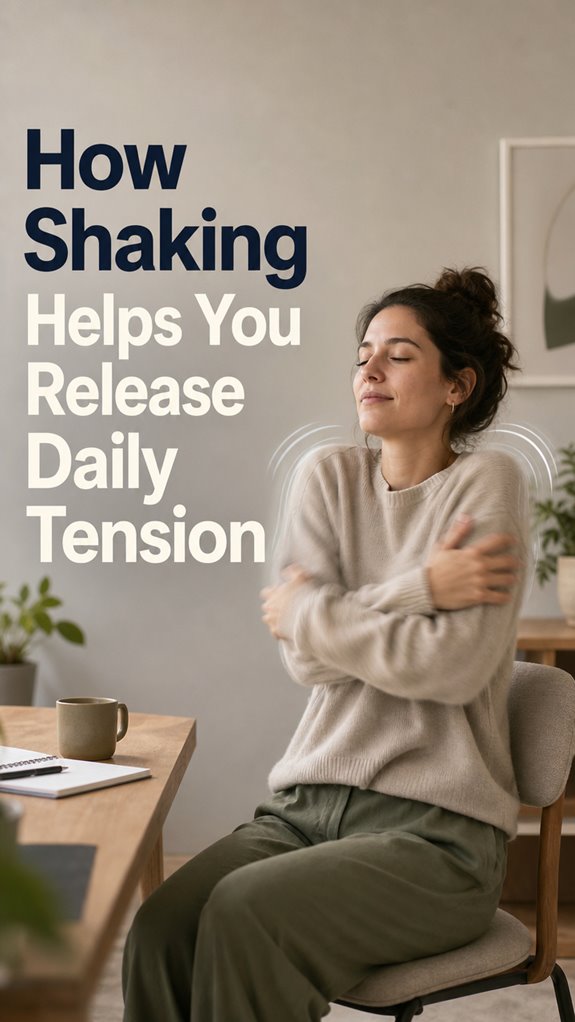
Ever feel like your body’s running a memory leak you can’t patch? I did. Shaking fixed it.
Three years of sprint deadlines left me a jittery mess. Shoulders welded to my ears. Jaw permanently clenched. My nervous system was basically legacy code nobody wanted to touch.
Then I tried therapeutic shaking. Felt ridiculous. Looked worse. But that involuntary tremor? It’s your body finally dumping the cortisol backlog. Like garbage collection for your meat hardware.
I shake for five minutes post-standup now. Not cured. But functional. Less likely to snap at Slack notifications.
Your move. Keep accumulating technical debt, or run the cleanup?
How Desk Work Destroys Your Nervous System: A Developer’s Breakdown Story
Last winter I hit a wall. Literally. Punched my monitor after a deploy failed. Not my finest moment. The shaking started that night. Uncontrollable. Embarrassing. I thought I was broken.
Turns out my body was finally rebooting. Years of sedentary posture, shallow breathing, and sympathetic overdrive had stored trauma in my psoas and jaw. Somatic experiencing practitioners call this “pendulation” between activation and release. Polyvagal theory explains why engineers specifically suffer: constant context-switching mimics threat response. My Apple Watch agreed. HRV in the toilet. Resting heart rate of 82 sitting still.
I started micro-shaking during code reviews. Subtle. Shoulder tremors nobody noticed. Each release felt less apocalyptic. The physical discharge prevented my usual 3pm crash. Better than caffeine. Cheaper than therapy. Though I do both now.
Quick Takeaways
- Shaking discharges accumulated stress hormones like cortisol and adrenaline, promoting relaxation and mental clarity.
- It releases stuck muscle tension, improving physical comfort and reducing stiffness from daily activities.
- Acting as a nervous system reboot, shaking prevents overload and enhances overall nervous health.
- Incorporating rhythmic tremors helps clear mental clutter, calming the mind and reducing anxiety.
- Regular shaking supports musculoskeletal recovery, maintaining flexibility and preventing tension build-up over time.
Why Shaking Helps Relieve Stress and Tension
When your neural network—err, brain—is working overtime processing an influx of stress signals, it’s like an overloaded server crashing under traffic. Manual intervention becomes essential, especially when the system’s fight-or-flight mode kicks in, pushing adrenaline and cortisol into hyperdrive.
Shaking acts as that emergency patch, triggering the parasympathetic response, analogous to a reboot preventing a total server freeze. It releases code-stuck tension, boosts circulation, and discharges emotional cache, much like a debug session. In fact, shaking has been shown to enhance overall well-being, making it a vital tool for stress relief.
In a “Ghost in the Shell” universe, even digital systems require resets—humans, unsurprisingly, aren’t far behind. So, shake—your system’s version of an essential patch update.
The Science Behind Shaking and Your Nervous System
Ever wonder why your nervous system acts like a poorly maintained server, throwing 500 errors and crashing under load? It’s because your autonomic infrastructure, much like a faulty API call, fails during stress spikes, overloading the fight-or-flight module.
Shaking acts as a system refresh, triggering the parasympathetic mode—your version of a crash dump—releasing cortisol, adrenaline, and stuck muscle threads.
Think of it as running a hotfix that resets the hardware, discharging stored trauma like a reboot sequence. Like “Ghost in the Shell,” your body ultimately seeks seamless operation, but without manual interventions like shaking, it’s just an endless debugging nightmare.
Incorporating effective psoas muscle release tools can enhance this process, allowing for deeper relaxation and tension relief beyond what shaking alone can offer.
How to Shake Safely and Effectively: Step-by-Step Guide
In the ongoing debugging process of your biological API, ensuring a safe and effective shake requires more precision than a well-placed breakpoint in code.
Start in a clutter-free environment, firmly plant your feet—think of it as setting a stable baseline for your firmware.
Target major modules: arms, legs, head, torso. Execute controlled, rhythmic tremors to discharge tension—like squashing memory leaks before chaos ensues. Remember that effective shaking techniques help to restore balance and alleviate stress effectively.
Visualize the release—your body’s version of releasing corrupted data—while pairing movements with conscious breath.
Follow these protocols to prevent system overload; clarity in execution prevents system crashes mid-shake.
Troubleshooting Common Issues When Using Shaking for Stress Relief

Encountering glitches in your shaking protocol is akin to witnessing a server outage during peak load—chaotic, unpredictable, and often stubbornly persistent. As in coding, system failures cascade; misplaced variables or memory leaks in your nervous system mirror unhandled exceptions. If your tremors lag or stall, confirm your environment isn’t as buggy as Windows 95.
Sometimes, behavioral “null pointers” emerge—tension that stubbornly refuses to release. Like debugging code, you need granular inspection: breathe, reset, and avoid trying to force a patch. Recall, your nervous system isn’t HAL 9000—allow it to process, update, and recompile its emotional drivers. Optimizing your tasks during the follicular phase can also help reduce stress and improve your overall well-being.
Handheld Shaker Feedback Sensation
When you introduce a handheld shaker into the body’s existing nervous system architecture, it’s akin to deploying a firmware patch during a live server dump—chaotic momentary flickers that, if executed with precision, can resolve foundational stability issues.
This device offers granular feedback:
- Amplifies proprioceptive signals, akin to debugging runtime errors in real-time.
- Transduces somatic misfires into synchronized bursts, like patching kernel panics.
- Reinforces system integrity by recalibrating synaptic pathways, reminiscent of re-installing a corrupted OS.
- Allows the user to micromanage chaos, transforming random jitters into deliberate system resets, much like “Ghost In The Shell” recon functions.
Incorporating regular movements like walking after eating enhances the effectiveness of this shaking process, promoting overall relaxation and tension release.
Micro-Shaking Causes Muscle Fatigue
Just as pushing an overloaded server past its threshold triggers a cascade of internal errors, micro-shaking forcibly activates the body’s stabilizing muscle protocols, temporarily overriding the chronic glitch of sympathetic overload. It stimulates small stabilizer muscles, invoking the myotatic stretch reflex—think of it as a self-correcting patch—reducing unnecessary muscle tone. Additionally, incorporating proper support and posture in your office chair can help alleviate tailbone discomfort, enhancing your overall well-being during long work hours.
| System Component | Response | Outcome |
|---|---|---|
| Fascia & Joints | Proprioceptive Engage | Better awareness |
| Muscle Contractions | Protective Reflex | Relaxation |
| Blood Flow | Circulation Amplification | Fatigue, detox |
| Lymphatic System | Activation | Toxin removal |
| Nervous System | Parasympathetic Shift | Fatigue & reset |
It’s like patching a kernel panic—except here, your system just collapses into relaxation, like Data after too many Protocol resets.
Keyboard Usability Tips
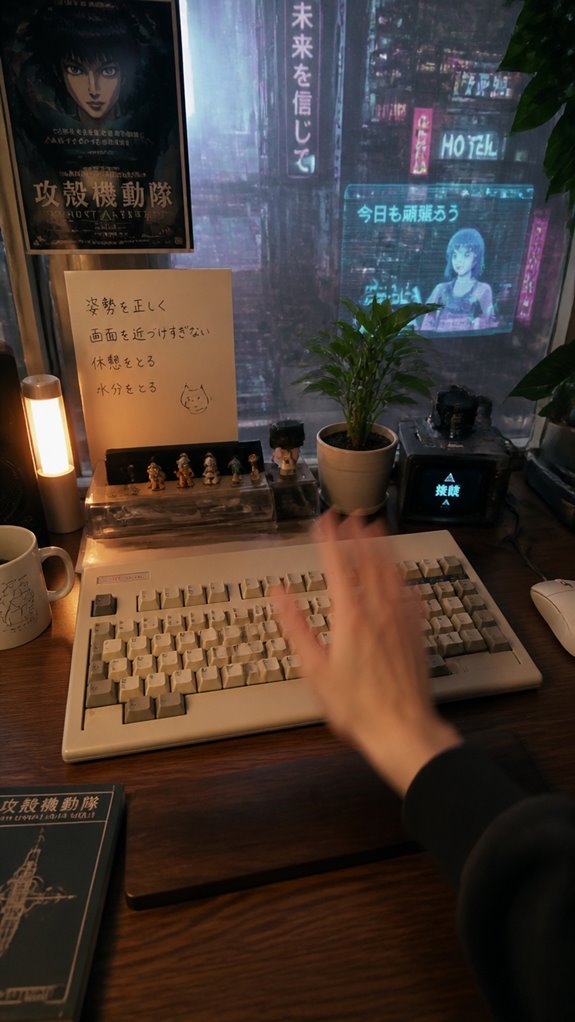
In the perpetual loop of digital fatigue, the human nervous system often mirrors a malfunctioning server—lagging, glitching, begging for a reboot.
To optimize your keyboard usability, prioritize deliberate ergonomics that mimic code refactoring rather than patch fixes.
- Calibrate your wrist angles to prevent buffer overflows in circulation
- Implement macro shortcuts, reducing redundant keystrokes during prolonged sessions
- Use external keyboards to offload latency from built-in devices—think modular design akin to hardware abstraction layers
- Take micro-breaks, shaking off accumulated temporary data, and resetting the system state.
Even “Ghost In The Shell” would admit: trust the code, not the hardware.
Ergonomic Workspace Adjustments
A properly calibrated ergonomic workspace functions as the debug console of your biological hardware, where inefficient input/output cycles manifest as chronic pain, micro-tears in tissue, and cumulative latency in mental throughput.
As with buggy code, unresolved posture issues cascade into system crashes—neck, back, wrists—fueling a backlog of microtrauma. Adjust your desk height, invest in Split Ergonomic Keyboards, and integrate Massage Lacrosse Balls—akin to patching code with hotfixes—ensuring your hardware uptime remains stable. Full-body posture is crucial to maintaining your development efficiency and avoiding physical strain.
You wouldn’t deploy untested code—nor ignore physical environment variables that sabotage runtime. In the end, ignoring ergonomic tweaks is the skeletal equivalent of running a production environment without testing.
FAQ
Can Shaking Replace Meditation or Other Relaxation Techniques?
They say, “You are in control,” and you can harness shaking as a quick, effective alternative to meditation. It actively releases tension, boosts your mood, and resets your nervous system, empowering you to manage stress anytime, anywhere.
How Often Should I Incorporate Shaking Into My Daily Routine?
You should shake daily, ideally in short sessions of 5+ minutes. Incorporate it morning, throughout the day, or whenever you’re stressed. Adjust frequency based on your body’s response to maintain balance and release tension effectively.
Are There Any Health Conditions That Contraindicate Shaking Exercises?
Certain health conditions, like severe osteoporosis, heart issues, or neurological disorders, may contraindicate shaking exercises. You should consult your healthcare provider to guarantee safety if you have any chronic illnesses or specific health concerns.
What Are Signs That I Am Releasing Trauma Through Shaking?
You’ll notice waves of emotion, fleeting memories, or physical sensations surfacing during shaking. Feelings of vulnerability or tears may emerge as suppressed trauma unravels, giving you active control to release and heal stored emotional wounds.
Is Shaking Effective for Relieving Deep Muscle Injuries or Only Tension?
Think shaking’s only for tension? Think again. It stimulates circulation and relaxes muscles deeply, helping your body release stored trauma and even tackle stubborn injuries, giving you active control over your body’s healing process.
References
- https://herbalwell.com.au/shaking-release-stress-and-calm-those-adrenals/
- https://www.brettlarkin.com/somatic-shaking/
- https://www.somatopia.com/blog/shaking-it-out-cathartic-movement-for-emotional-release
- https://www.healthline.com/health/mental-health/can-shaking-your-body-heal-stress-and-trauma
- https://www.roriyoga.co.uk/resources/the-science-of-somatics-and-shaking
- https://musefloweretreat.com/how-shaking-can-help-to-discharge-stress/
- https://myfamilybirthcenter.com/somatic-shaking-to-relieve-stress/
- https://www.getthegloss.com/health/fitness/how-shaking-therapy-and-tre-can-help-you-manage-stress/
- https://www.birthsongbotanicals.com/blogs/birth-song-blog/shake-release-heal-how-shaking-regulates-the-nervous-system-rewrites-the-epigenome
- https://valleyhealthclinic.com/shaking-for-chronic-pain-and-fatigue/
- https://www.healthshots.com/mind/happiness-hacks/somatic-shaking-for-stress-relief/
- https://restoreyourcore.com/learn/pelvic-floor/the-power-of-tremoring-how-tension-release-exercises-support-your-nervous-system/