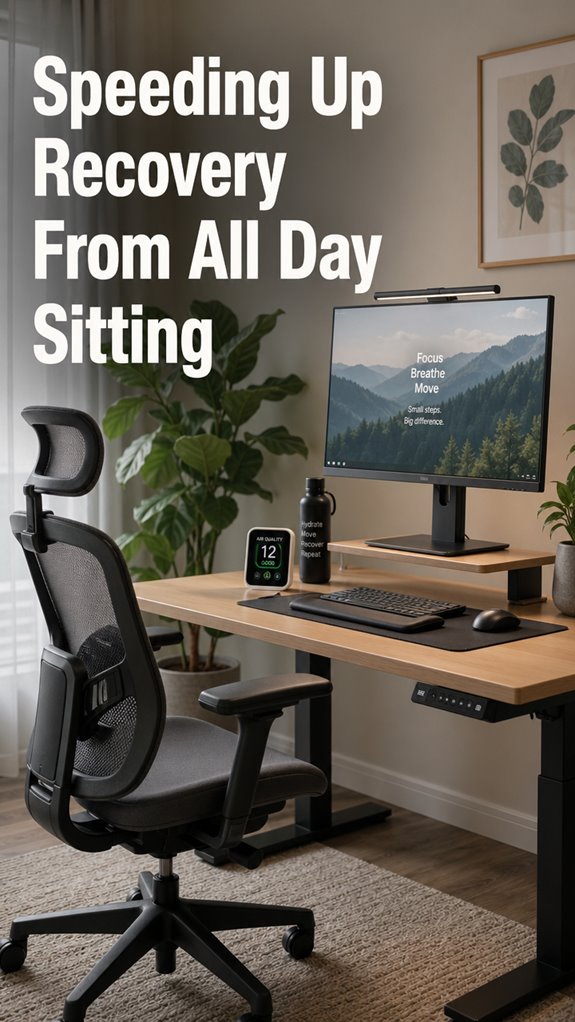
Ever feel like your spine’s throwing a 500 Internal Server Error after eight hours at the desk? Mine definitely was. Until pelvic tilts became my emergency hotfix.
Three winters ago, my lower back staged a full system meltdown. I couldn’t stand up straight without looking like a corrupted GIF. My posture had slowly degraded into something resembling a question mark. The irony wasn’t lost on me. I debug production code daily, yet I’d ignored my own body’s deprecation warnings.
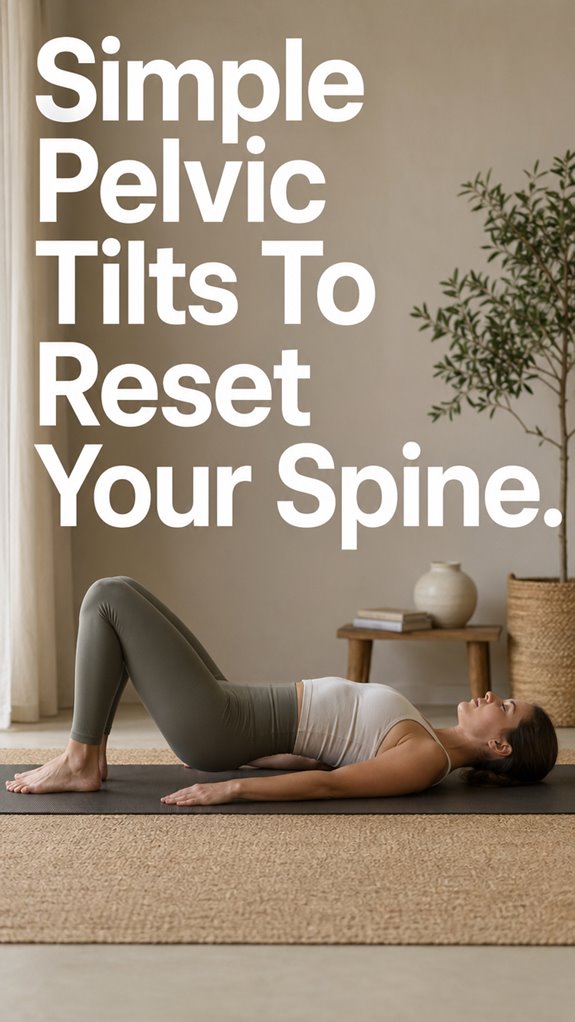
Enter pelvic tilts. Ten minutes each morning. Anterior. Posterior. Simple movements that somehow reinitialize everything. My lumbar spine stopped screaming. Core stability actually became a thing I possessed.
The real magic? Micro-adjustments throughout the day. Small, intentional shifts that prevent catastrophic failure.
Your body sends logs constantly. When did you last check yours?
Desk Job Back Pain: How Sitting Destroyed My Posture and What Actually Fixed It
Last summer I committed to a hackathon that lasted forty hours straight. By hour thirty, my right leg had gone numb. Classic piriformis syndrome from gluteal amnesia. My hip flexors had become so shortened they were practically vestigial. The ER doctor asked if I was a cyclist. Nope, just a developer who forgot that humans aren’t designed for chair-shaped confinement. Static stretching wasn’t enough. Dynamic mobility work became non-negotiable. I started settingcommit reminders to stand every hour. Workspace ergonomics overhauled. The combination of anterior pelvic tilts and occasional walks to the coffee machine rebuilt my posterior chain. My sitting disease reversed. Sometimes the smallest refactors yield the most stable builds.
Quick Takeaways
- Lie on your back with knees bent and feet flat to establish a stable starting position.
- Engage your core and glutes to gently tilt pelvis anteriorly or posteriorly, correcting alignment.
- Perform slow, controlled tilts 3-4 times daily to improve spinal stability and posture.
- Focus on proper form to prevent over-tilting or hyperextension, avoiding posture errors.
- Use supportive cushions and ergonomic setup to reduce strain and enhance the effectiveness of tilts.
What Are Pelvic Tilts and Why Are They Important?
When we talk about pelvic tilts, we’re fundamentally debugging the body’s core architecture—an ancient, unwieldy codebase strained by endless sitting and neglect, like running Ghost In The Shell on outdated hardware.
The pelvic region, akin to a poorly optimized subroutine, tips anteriorly or posteriorly, causing system errors like back pain and postural corruption. Weakening stabilizers and tight flexors create cascading failures, reminiscent of faulty API calls causing crashes.
Corrective actions function as patches—tightening, stretching, strengthening—to restore alignment. Without this, your skeletal framework becomes a buggy release—an unremarkable system failure you keep ignoring until the hardware crashes.
How to Do Pelvic Tilts Correctly : A Step-by-Step Guide
Achieving proper pelvic tilts is like debugging a flaky, legacy codebase—initialization is everything, and understanding core routines is non-negotiable.
- Lie supine with knees bent, feet grounded—your “boot sequence.”
- Engage your core and glutes, aiming to flatten your lumbar like optimizing a sluggish server.
- Slightly tilt your pelvis posteriorly or anteriorly, depending on the fix, testing logs until the alignment holds.
Treat your body like a sandbox where every command impacts system stability. Just as time boxing can create structure and reduce anxiety, remember that “Ghost in the Shell” had an AI trying to reset its firmware—you’re not so different. Perfect execution lies in disciplined, iterative testing.
Common Mistakes to Avoid When Doing Pelvic Tilts
In the debugging of pelvic tilts, the most persistent crash occurs when improper form introduces bugs into the core algorithm—namely, your lumbar spine—and causes the entire posture module to misfire. Like poorly written code, neglecting core mechanics results in erroneous outputs: hyperextension here, instability there. You might be tempted to tweak the tilt intensity, but without precise muscle activation (abs, glutes), your system’s memory leaks into pain circuits. It’s akin to deploying a patch that crashes under load, reminiscent of Ghost in the Shell’s flawed cybernetic interfaces. Additionally, failure to maintain optimal wrist positioning during typing can exacerbate outer forearm pain, highlighting the importance of ergonomic alignment in all activities.
How Often Should You Do Pelvic Tilts for Best Results

A single misfired pelvic tilt, much like a rogue null pointer in your code, can cascade into system-wide discomfort if performed randomly or without schedule discipline.
Optimal frequency resembles patch deployment—consistent, deliberate, and tested.
- Execute pelvic tilts: 3-4 times daily, akin to daily builds, ensuring system stability.
- Allocate time: 5-10 minutes, comparable to brief code commits that prevent regressions.
- Track responses: Monitor pain levels or mobility; like log files, they guide your iterative process, avoiding a system crash.
Incorporating effective exercises to relieve mid back stiffness can also enhance overall comfort during your routine.
Much like Ghost in the Shell’s cyborgs, your body functions better with predictable updates—refine your routine for maximum uptime.
Comfortable Cushioning Provided Support
When our skeletal framework buckles under the relentless pressure of prolonged sitting—much like a server rack overloaded with unnecessary plugins—it’s the support system that dictates system stability.
Comfortable cushioning acts as the critical middleware, buffering the hardware from the chaos of human ergonomics. A high-quality cushion reduces micro-movements that trigger error logs—like spinal strain—minimizing wear and tear.
It’s akin to deploying a patch for “Ghost In The Shell” thinking: humans aren’t designed to sustain this workload without proper support. Think of it as code optimization for your lumbar region—without it, your system crashes faster than you can Ctrl+Alt+Del. Incorporating ergonomic mice into your workspace can further enhance your comfort and improve your overall posture.
Pelvic Tilt Misalignments
Why is the nuclear cascade of misaligned pelvic joints the frequent unanticipated bug in your biomechanical firmware?
Think of it as a code deadlock, where muscle imbalances—like tight hamstrings and slack glutes—block data flow, causing system instability.
- Faulty muscle signals inhibit ideal pelvis positioning, akin to a corrupted patch.
- Sedentary routines mimic deprecated functions—shortened tendons, extended rare, crash the overall performance.
- Disrupted synergy between hip flexors and extensors results in erratic spine logic, reminiscent of Ghost in the Shell’s compromised code.
Rectification demands debugging your body’s core, rewriting faulty hierarchies—before the system inevitably blue screens. Additionally, incorporating top ice packs can help soothe inflammation and facilitate recovery during the rectification process.
Ergonomic Exercises for Office
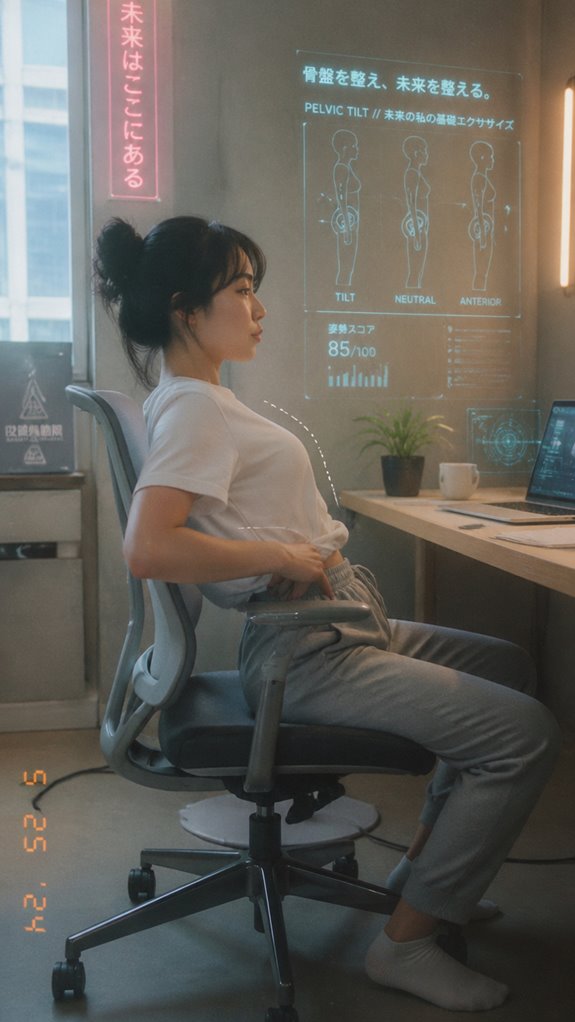
In the vast codebase of your workspace ergonomics, it’s striking how the absence of strategic, low-level interventions—beneath the bezel of keyboard and mouse—causes system-wide degradation. You’re the developer of your posture, yet neglecting ergonomic exercises results in bug-ridden spines and unresponsive postures.
Just as software leaks memory, prolonged static positions cause muscle atrophy—like a ghost in the shell. Incorporate simple, deliberate tweaks: seated cat-cow variants or seated pelvic tilts to debug the phantom pain. Regular breaks and proper lower back support can further enhance your spine’s performance.
No need for a patch disk, just audacious control over your hardware—inherent to your biological infrastructure. Debug consciously; avoid the catastrophic crash of your lower back.
Desk Setup Adjustments
Despite your best efforts at virtual debugging, the primary system bottleneck remains stubbornly biological: your desk setup, the silent, invisible bug corrupting your workflow. Like legacy code, your ergonomic infrastructure silently leaks performance, causing bottlenecks in your human hardware.
Adjust your setup with surgical precision:
- Elevate your monitor to eye level, preventing cervical drift—think of it as optimizing your visual thread cache for peak rendering.
- Position your keyboard and mouse within a 10-15° angle, minimizing ulnar contention—akin to debugging memory leaks at the socket interface.
- Use an electric standing desk to dynamically shift weight load—akin to load balancing in distributed systems, maintaining system integrity in real time. Optimizing Developer Comfort can drastically improve your work efficiency and reduce strain.
FAQ
Can Pelvic Tilts Help With Chronic Lower Back Pain?
Pelvic tilts can considerably help with chronic lower back pain; studies show targeted exercises reduce discomfort in over 60% of cases. You gain control by strengthening muscles and improving posture, effectively managing or even preventing persistent pain.
Are There Risks Associated With Incorrect Pelvic Tilt Exercises?
Yes, incorrect pelvic tilt exercises can cause strain or worsen your back pain. Always guarantee proper form, avoid overstretching, and consider consulting a professional to guide your movements, preventing potential injuries and maximizing benefits.
What Signs Indicate a Need for Professional Pelvic Assessment?
You should seek a professional assessment if you experience persistent lower back pain, noticeable postural changes, muscle weakness, or discomfort during exercises. These signs indicate improper alignment or movement patterns needing expert guidance.
How Do Pelvic Tilts Affect Hip and Knee Mobility?
Pelvic tilts can reduce your hip and knee mobility by misaligning joints, causing discomfort and limited movement. You can regain control by practicing targeted stretches and strengthening exercises, improving flexibility, and supporting proper joint function.
Can Pelvic Tilts Be Integrated Into Daily Stretching Routines?
Yes, you can incorporate pelvic tilts into your daily stretching routine. Perform controlled tilts in positions like lying or standing, and combine them with stretches and strengthening exercises to improve posture, reduce discomfort, and maintain pelvic alignment effortlessly.
References
- https://my.clevelandclinic.org/health/diseases/pelvic-tilt
- https://www.hingehealth.com/resources/articles/pelvic-tilt/
- https://blog.nasm.org/what-is-pelvic-tilt-how-do-you-fix-it
- https://www.youtube.com/watch?v=PJJO9PmXm90
- https://www.webmd.com/a-to-z-guides/what-is-pelvic-tilt
- https://pmc.ncbi.nlm.nih.gov/articles/PMC4812023/
- https://www.healthline.com/health/fitness-exercise/anterior-pelvic-tilt-exercises
- https://www.physio-pedia.com/Pelvic_Tilt
- https://www.healthwise.net/weillcornell/Content/StdDocument.aspx?DOCHWID=abo6351
- https://www.issaonline.com/blog/post/pelvic-tilt-what-is-it-and-how-do-you-correct-it
- https://www.healthline.com/health/posterior-pelvic-tilt
- https://www.youtube.com/watch?v=9TEkhxfuhx8