Ever feel like your spine’s turning into legacy code nobody maintains? Mine was. Hours at the desk rendered my mid-back about as flexible as a 500-line if-statement nightmare.
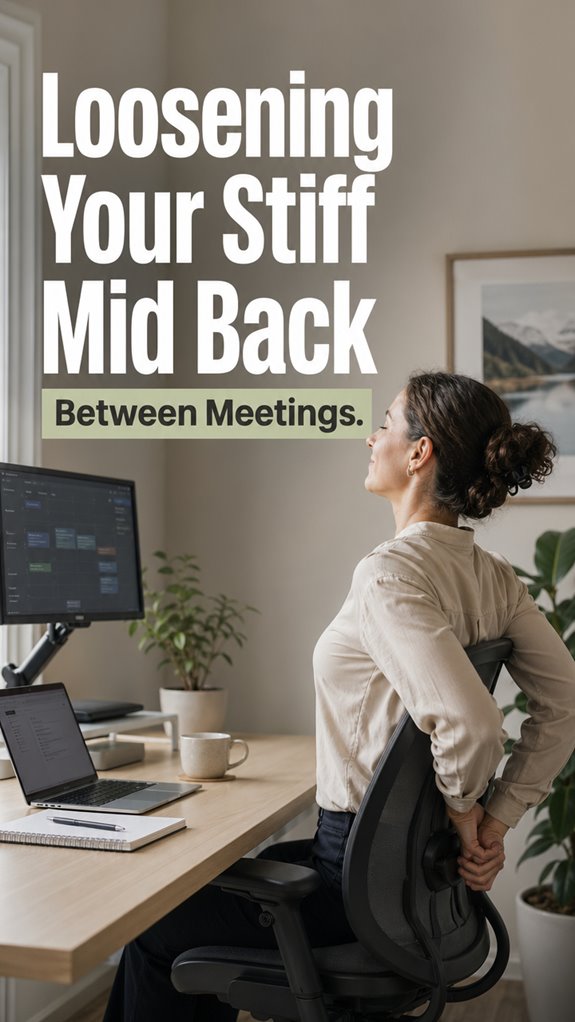
Last sprint, I discovered foam roll extensions. Game changer. Just five minutes between standups, and I felt like I’d finally refactored years of technical debt. The relief was almost embarrassing.
Now I sneak in axial rotations during builds. Micro-movements, micro-commitments. My workspace? Still suboptimal. But my thoracic mobility? Finally compiling without warnings.
What about you? Still running production on a corrupted spine?
How My Ergonomic Disaster Led to Chronic Back Pain and Poor Posture
Three years coding in a kitchen chair nearly broke me. My “setup” was a laptop on textbooks, my posture a complete regression. The muscle knots became constants, the stiffness normalized. I ignored the warning signs until reaching for coffee felt like a merge conflict with my own body. Then I invested in actual lumbar support. Physical therapy taught me about thoracic spine mobility, fascia release, and why “sitting is the new smoking” isn’t just a LinkedIn meme. My desk job nearly cost me more than sleep.
Quick Takeaways
- Perform quick thoracic rotations and extensions using a foam roller or wall slides to improve mobility between meetings.
- Incorporate simple desk stretches like Thread the Needle or doorway T-spine rotations to counteract stiffness.
- Practice deep diaphragmatic breathing to reset neural pathways and reduce muscle tension.
- Take short movement breaks every 20-30 minutes to prevent postural fatigue and system crashes.
- Self-massage trigger points in the mid-back to release muscle tension and restore smoother movement.
How to Recognize the Causes of Mid Back Stiffness Between Meetings
When diagnosing mid-back stiffness in the framework of a relentless, all-day code deploy—akin to debugging a Ghost In The Shell system plagued by unanticipated latency—it becomes clear that the root causes stem from macro-system failures.
These failures, mainly caused by suboptimal postural habits, create persistent muscle tension that bypasses the physical layer, aggregating into physiological bottlenecks. Incorporating donut seat cushions can provide additional support and help alleviate some of the discomfort associated with prolonged sitting.
Suboptimal postural habits cause ongoing muscle tension, bypassing physical defenses and building internal physiological bottlenecks.
Like legacy code clogging a modern API, sustained desk sitting and prolonged flexed positions disable thoracic mobility, forcing compensation across the spine.
Identifying these systemic port failures highlights where ergonomic patches and mindful session resets are needed, ultimately optimizing human hardware performance. Furthermore, implementing techniques like time boxing can effectively manage work sessions, reducing anxiety and enhancing focus during high-pressure tasks.
Effective Stretches to Loosen Your Mid Back During Workdays
Even the most sophisticated code can buckle under the weight of a legacy system running unchecked—much like your thoracic mobility after endless hours at the desk. To reboot your joint flexibility and reduce muscle tension, execute targeted stretches. Incorporating top ergonomic chairs can also play a significant role in enhancing your comfort throughout the workday, particularly by promoting proper wrist alignment during typing.
| Effective Stretches | Key Focus Areas | Duration | Frequency | Equipment Needed |
|---|---|---|---|---|
| Thoracic Extensions | Mid-back extension | 5 seconds, 5 reps | 3 sets, daily | Foam roller |
| Rotations | Axial rotation | 15-30 sec/side | 3-4 reps, daily | None |
| Wall Slides/Angels | Shoulder mobility | Hold 5 seconds | 3-5 reps, daily | Wall |
| Cat-Cow | Spinal flexibility | 10-15 reps | Multiple daily sets | None |
| Foam Roller Rolls | Thoracic mobility | 1-2 mins per set | Daily, as needed | Foam roller |
Desk Exercises to Improve Thoracic Mobility
In the sprawling codebase of your daily workflow, the mid-back’s mobility module often becomes a deprecated relic buried under layers of sedentary syntax—glitches in thoracic flexibility causing high-latency issues like stiff loops and lagging spinal rotation.
You can’t just “patch” this through passive stretches; active mobility exercises—like threading the needle or doorway T-spine rotations—are the debug scripts. These reset your thoracic subsystem, restoring flow and preventing resource conflicts. Incorporating top yoga mats into your routine can provide additional support during these exercises.
Think of it as a low-level system refresh—because if you don’t, your hardware will continue crashing, much like a villain in *Ghost in The Shell*, hacking your ergonomic integrity with digital apathy. Incorporating regular movement breaks throughout your day can significantly enhance your overall spinal health and prevent discomfort.
Stretching and Posture Tips to Keep Your Mid Back Flexible During Long Sitting

Long sitting at your desk, much like an infinite loop with no exit condition, inevitably causes system slowdown—specifically, the mid-back’s firmware begins to throttle, leading to stiffness and degraded mobility. To combat this, incorporating easy desk stretches throughout your day can enhance flexibility and reduce muscle tension.
To prevent catastrophic failure, optimize posture awareness and deploy breathing techniques as system patches. Deep, diaphragmatic breaths recalibrate neural pathways, firing neuron clusters that preserve thoracic flexibility.
Maintain vigilant posture updates—refrain from falling into the equivalent of a “loop-fixed” flexed position. By methodically executing these micro-upgrades, you reinforce mid-back stability, ensuring your code (body) doesn’t encounter a blue-screen of immobility—akin to Ghost in the Shell’s digital rebellion. Additionally, incorporating weighted heating pads can provide soothing relief and improve blood circulation to the affected areas.
Incorporating Movement Breaks Into Your Work Routine for Better Back Health
When the processing unit—the human spine—becomes bogged down by relentless, uninterruptible task loops, system performance degrades, manifesting as mid-back stiffness and reduced mobility.
To prevent a system crash, integrate movement breaks like:
- Posture correction: Reset your alignment with quick desk-aligning routines.
- Breathing techniques: Optimize oxygen flow, facilitating neural and muscular reboot.
- Active mobility exercises: Engage thoracic rotations, T-spine stretches—think debugging your internal firmware.
- Strategic pauses: Schedule micro-rests, akin to system checkpoints, to avoid overheating.
Additionally, incorporating thoracic back stretchers can further enhance your mid-back flexibility and support better posture.
It’s about patching the software, one reset at a time, before losing the entire backbone of your workflow—because, in this sim, the hardware’s just as critical.
Try Foam Roller Stretches
Facilitating a successful system reset in the midst of a prolonged debugging session often calls for a hardware upgrade—only we’re dealing with our mid-back, not RAM.
Enter foam roller-based thoracic stretches: the equivalent of patch updates for a sluggish, hypomobile spine. Rolling on the foam roller acts like rerouting faulty data streams, encouraging proper thoracic mobility while debugging the persistent stiffness bug. Incorporating office plants into your workspace can further enhance your focus and overall well-being, creating a conducive environment for productive stretches. Additionally, creating a coworking space that accommodates introverts can alleviate stress and promote relaxation during these stretches.
This targeted intervention, much like optimizing your code, requires consistent execution—10 to 15 reps, multiple sessions per day. It’s the manual override that guarantees your thoracic system remains operative, avoiding the “ghost in the shell” of your structural integrity.
Limited Upper Back Extension

Limited upper back extension acts as a core system failure, akin to a corrupted module halting the entire application. You must prioritize:
- Breathing techniques that reset interface variables, restoring rib mobility. These techniques can also help in alleviating rib pain that often results from prolonged sitting.
- Core strengthening algorithms to support spinal infrastructure.
- Dynamic thoracic extensions—like debugging a capsule bug—to re-enable full rotational logic.
- Regular resets with mobility exercises to prevent deadlocks.
Incorporating walking breaks into your routine can significantly enhance spinal stability and overall performance.
Without these updates, your code will crash—manual or mechanical—mirroring the chaos of a human system in stasis, like Ghost in the Shell.
Upper Thoracic Self-Massage
Have you ever experienced the sneaking suspicion that your upper thoracic region has become the software bug of your postural ecosystem, silently sabotaging overall function without explicit error messages? Trigger point therapy, akin to debugging faulty code, targets these stubborn patches of dysfunction—self-massage techniques acting as manual patches.
You’ll need to simulate a system reset by applying targeted pressure, deactivating tight ‘modules’—knots blocking data flow. Think of it as code refactoring for your fascia: manual, precise, and deliberate. Incorporating essential stretches every 25 minutes further enhances your ability to maintain flexibility and prevent stiffness.
As Ghost in the Shell suggested, accessing this “ghost” requires meticulous internal diagnostics, or in this case, self-directed trigger point therapy, to reestablish system stability.
Ergonomic Workspace Tips
When the hardware tends to betray you by introducing latency—be it through persistent discomfort or the creeping cascade of postural bugs—debugging the physical environment becomes the logical next step.
Prioritize postural correction with precise ergonomic adjustments:
- Monitor height so your line of sight remains effortless.
- Chair support that aligns lumbar and thoracic regions—think of it as hotfixes for your core kernel.
- Desk positioning to minimize extraneous flexion and extension—no more cursed “tech support” stretching scripts.
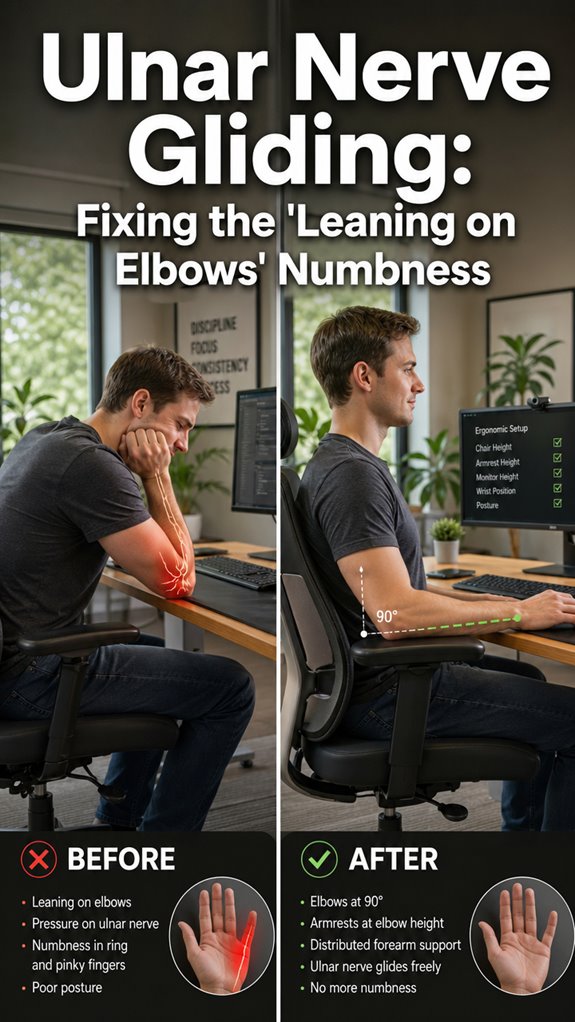
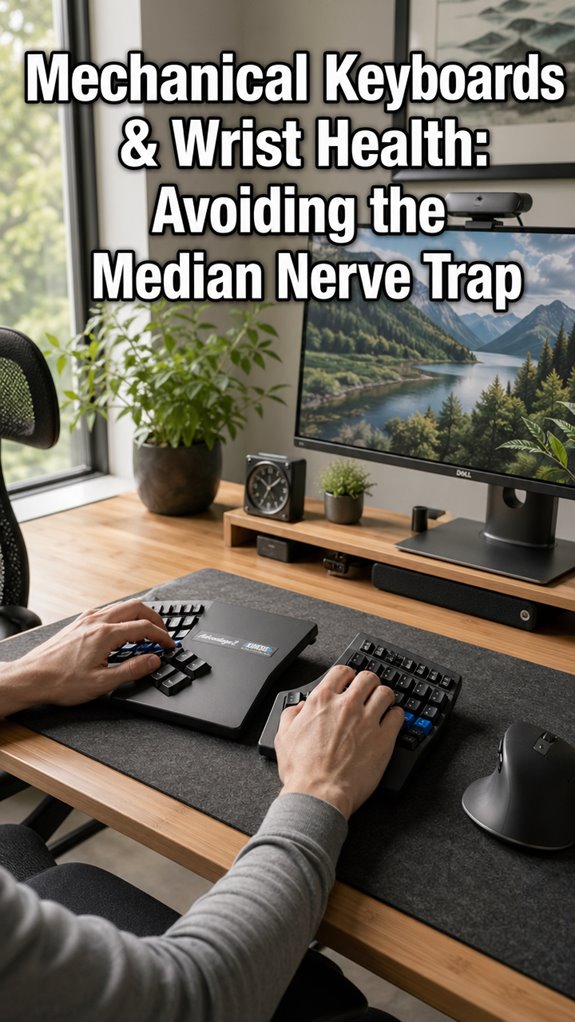
- Keyboard and mouse placement that prevent ulnar drift, emulating a clean API call.
This isn’t user error; it’s systemic debugging. Recall, Ghost In The Shell wouldn’t run on a hardware bottleneck. Integrating eye protection strategies into your workspace can further enhance your overall comfort and productivity.
Incorporating full-body posture tips into your daily routine can also lead to long-term performance gains.
FAQ
How Long Should Each Stretching Session Last for Optimal Mid-Back Flexibility?
You should do thoracic stretches for about 5-10 minutes daily, focusing on maintaining good posture habits. Short, consistent sessions build strength and flexibility, empowering you to fight stiffness and enhance your overall mid-back mobility effectively.
Can Poor Posture During Non-Work Hours Affect Mid-Back Stiffness?
Poor posture during non-work hours can sabotage your mid-back health, turning evening routines into silent enemies. Maintain strong posture habits and incorporate mobility exercises to conquer stiffness and preserve your back’s power and resilience.
Are There Contraindications or Risks for Thoracic Mobility Exercises?
You should prioritize safety precautions and recognize exercise contraindications with thoracic mobility exercises; avoid if you have severe back pain, herniated discs, or spinal injuries. Power through cautiously, listening to your body to prevent injury.
What Are Quick Ways to Relieve Mid-Back Tension During a Busy Workday?
Feeling that mid-back tension build? Immerse yourself in quick desk stretches, then harness powerful breathing techniques—deep, controlled breaths—to release stress fast. These simple moves actively combat stiffness, energize you, and restore control during your busiest work moments.
How Often Should I Perform Mobility Exercises for Lasting Improvement?
You should perform thoracic mobility exercises daily, especially if you have a sedentary lifestyle, to guarantee lasting improvement. Combine them with ergonomic adjustments at your workspace, empowering you to maintain strength and flexibility effectively.
Summary
Just like debugging a flummoxed codebase, fixing mid-back stiffness demands precise identification of systemic failures—be it ergonomic misconfigurations or neglected movement parsers. Your spinal firmware doesn’t run flawlessly under static load, much like a server discarded in idle mode. Implementing these stretches and posture patches is akin to deploying critical patches—inevitable for preventing system crashes. Recall, your thoracic subsystem isn’t a deprecated module; it’s a core process that needs routine refreshes to prevent total collapse.
References
- https://www.youtube.com/watch?v=ukf2c64njow
- https://theprehabguys.com/mid-back-prehab/
- https://www.youtube.com/watch?v=VMM2czODEUs
- https://onondagapt.com/stiff-mid-back-try-these-thoracic-mobility-exercises/
- https://www.healthline.com/health/fitness/thoracic-mobility-exercises
- https://www.rehabunited.com/post/mid-back-stretches
- https://www.youtube.com/watch?v=tph_8KN9vQw
- https://www.nhsaaa.net/musculoskeletal-msk-service-patient-portal/mid-back-pain-thoracic/mid-back-pain-exercises-msk-patient-portal/
- https://prorehab.com/blog/11-stretches-for-mid-back-pain/
- https://themovementfix.com/mfm-8-thoracic-extension/
- https://www.annarborchiropractor.net/upper-back-pain-faqs
- https://www.mygcphysio.com.au/education/thoracic-spine-upper-back-mobility-why-its-so-important-to-everyone/
- https://www.mwpain.com/upper-back-pain-why-it-happens-and-how-its-treated/
- https://symmetryptmiami.com/how-can-limited-thoracic-mobility-affect-my-low-back-and-shoulder-pain/
- https://www.ewmotiontherapy.com/blog/upper-back-stiff-tight-potential-causes-physical-therapy-help
- https://www.physio-pedia.com/Thoracic_Back_Pain
- https://www.youtube.com/watch?v=Scq9hboii8I
- https://my.clevelandclinic.org/health/symptoms/22866-upper-back-pain