Ever poured coffee at 9 AM only to crash by noon? That’s your circisol curve laughing at you. I learned this the hard way.
My brain used to feel like a server room on fire by 2 PM. Jittery hands, scattered commits, that sinking feeling my code was garbage (spoiler: sometimes it was).
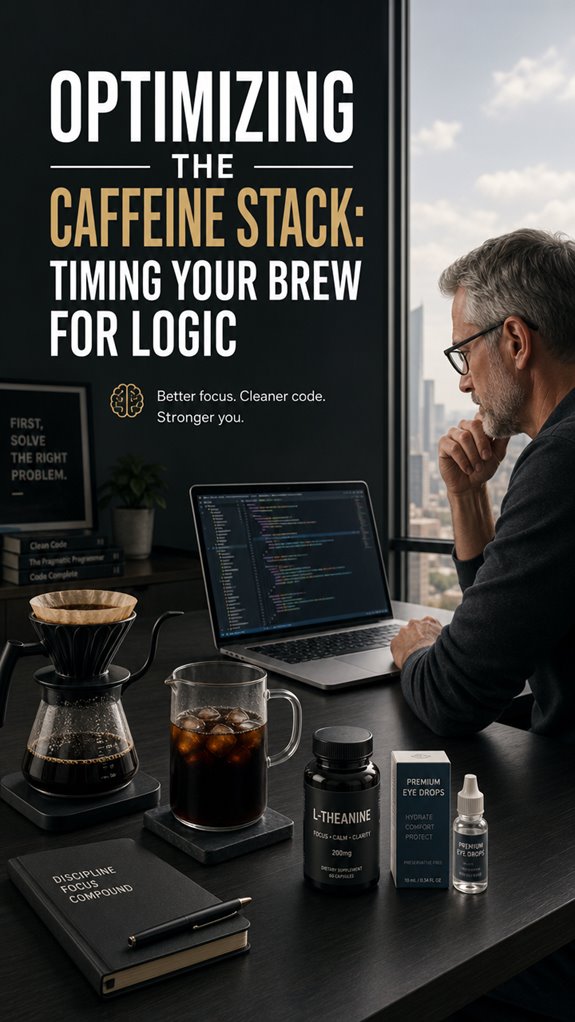
Now I wait that sweet 45-minute window post-wake. Cortisol dips. I time it perfectly. Smooth focus. No jitters. I pair it with L-Theanine— nature’s error handler.
Coffee at 3? That’s just borrowing tomorrow’s energy with predatory interest rates.
Trust the protocol. Your sanity compiles cleaner.
Caffeine Crash Recovery: How I Broke My Sleep Schedule Coding Crunch Weeks
Three years ago I pulled a 72-hour sprint for a product launch. Red Bull towers on my desk. By day four, I was hallucinating merge conflicts in my ceiling tiles. My git history looked like a crime scene. Heart palpitations at standup. The PM asked if I was okay. I said “_ship it_.”
Recovery took two weeks. Melatonin barely touched me. That’s when I discovered cortisol mapping and circadian alignment—same principles behind chrononutrition and biohacking sleep hygiene. Now I track my caffeine halflife like dependencies. Your adrenal glands aren’t legacy code you can just patch indefinitely.
Quick Takeaways
- Time caffeine intake to coincide with cortisol dips, typically 30-45 minutes after waking, to enhance focus and reduce jitteriness.
- Schedule your first brew around 10AM, leveraging natural circadian lows for optimal absorption and mental clarity.
- Avoid caffeinating late afternoon; set a cutoff by 2PM to prevent interference with sleep and system overload.
- Combine microdosing with L-theanine to maintain steady energy and prevent jittering or crashes during intensive tasks.
- Use environmental cues and precise brewing methods to maximize caffeine’s effectiveness while minimizing overstimulation.
What Is Caffeine Half-Life and Why Does It Matter?
Ever wonder why your caffeine-induced bug fixes have a lifespan shorter than a beta release? It’s because the half-life of caffeine — that critical window of system clearance — varies due to genetic metabolism and caffeine tolerance.
Caffeine’s half-life varies with genetics, impacting how long your bug fixes keep your system running smoothly.
Your body’s ability to process this stimulant differs at a byte-level: CYP1A2 gene variants determine fast or slow metabolizer status.
As with software, efficiency degrades over time, leading to crashes—irritability, jitters, or the infamous “log-out” at midnight.
Just like debugging a core dump, understanding your caffeine half-life optimizes your productivity stack, avoiding the system overload and ensuring your PRs stay ahead of the inevitable caffeine crash orbit.
How to Time Your Coffee for Maximum Focus and Less Crash
In the grand schema of cognitive uptime, timing your caffeine intake is akin to hosting a meticulously orchestrated software deployment—any misfire risks a cascading crash or, worse, prolonged downtime.
- Prioritize caffeine absorption windows; delay intake until cortisol peaks—30-45 minutes post-wake—avoiding conflicts with your body’s natural load balancing.
- Align your first brew around the 10AM mark, exploiting the post-cortisol dip as if patching a memory leak in “Ghost in The Shell.”
- Schedule doses during circadian troughs, not peak times—think of it as avoiding race conditions in your brain’s processing pipeline.
- Cutoff by 2PM, ensuring your system clears 75% of caffeine before attempting to reboot at bedtime.
- Consider complementing your routine with caffeine gum, which offers a quick energy boost without the delays associated with traditional beverages.
Managing Your Afternoon Caffeine Intake for Better Energy
Lasting effects, from 2 to 12 hours, obscure clear execution of core routines. You might think of caffeine as an auxiliary thread, often misused, causing jittery crashes around peak absorption. Incorporating a proper cycle tracking app can help you monitor how caffeine affects your overall wellness and energy levels.
Strategic clearance, combined with microdosing L-theanine, functions as a debugging tool—optimizing energy flow without succumbing to tolerance, dependency, or the all-consuming crash loop. Additionally, blurred distance vision can result from prolonged screen exposure, particularly in the afternoon when fatigue sets in.
How L-Theanine Can Help Reduce Coffee Jitters

When caffeine runs amok through your neural network, it’s akin to a rogue process clogging the CPU—causing jittery spikes, inconsistent response times, and a general loss of system stability.
L-Theanine acts as a calming patch, modulating neurotransmitter activity to stabilize your bio-routine.
- Neurotransmitter modulation replaces chaos with targeted signals.
- It buffers the adrenaline rush, reducing jittery overloads.
- Acts as a calming technique, akin to a system reset.
- Realigns your internal execution framework, minimizing crash cycles.
Like debugging “Ghost In The Shell,” stacking L-Theanine with caffeine optimizes your mental architecture—dialing down the noise and boosting core stability for sustained throughput.
Tips to Avoid Jitters During Busy Workdays
Even the most bulletproof code eventually runs into race conditions—an unanticipated jitter spike when CPU cycles clash, crashing your neural network’s stability under caffeine chaos.
You, the developer, are the sysadmin of your own bio-logic stack, facing unpredictable caffeine absorption patterns driven by metabolic variability. The longer the half-life, the greater the data pollution, risking jitter spikes during critical debugging sessions.
To optimize, delay the first caffeine injection until after cortisol peaks, ensuring your code isn’t fighting your physiology.
Combine microdosing, like an API call with L-theanine, to buffer the inevitable load.
Sometimes, decaf at lunch transforms your biological server from Ghost in the Shell to smooth operation.
Simple Ways to Keep Calm With Decaf or Tea After Lunch
In the grand architecture of productivity, sometimes the most effective patch involves a simple switch to decaf or a piping-hot cup of tea—an overlooked but essential variable in maintaining operational stability after the post-lunch dip, which, much like poorly optimized code, threatens to cascade failures across your cognitive stack.
- Herbal infusions: serve as lightweight, system-friendly overrides, minimizing resource leaks. Incorporating a heated desk mat can provide additional comfort, creating an inviting workspace that fosters prolonged focus.
- Mindfulness practices: debug your mental state, avoiding memory leaks of stress.
- Rituals of calm: analogous to clean boot sequences, prepping your neural infrastructure.
- Short breaks: like scheduled patches, prevent overload and keep the core system responsive.
This iterative process prevents human “ghosts” in your shell, restoring clarity amid chaos. Additionally, it’s essential to be aware of electric shock feelings that can arise in the neck, which may signal underlying tension or stress.
First Caffeine Supplement Tried

Facing the default morning routine is akin to launching a software update without proper debugging—inevitably, the system hiccups, and cognitive throughput plummets. My initial caffeine supplement was a failed patch—an ill-matched flavor pairing, brew time, and method—leading to jittery crashes reminiscent of “Ghost in the Shell” glitches.
I tested drip versus French press, searching for *best* latency, yet risked bottlenecking my logical pipeline. The absurdity: caffeine’s half-life—4 hours—unfolded like a poorly documented API, leaving residual effects that spiked dashboard metrics with anxiety.
The realization: proper timing and brewing method are the key to debugging my neural OS.
Extended Caffeine Effects Disrupt Routines
When caffeine’s extended runtime begins to malfunction your biological system—akin to a rogue process hogging CPU cycles—your routines are compromised at a fundamental level.
- Sleep hygiene degrades, resembling a buggy session, delaying sleep onset, sacrificing restorative phases, reminiscent of Ghost in The Shell’s digital chaos. Using a weighted heating pad can help promote better sleep by soothing shoulder tension before bedtime.
- Routine disruption causes a cascade of failures: delayed productivity, fractured focus, and jittery peripheral responses, akin to a system with memory leaks.
- Stress responses amplify, turning your heart into an overclocked CPU, elevating blood pressure and adrenaline, undermining even the sturdiest power strategies.
- Chronic effects bleed into performance metrics, making routine maintenance—in this case, sleep—a casualty of relentless bug reports.
- Ignoring pain signals may yield temporary relief but can lead to long-term consequences similar to outer forearm pain arising from repetitive stress injuries while typing. If shoulder pain persists, the use of weighted heating pads can provide much-needed relief.
Caffeine Metabolism in Liver
Caffeine metabolism in the liver functions as the system’s core process for resource recycling—except instead of caching and garbage collection, you’re dealing with enzymatic pathways that convert a stimulatory sorry state into benign metabolites, allowing your neural cache to refresh without causing a total system crash.
This process hinges on liver enzymes—primarily CYP1A2—that dictate metabolic variation, much like how obscure compiler flags influence code performance. Your genetic profile, along with external factors, scripts this variability, creating a mosaic of half-lives. Vertical mice can be particularly beneficial during long hours of work, as they help reduce strain and promote comfort while you process information.
It’s a perpetual balancing act, maintaining operational integrity amid biological chaos—like debugging Ghost In The Shell’s unwieldy code, with each iteration revealing new failure points in your internal architecture. Incorporating recommended indoor plants can further enhance your cognitive function and overall well-being, creating an optimal environment for productivity.
Caffeine Half-Life Supplements
Metabolic variability among users—like runtime discrepancies across different hardware—dictates caffeine clearance efficiency, leaving your biological system in unpredictable states of performance regression.
Biological metabolism varies like hardware—impacting how quickly caffeine clears and performance stabilizes.
Supplement interactions matter:
- Optimizing caffeine metabolism via supplements, like N-acetylcysteine, adjusts clearance speeds, reducing latency. Including snake plants in your environment can also enhance your overall well-being, which supports better cognitive function.
- L-theanine acts as a debugging tool—smoothing jitters caused by abrupt caffeine injections.
- Decaf post-lunch provides a graceful fallback, avoiding half-life baggage.
Be aware: some supplements can conflict with prescribed meds, creating dependency loops akin to infinite recursion—an existential crisis your code won’t fix.
In essence, upgrading your caffeine infrastructure demands precision—manual patching, testing, and clear documentation, or system failure ensues. Including strategies for caloric management can enhance overall productivity while using caffeine as a tool for performance.
Tailored Focus Strategies for Professionals
Ever wonder how to debug your focus pipeline when the entire system starts hallucinating under load? As a senior dev trapped behind a desk, you recognize the absurdity of trying to execute complex batching logic with a human processor succumbing to Ghost in The Shell-level hallucinations.
To prevent runtime crashes, fine-tune your focus module through precise brewing techniques and deliberate flavor combinations—think cold brew, high-grade beans, and microdosed synergy with L-theanine.
Adapt your caffeine stack like software architecture: modular, testable, resilient. Because if your mental cache isn’t optimized, all those legacy processes will gibberish into chaos long before the 12-hour mark. Choosing the best eye drops can also help ease visual strain during those long coding sessions, enhancing your overall productivity.
FAQ
How Does Genetics Influence My Ideal Caffeine Consumption Schedule?
Genetic markers influence your caffeine metabolism, dictating whether you’re a fast or slow metabolizer. Knowing this, you can tailor your intake schedule—fast metabolizers can dose more freely, while slow ones should space caffeine to maximize alertness and avoid crashes.
Can I Extend Caffeine’s Effects With Specific Timing or Supplements?
You can turbocharge caffeine effects with strategic timing—sip later in your cycle when half-life peaks—and amp them with supplement synergy, like L-theanine. Power up, extend alertness, and conquer with precision, not crash.
What’s the Safest Way to Avoid Caffeine Jitters and Crashes?
To avoid caffeine jitters and crashes, pair bold flavors with decaf or L-theanine, use precise brewing techniques, and time your intake post-cortisol peak. This maximizes alertness while minimizing side effects for powerful, sustained focus.
How Does Body Weight Impact Caffeine Metabolism and Half-Life?
Your body weight influences caffeine absorption and metabolic rate; lighter individuals process caffeine faster, reducing half-life, while heavier bodies metabolize it slower, prolonging effects. Adjust intake timing accordingly to maximize alertness and minimize jitters or crash risks.
Are There Natural or Dietary Methods to Accelerate Caffeine Clearance?
You can accelerate caffeine clearance naturally by incorporating herbal alternatives like milk thistle or dandelion root, and making dietary adjustments such as increasing hydration, fiber, and antioxidants, which support liver detoxification and boost metabolism for faster caffeine elimination.
Summary
In the grand algorithm of productivity, neglecting caffeine’s half-life is akin to deploying patches without testing—destined for runtime errors. Syncing your brew timings reduces system crashes, while managing jitters prevents memory leaks in focus. Just as developers optimize code, you should optimize your intake patterns—lest your mental cache overflow. Keep in mind, even the most sophisticated AI can’t debug a jittery human. So, bootstrap your routines, and keep your cognitive cache clean to prevent full system failure.
References
- https://www.hushhome.com/blogs/sleep-wellness-guide/caffeine-half-life-and-sleep
- https://www.sleepfoundation.org/nutrition/how-long-does-it-take-caffeine-to-wear-off
- https://www.news-medical.net/health/Caffeine-Timing-How-to-Use-It-for-Energy-Without-the-Crash.aspx
- https://www.ncbi.nlm.nih.gov/books/NBK223808/
- https://www.healthline.com/health/how-long-does-caffeine-last
- https://corporate.dukehealth.org/news/caffeines-effects-are-long-lasting-and-compound-stress
- https://archive.cdc.gov/www_cdc_gov/niosh/emres/longhourstraining/caffeine.html
- https://pmc.ncbi.nlm.nih.gov/articles/PMC6292246/
- https://www.uclahealth.org/news/release/study-mice-shows-how-chronic-caffeine-consumption-alters
- https://www.healthline.com/nutrition/caffeine-side-effects
- https://www.ama-assn.org/public-health/prevention-wellness/what-doctors-wish-patients-knew-about-impact-caffeine
- https://www.ncbi.nlm.nih.gov/books/NBK202225/